Stretch marks cannot be completely erased, but their colour, texture and visibility can often be softened with the right treatment, and earlier marks generally respond better than older ones. American Academy of Dermatologylogy describes a stretch mark as a type of scar, so the realistic goal is a less noticeable mark, not skin that looks as if it never happened. Topical products, microneedling, radiofrequency and some light and laser treatments are the main options people weigh up.
That is the short version. The longer one is more interesting, because “stretch mark treatment” covers very different situations. A new purple line on the hip of a 17 year old, a silvery band on the abdomen from a pregnancy ten years ago and a cluster of marks on the thighs after fast weight change are not the same problem, and I think the honest answer to “what works” changes with each of them.
This guide is general education for adults in Toronto who are curious about their options. At Rejuvenation Med Clinic, our stretch mark removal page lists Morpheus8, Venus Viva MD, Lumecca IPL and Venus Legacy as options we use for stretch marks, and I will say where the evidence behind each seems stronger or weaker. Nothing here is a diagnosis or a promise of results. Stretch marks are harmless, treating them is a personal choice, and not treating them is a perfectly good one.
Related Service: Stretch Mark Removal at Rejuvenation Med Clinic
What stretch marks are and why they form
Stretch marks, called striae distensae in medical language, are narrow bands or streaks that show up when skin stretches or shrinks faster than it can adapt. The AAD explains that the rapid change ruptures collagen and elastin in the dermis, and the mark is what the skin leaves behind as it heals. They are very common and they are not a sign that anything is wrong with you.
What is happening under the surface
The dermis is the supportive layer below the surface skin, and it relies on collagen for strength and elastin for bounce. When that network is pulled hard and fast, some fibres tear. The surface layer above stays intact, which is why a stretch mark usually feels smooth or slightly dipped rather than rough, and why creams that act only on the surface have a hard time doing much.
Why some people get them and others do not
The AAD notes that not everyone develops them, that hormone shifts seem to play a role and that a family history raises the odds. Common triggers include puberty growth spurts, pregnancy, rapid weight gain or loss and weight training with quick muscle growth. Cleveland Clinicinic adds that pregnancy-related stretch marks are reported especially often in Black, Hispanic, East Asian and South Asian people, and that long-term prednisone use is a risk factor too. Two people can go through the same weight change and only one will get marks. That is mostly genetics, and it is nothing to feel guilty about.
Red and purple marks versus white or silver marks
New marks tend to be raised, a little itchy and coloured pink, red, purple or brown depending on your skin tone. Over months and years they usually fade to a paler, flatter and sometimes slightly sunken band. Dermatologists often call the early stage striae rubra and the later one striae alba, and the Chaudhury review in the International Journal of Women’s Dermatology reports that rubra marks generally respond better to most treatments while alba marks are more mature and often need more intensive or combined approaches.
| Stage | What it usually looks like | What this tends to mean for treatment |
|---|---|---|
| Early (rubra) | Pink, red, purple or brown, sometimes raised or itchy | Generally more responsive, and the stage where most sources say to start |
| Transition | Colour starting to fade, band getting flatter | Still worth discussing, with realistic expectations |
| Mature (alba) | White or silvery, flat or slightly sunken, smooth | Often slower to change and more likely to need combined treatment |
Stretch marks are not a flaw
I want to say this plainly, because a lot of stretch mark content is written to make people feel bad about their skin. Marks on the hips, thighs, breasts, abdomen and upper arms are ordinary human skin. Some people want them softened, some feel nothing about them, and some are fond of them. All three are reasonable, and none of them needs a treatment plan to be valid.
Can stretch marks be removed?
Not completely, based on what the major sources say. The AAD states that stretch marks are permanent like any scar, though treatment may make them less noticeable and they also fade on their own over time. Mayo Clinicinic says treatment can make them fade but they may never completely disappear, and that none of the available options has been proved consistently better than the others.
The short answer for a featured snippet would be this: stretch marks usually cannot be fully removed, but their colour and texture can often be improved. Early red or purple marks tend to respond better than older white ones, results vary from person to person, and most approaches need several sessions or months of regular use.
What “improve” really means
Improvement can mean a purple mark that turns closer to your skin tone, a sunken band that feels smoother, or a patch that simply catches the light less. It rarely means the mark vanishes. When I read before and after photos from any clinic, mine included, I try to remember that photos can be taken in different lighting and that a good outcome for one person is not a forecast for the next.
Do they fade without treatment?
Often, yes. The Cleveland Clinic says marks commonly fade on their own over roughly six to 12 months, and the Mayo Clinic describes them as harmless and often fading with time. That matters for planning. If you have a brand new mark and you are not in a hurry, waiting and seeing is a legitimate first step, though starting earlier is generally associated with better results.
Stretch mark treatment options compared
The table below is a general overview, not a recommendation. Evidence for stretch marks is thinner than people expect. The Chaudhury review calls it limited, notes that many studies are small and use inconsistent ways of measuring results, and says better comparative studies are needed. So when you see a confident claim that one device is the best answer, I would be a little sceptical.
| Option | How it is thought to work | What sources say | Things to weigh |
|---|---|---|---|
| Moisturizers and oils | Hydrate and soften the surface | The AAD reports that almond oil, cocoa butter, olive oil and vitamin E did not fade stretch marks in studies | Pleasant for comfort, but not a fade strategy |
| Hyaluronic acid products | Hydration of the surface layer | AAD notes two large studies where applying it to early marks made them less noticeable | Best discussed for early marks |
| Prescription tretinoin or other retinoids | Supports collagen rebuilding in newer marks | Mayo says it may improve marks less than a few months old, and AAD cites 24 weeks of nightly use in one study | Can irritate, needs a prescriber, and is not for use in pregnancy or while nursing |
| Microneedling | Controlled micro-injuries trigger collagen and elastin production | Mayo describes lower risk of skin colour change than laser; Cleveland Clinic says most people need three to six sessions | Several visits, gradual change |
| Radiofrequency, with or without microneedling | Heat delivered to the dermis to stimulate remodelling | One study in the Chaudhury review found more collagen and elastic fibre gain than a nonablative laser, with more discomfort | Settings and skin tone matter |
| Fractional and other lasers | Light energy to stimulate remodelling or target colour | Cleveland Clinic says improvement can continue for up to a year | Higher pigment-change risk in deeper skin tones, especially with ablative types |
| Chemical peels and PRP | Surface renewal, or growth factors from your own platelets | The review describes small studies, including one where PRP outperformed tretinoin | Limited evidence, often used as part of a combination |
Creams and home care
I will keep this short, since most people have already tried a few. The consistent message across the AAD, Mayo Clinic and Cleveland Clinic is that products work best on early marks, need weeks to months of daily use and often do little for mature ones. The AAD also says tanning makes stretch marks more noticeable, and that self-tanner can camouflage them without changing them. If you are pregnant or nursing, check with your doctor before using retinoids, since Mayo and the AAD both flag that.
Microneedling
Microneedling uses very fine needles to create tiny controlled injuries so the skin lays down new collagen and elastin while it heals. Mayo describes it as having less risk of skin colour change than laser therapy and as the preferred first approach for people with darker skin. Our microneedling page covers how we use it more generally, and we have written about what microneedling does, how often it is usually spaced and what affects its cost.
Radiofrequency and microneedling with radiofrequency
Radiofrequency devices warm the dermis, and some combine that heat with microneedles so the energy is delivered below the surface. Our stretch mark page names Morpheus8 for this, described as combining microneedling with radiofrequency, and Venus Viva MD, described as fractional radiofrequency resurfacing. It also lists Venus Legacy, which uses multipolar radiofrequency with pulsed electromagnetic fields. Our existing guide to improving the appearance of stretch marks with Venus Legacy goes into that device in more detail.
In the research I read, radiofrequency microneedling looked promising, but the evidence is small and mixed. One study in the Chaudhury review found it produced more collagen and elastic fibre than a nonablative laser, though it was more painful. Another combining it with a CO2 laser reported more post-inflammatory pigmentation. I would read that as “worth asking about, with caveats” and not as “the answer.”
Light and laser treatments
Fractional lasers are the best known category for stretch marks, and the Cleveland Clinic says improvement can keep building for up to a year, with possible milia, swelling and colour changes as side effects. Our page lists Lumecca IPL for the colour in early marks. I did not find strong evidence for intense pulsed light specifically on stretch marks in the sources I reviewed, so if that is the option on the table, I would ask your provider what they expect it to do and for which stage of mark.
Peels, PRP and injectables
Chemical peels and platelet-rich plasma show up in small studies, usually alongside other treatments. Our medical grade peel and platelet rich plasma pages describe those services in general, though neither page is specific to stretch marks. Some clinics also use injectables for stretch marks, which is outside what I can verify about our own menu, so I will leave it at asking.
What the research actually shows
In plain terms, treatments tend to help rather than erase, early marks are more responsive than mature ones and combinations often outperform single approaches, especially for white marks. The review also points out that evidence quality is limited. I find that reassuring in a way. It means a good provider should talk about probabilities and trade-offs, and a provider who guarantees a result is probably overstating what the field knows.
Which approach fits which kind of stretch mark
There is no tidy formula, but a few patterns come up repeatedly in the sources and in the questions people ask. Treat this table as a conversation starter for a consultation and not as a prescription.
| Your situation | Questions worth raising | General direction in the literature |
|---|---|---|
| New red, pink or purple marks | How recent are they, and are you pregnant or nursing? | Topicals for early marks and in-office options are both discussed, earlier generally being better |
| White or silvery marks from years ago | What change would feel worthwhile to you? | Often more gradual, with combined approaches discussed more often |
| Deeper or darker skin tones | Who has experience with pigment risk on my skin type? | Mayo describes microneedling as a preferred first approach, and the review says nonablative lasers are better tolerated in Fitzpatrick IV to VI |
| Marks with loose or crepey skin around them | Is skin laxity part of what bothers me? | Radiofrequency based options are often discussed because they target tightening as well |
| Large areas, such as the whole abdomen or both thighs | How many sessions and what spacing, realistically? | Larger areas generally mean more time, more sessions and more cost |
| Marks that appeared quickly with other symptoms | Should a doctor look at this first? | Medical assessment comes before cosmetic treatment |
Stretch marks and different skin tones
Skin tone changes the risk side of the conversation more than most articles admit. In deeper skin, treatments that heat or injure the skin can sometimes leave behind patches that are darker or lighter than the surrounding area. The Chaudhury review says ablative CO2 lasers carry a higher risk of pigment change in darker skin, that nonablative lasers are generally better tolerated in Fitzpatrick types IV to VI, and that microneedling shows a lower risk of dyspigmentation than CO2 laser in one comparison.
The Fitzpatrick scale, if you have not met it, is a six-step way of describing how skin reacts to sun. It is a rough guide and not a perfect one. It is a useful reason to tell your provider how your skin has reacted to scrapes, sun, acne or past treatments, because a history of dark marks after a bruise or pimple matters here. I would also say that no clinic should call a treatment suitable for all skin types without looking at yours. Our pigmentation treatment page and Lumecca page describe how we think about pigment more broadly.
Stretch marks by body area
Where the marks are changes what is practical, from how the device reaches the skin to how you will handle clothing, friction and activity afterwards.
| Area | Common reasons | Practical points |
|---|---|---|
| Abdomen | Pregnancy, weight change | Large surface area, and the skin can be loose after pregnancy or weight loss |
| Hips and thighs | Growth spurts, weight change | Friction from clothing, and heat in summer, can make aftercare feel fussy |
| Buttocks | Growth spurts, weight training | Sitting pressure can matter in the first days |
| Breasts | Pregnancy, puberty, weight change | Needs a conversation about breastfeeding and timing |
| Upper arms | Weight change, weight training | More sun exposure, so sun protection planning matters |
| Lower back and flanks | Growth spurts, weight training | Harder to monitor yourself, so photos help |
Our Morpheus8 body page and body sculpting page describe treatments for body areas in general, and you can ask which fit a particular mark pattern.
Stretch marks after pregnancy and while breastfeeding
Pregnancy is one of the most common reasons people look this up, and it comes with a few specific cautions. Our stretch mark page says most treatments are best avoided during pregnancy, and the Mayo Clinic and AAD both advise checking with a health care provider before using retinoids if you are pregnant or nursing. That means the sensible time to ask about in-office treatment is usually after pregnancy, and your own doctor or midwife should weigh in on timing if you are breastfeeding.
There is a quieter question here too. A lot of new parents feel their body has been through something big and that they are expected to rush back. You are allowed to wait. The marks will fade somewhat on their own, as the sources above describe, and treatment will still be an option later if you want it.
Stretch marks after weight loss or rapid body change
Fast weight change is the other big trigger, and it is increasingly part of the conversation because of medications that lead to quicker weight loss. I should be clear that stretch marks and loose skin are different things. Stretch marks are bands within the skin. Looseness is about the skin and underlying support having less snap than before. People often have both, and they are approached somewhat differently.
Our article on body sculpting after weight loss from Ozempic discusses skin and contour questions after rapid loss, and our guide to tightening loose skin with Venus Legacy explains one radiofrequency approach to laxity. If you are still actively losing or gaining, it is worth asking a provider whether waiting until your weight has settled makes sense.
What a consultation and treatment series usually look like
I do not want to invent a protocol for you, because settings, depth, spacing and session counts are decided by the qualified professional who examines you. What I can describe is the general shape.
The assessment
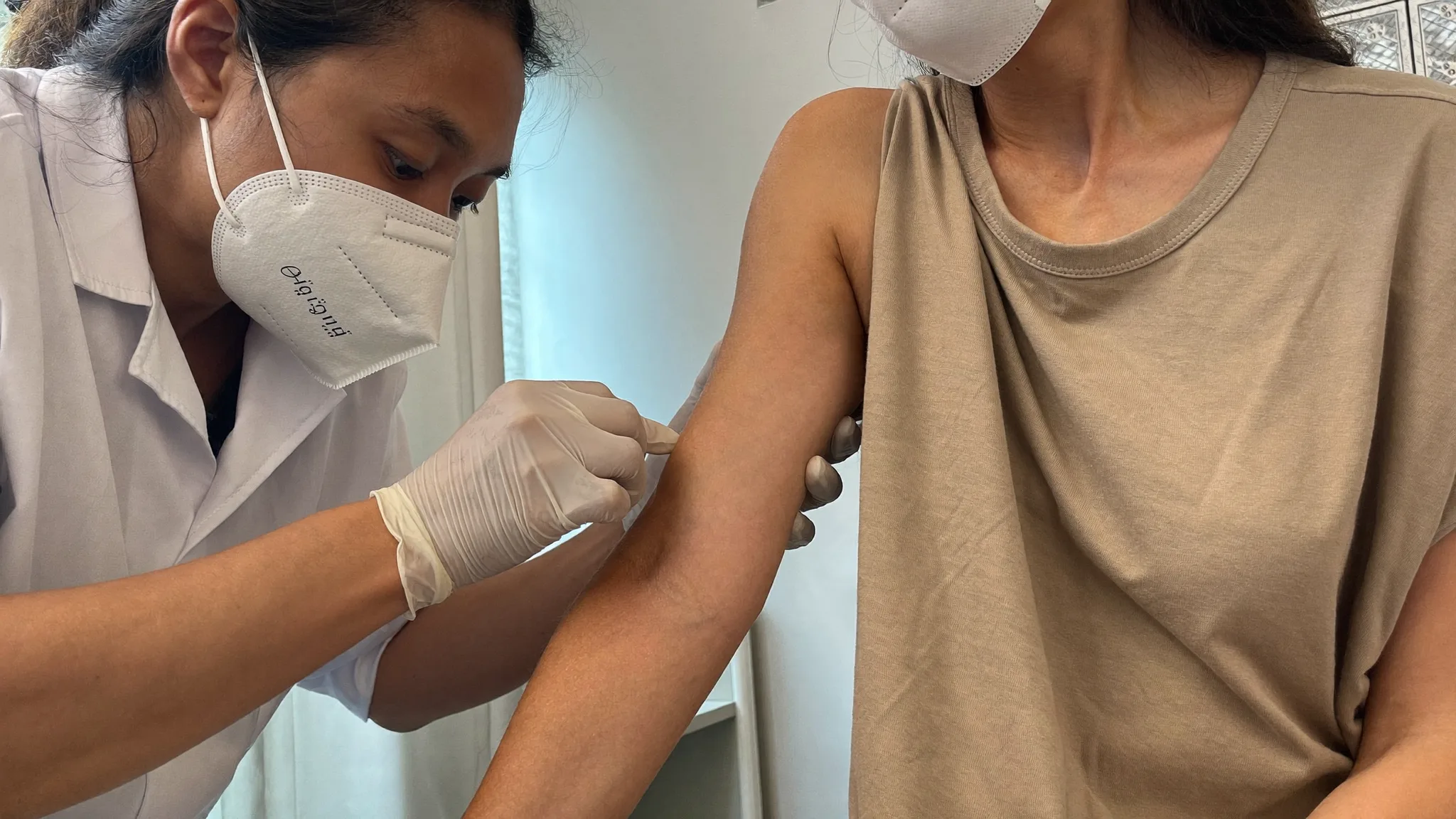
A good consultation starts with questions. How long have the marks been there, what colour are they, where are they, and what have you tried? The provider will usually want to know your medical history, medications, allergies, history of scarring or dark marks, pregnancy or breastfeeding status and whether you have had recent sun exposure or tanning. They will look at the skin in good light and feel its texture, and they may take photos for comparison.
How many sessions and how far apart
Our stretch mark page says most people need about four to six sessions spaced several weeks apart, and that results often appear over a few months as the skin heals. The Cleveland Clinic gives a similar picture for microneedling, with three to six sessions and full results sometimes taking four to six months or longer. These are general ranges, not commitments. Mature marks, large areas and deeper skin tones can all change the plan, and some people need more or fewer visits than the average.
Combining treatments
Many providers combine approaches, for example radiofrequency microneedling with a light-based option, or treatment sessions with a home routine. The Chaudhury review reports that combinations generally outperform single approaches, particularly for white marks, but it also notes a study where one combination led to more post-inflammatory hyperpigmentation. More is not automatically better, and a conservative plan with a check-in point is, in my view, a sign of good judgement.
How long results last
This is where I am most cautious. Collagen changes are described as lasting, but the skin keeps ageing and your weight and hormones can change, so I would not promise permanence or a number of years. Our page mentions results lasting a year or more for many treatments, which I take as a general statement. Ask your provider what they expect in your case and what maintenance would look like.
Preparing for treatment and looking after your skin afterwards
Preparation and aftercare instructions vary by treatment, so please follow the ones your own provider gives you. Some general themes come up often, though, and they are worth knowing before you book.
Before your appointment
Mention any retinoids, exfoliating acids or prescription creams you use, since providers sometimes ask people to pause them before skin treatments. Avoid tanning and heavy sun exposure on the area, since the AAD notes that tanning makes stretch marks more noticeable, and providers often ask about recent sun exposure for other reasons too. Tell your provider about any history of keloid or dark scarring, and about anything that affects healing.
Afterwards
Redness, warmth and a little swelling are common after treatments that stimulate collagen, and they usually settle over days. Our stretch mark page describes side effects such as slight skin depression, redness, swelling or irritation that typically resolve within days. Gentle moisturizer, sun protection and avoiding picking or scrubbing are the usual themes.
| What you notice | Often expected | Worth contacting your provider or a doctor |
|---|---|---|
| Redness and warmth | Yes, in the first days | If it spreads, worsens or comes with fever |
| Mild swelling | Yes, usually settling within days | If it is severe or one-sided and growing |
| Dryness or flaking | Sometimes | If there is oozing, crusting or blistering |
| Tiny pinpoint marks | Sometimes after microneedling | If they look infected or are very painful |
| Patches that look darker or lighter | Can happen, and need to be reported | Tell your provider early, since early guidance helps |
| Small white bumps (milia) | Listed by Cleveland Clinic as a possible laser side effect | Mention at follow-up |
Risks, side effects and who should wait
Every treatment that triggers healing carries risks. The ones most often described for stretch mark treatments are temporary redness and swelling, discomfort, infection if aftercare is not followed, pigment changes and, less commonly, scarring.
| Consideration | Why it matters |
|---|---|
| Pregnancy or breastfeeding | Many treatments and products are avoided, and timing needs your doctor’s input |
| Active skin infection, open wounds or a skin condition in the area | Healing and infection risk |
| Recent tanning or sunburn | Higher pigment change risk and more sensitive skin |
| History of keloid or raised scars | May change which treatments are suitable |
| Certain medications | Can affect healing, so share your full list with your provider |
| Unrealistic expectations of complete removal | Worth resolving before you spend anything |
Whether you are a candidate for a given treatment is a decision for the qualified professional who assesses you. This list is not a complete screening, and I would not want anyone to use it to rule themselves in or out.
What affects the cost
I am not going to quote prices here, because they change with device, area and plan, and anything printed in an article will go out of date. What I can say is which factors usually matter: the size of the area, the age and depth of the marks, the technology used, the number of sessions and whether treatments are combined. Our financing page describes how financing works at the clinic, and a consultation is the place to get a plan with numbers. As far as I know, stretch mark treatment is generally cosmetic and not covered by provincial health plans, so check any private benefits you have.
| Cost factor | Why it changes the total |
|---|---|
| Area size | More skin means more time, and often more sessions |
| Mark age and depth | Mature or deep marks may need longer plans |
| Technology | Different devices and settings carry different costs |
| Number of sessions | Spacing of weeks means a plan unfolds over months |
| Combination plans | Layering treatments adds to the total |
| Maintenance | Some people choose occasional follow-up sessions |
Common misconceptions about stretch marks
“The right cream will make them disappear”
Some products help early marks a little, and the AAD describes hyaluronic acid and prescription tretinoin as having some support. No cream removes a mature mark, and several popular oils did no better than nothing in the studies the AAD cites.
“Laser removes them for good”
Lasers and other devices can improve the look of stretch marks, but the AAD and Mayo Clinic both say none removes them completely. I find it helpful to ask clinics what improvement they typically see and what they would consider a disappointing result.
“Only people who gained weight get them”
Not at all. Growth spurts, hormones, genetics, muscle gain and medications all play a part, and the AAD notes that long-term topical corticosteroid use can cause them.
“They are always a skin problem”
Mostly they are not. In some cases, widespread new marks can be linked to hormone or connective tissue conditions, which is the next topic.
“If I wait, I have missed my chance”
Earlier treatment is generally associated with better responses, but older marks can still improve to some degree, and the choice to treat is yours at any age.
When a doctor, not a med spa, is the right next step
Stretch marks are usually harmless, but a few situations deserve medical attention before or instead of a cosmetic consultation. The AAD and Cleveland Clinic both mention Cushing’s syndrome and Marfan syndrome as medical causes, and prolonged use of corticosteroid medicines as a trigger. If you have many new, wide or dark purple marks, especially with other symptoms such as unexplained weight gain in the face and trunk, easy bruising, muscle weakness, new high blood pressure or marks appearing without an obvious reason like growth or pregnancy, please see your family doctor. Likewise, if marks are painful, ulcerated or look infected, get them checked first.
None of that means an aesthetic clinic cannot help, it just means the order matters. A good provider will tell you when something looks like it belongs with a doctor, and in our case that is a normal part of a consultation and not a failed one.
Questions to ask at a stretch mark consultation
| Topic | Question |
|---|---|
| Fit | Which stage are my marks, and what does that mean for the options? |
| Skin tone | What is the pigment risk on my skin, and how do you reduce it? |
| Expectations | What improvement is typical, and what would you call a poor result? |
| Plan | How many sessions, how far apart and when do we reassess? |
| Comfort | What does treatment feel like and what is the aftercare? |
| Timing | Should I wait for pregnancy, breastfeeding or weight change to settle? |
| Practicalities | What are the costs, and what financing options exist? |
| Alternatives | What are the options if I choose not to treat, or to start with a topical? |
Deciding whether to book a consultation
If your marks bother you and you would like a clear look at what might help, a consultation is a reasonable step. If they do not bother you, there is nothing to fix. At Rejuvenation Med Clinic you can read about our team, explore our skin tightening options and our acne scar removal page for related skin texture concerns, and see our skin FAQ for more general questions. If you decide to talk to us, you can request a consultation.
A consultation does not commit you to anything, and your plan may change after an individual assessment. We would rather tell you plainly if a simpler option, a referral or no treatment at all is the better fit.
Frequently asked questions
What are stretch marks?
Stretch marks, or striae distensae, are narrow bands in the skin that form when it stretches or shrinks quickly enough to break collagen and elastin fibres. They start pink, red, purple or brown and usually fade to a paler, flatter band over time. They are harmless and very common, and anyone can get them.
Can stretch marks be completely removed?
Usually not. The AAD calls them permanent like any scar, and the Mayo Clinic says they may never completely disappear. Treatment can make colour and texture less noticeable, and results differ from person to person, so it helps to aim for improvement and to ask any provider what they realistically expect.
Do stretch marks go away on their own?
They often fade. The Cleveland Clinic says marks commonly lighten over roughly six to 12 months, and the Mayo Clinic describes them as often fading with time. Fading is not the same as disappearing, and a pale or slightly sunken band can remain. Treatment may speed fading but cannot guarantee a result.
What is the best treatment for stretch marks?
No single option has been shown to be consistently better than the others, according to the Mayo Clinic. The best fit depends on how old the marks are, your skin tone, where they are, and your goals. A consultation with a qualified professional is the way to narrow it down.
Does microneedling work for stretch marks?
It is one of the better-supported options. Microneedling is described as having a lower risk of skin colour change than laser, and the Cleveland Clinic says most people need three to six sessions, with full results possibly taking four to six months or longer. Outcomes vary, and the evidence base is small.
Can lasers treat stretch marks?
They can help improve the look of some marks. The Cleveland Clinic says improvement from laser resurfacing can continue for up to a year, with possible swelling, milia and colour changes. The Chaudhury review notes higher pigment risk in darker skin with ablative lasers, so the type of laser and your skin tone matter.
How many sessions do stretch marks need?
Our stretch mark page says most people need about four to six sessions spaced several weeks apart. Other sources give similar ranges for microneedling. Mature marks, larger areas and different skin tones can change that number, so a provider can only give a real estimate after assessing your skin.
Are red stretch marks easier to treat than white ones?
Generally, yes. The Chaudhury review reports that early red or purple marks (rubra) tend to respond better to most treatments, while white marks (alba) are more mature and often need more intensive or combined approaches. Older marks can still improve to some degree, just more gradually.
Is stretch mark removal covered by insurance?
In general it is treated as a cosmetic concern and is not covered by provincial health plans in Canada, as far as I know. Some private benefits plans may differ, so check yours before booking. If marks are linked to a medical condition, ask your doctor what is relevant for coverage.
Can retinol or tretinoin reduce stretch marks?
Mayo says prescription tretinoin may improve marks less than a few months old, and the AAD cites one study of nightly use for 24 weeks. It can irritate the skin, and it is not for use during pregnancy or while nursing. Speak with your doctor or pharmacist before starting it.
Can vitamin C clear stretch marks?
I did not find vitamin C supported as a stretch mark treatment in the AAD, Mayo Clinic or Cleveland Clinic pages I reviewed. It may be a pleasant part of a skincare routine for other reasons, but I would not count on it to fade stretch marks. Ask a dermatologist if you are curious.
Is coconut oil good for stretch marks?
The AAD reports that almond oil, cocoa butter, olive oil and vitamin E did not fade stretch marks in studies, and the Cleveland Clinic says oils like coconut and olive do not effectively treat or prevent them. Moisturizing can keep skin comfortable, but it should not be relied on to fade marks.
Can I get stretch mark treatment while pregnant or breastfeeding?
Our stretch mark page says most treatments are best avoided during pregnancy. Retinoid products are also flagged by the Mayo Clinic and AAD for pregnancy and nursing. Talk to your doctor or midwife about timing, and plan in-office treatment for after pregnancy and as advised for breastfeeding.
Is stretch mark treatment safe for darker skin tones?
It can be suitable for some people, but risks differ. The Chaudhury review notes a higher pigment-change risk with ablative CO2 lasers in darker skin and better tolerance of nonablative lasers, while Mayo describes microneedling as a preferred first approach. Ask your provider about their experience with your skin tone.
How long do stretch mark treatment results last?
Collagen changes may last, but skin keeps changing with age, hormones and weight, so no provider should promise permanence. Some people choose occasional maintenance sessions. Ask what to expect in your case and what is considered normal over the following year.
Does Rejuvenation Med Clinic treat stretch marks?
Our stretch mark removal page lists Morpheus8, Venus Viva MD, Lumecca IPL and Venus Legacy as options. Which one, if any, suits you depends on an in-person assessment of your skin and your goals. We can also tell you if waiting or seeing a doctor first makes more sense.
What does stretch mark treatment cost?
It depends on the area, the age of the marks, the technology and the number of sessions, so any figure printed online can mislead. We have not listed prices here. A consultation can give you a plan with costs, and our finance page describes financing options at the clinic.
What reduces stretch marks fastest?
There is no proven fast fix. Early treatment is generally associated with better results, and in-office procedures are described by the AAD as having proven more effective than creams, though none removes marks. Patience and a realistic plan tend to matter more than speed.
Can men get stretch marks treated too?
Yes. Stretch marks affect people of every gender, often from growth spurts, weight training or weight change. The same general options and cautions apply, and treatment decisions depend on the marks and your skin, not on who you are.
Can stretch marks be prevented?
Not reliably. The AAD says the answer to prevention is “maybe”, that oils and vitamin E did not prevent them in studies, and that products with centella or hyaluronic acid may help. Gradual weight change and good hydration are sensible, though genetics play a large part.
When should I see a doctor about stretch marks?
See a doctor if you have many wide, dark purple new marks with other symptoms such as unexplained weight gain in the face or trunk, easy bruising or muscle weakness, if you use long-term steroid medicines, or if marks are painful or look infected. Otherwise, a consultation about cosmetic options is a reasonable first step.
Stretch marks are one part of the broader skin tightening services and cellulite treatment services we talk through with clients in Toronto, and our body FAQ answers more general questions. If you would like a plain conversation about your skin and your options, you can request a consultation. This article is general education and not medical advice or a diagnosis. A consultation does not commit you to anything, your plan can change after an individual assessment, and if no treatment or a different option suits you better, we will say so directly.