

Electro muscle stimulation (EMS) uses electrical impulses, delivered through pads or applicators on the skin, to make a muscle contract without you moving it yourself. In a clinic setting it is used for muscle toning and conditioning, and physiotherapists also use it for rehabilitation. It adds to exercise rather than replacing it, and it is not a proven way to lose fat.
That is the short answer, and that is where a lot of online articles stop. The longer answer depends on who you ask and what you want from it. A person recovering from knee surgery, a person who trains four times a week and has hit a plateau, and a person who saw an ad promising abs from the couch are all asking about the same technology and getting very different truths.
This guide is general education for adults in Toronto who are curious about EMS. Rejuvenation Med Clinic has just added a muscle conditioning service built on the Venus Bliss MAX platform, and you can read our own description on the Electro Muscle Stimulation service page. I will say where the claims are well supported, where the evidence is thinner, and what questions are worth asking before you book anything. Nothing here is medical advice, a diagnosis or a promise of results.
Related Service: Electro Muscle Stimulation at Rejuvenation Med Clinic
What electro muscle stimulation is
Electro muscle stimulation, also written as electrical muscle stimulation or neuromuscular electrical stimulation (NMES), sends small electrical pulses through the skin to the nerves that control a muscle. The nerve fires, the muscle contracts, and it releases when the pulse stops. Medical News Today describes it as impulses that mimic the natural contraction and release of muscle, and notes that doctors and physical therapists have used it to treat injuries and diseases.
How a muscle normally contracts
Usually the signal starts in your brain, travels down the spinal cord and along a motor nerve, and tells the muscle fibres to shorten. EMS skips the first part of that chain. The device produces the signal from outside the body, so the muscle can be asked to contract even when you are not trying to move.
What the device actually does
A unit delivers pulses of a chosen strength, frequency and duration. Stronger pulses can reach more motor nerves, which can recruit more of the muscle at once. Most devices cycle between contraction and rest phases, much like a set of repetitions with breaks in between. Settings differ a lot between a physiotherapy unit, a consumer gadget and a clinical platform, and those settings matter more than the brand name on the box.
EMS, TENS and magnetic stimulation are different things
People mix these up all the time, and I did too before reading about them properly. EMS is aimed at making the muscle contract. TENS, which stands for transcutaneous electrical nerve stimulation, is aimed at the sensory nerves and is mainly used to reduce the feeling of pain. Magnetic muscle stimulation uses a magnetic field instead of direct electrical contact. Our own service page makes the point that electrical stimulation delivers energy directly through electrodes, while magnetic devices spread a field over a wider area.
| Technology | Main aim | How the signal is delivered | Typical setting |
|---|---|---|---|
| EMS or NMES | Make a muscle contract | Electrical pulses through skin pads or applicators | Physiotherapy, athletic training, muscle conditioning |
| TENS | Reduce the sensation of pain | Lower level pulses aimed at sensory nerves | Pain management, often with home units |
| Magnetic muscle stimulation | Make a muscle contract | A magnetic field passing through the body | Some aesthetic and rehabilitation clinics |
What EMS is used for
EMS has more than one life. Which one you are reading about changes what counts as good evidence.
Rehabilitation and physiotherapy
This is the oldest and best established use. Healthline explains that EMS uses a stronger current than TENS to make muscles contract, and that it can help rebuild strength and blood flow after an injury. The FDA says most reviewed electrical muscle stimulators are intended for physical therapy and rehabilitation under the direction of a health care professional, and lists uses such as muscle re-education, easing muscle spasms and preventing muscle wasting. That is U.S. information, but the underlying clinical use is common in Canadian physiotherapy too.
Athletic and fitness training
Some athletes and trainers use EMS as a complement to training, not a substitute for it. The idea is to add muscle activation on top of normal sessions, or to keep working a muscle when joints need a break. Whether that is worth the effort for a recreational exerciser is less clear, and reasonable people in sports science disagree about it.
Muscle toning in an aesthetic clinic
This is the use our new service falls into. It is about conditioning and toning muscle that is already there, with the goal of a firmer and more defined look as part of a broader fitness routine. It is not rehabilitation, it is not a medical treatment for a condition, and it should not be sold as a fat loss treatment.
| Use | Who typically uses it | Evidence and oversight |
|---|---|---|
| Rehabilitation | People recovering from injury, surgery or illness | Best established, usually directed by a physiotherapist or doctor |
| Athletic training | Athletes and serious exercisers | Mixed, used as an add on to training |
| Aesthetic muscle conditioning | Adults wanting more tone and definition | Newer in clinics, results vary, works alongside exercise and nutrition |
Does EMS actually build muscle?
Sometimes, and in specific situations. Medical News Today says EMS may help strengthen or retrain muscles after surgery or injury and may help prevent muscle loss, but it also states plainly that research results are mixed and that more studies are needed. I think that is the fairest summary of the whole field. There are positive findings, there are weak ones, and the quality of the studies varies a great deal.
Why the answer depends on the person
If a muscle is weak from disuse, EMS can add stimulation the person cannot produce voluntarily, which is why it earns its place in rehabilitation. If you already train hard and consistently, the extra benefit of EMS is probably smaller, and the gap between a gym session and a muscle stimulator session is not the same for everyone. A CNN report from July 2026, as summarized in its search listing, notes that EMS workouts are growing on social media and that experts suggest sticking with conventional exercise. I could not read the full article, so I am only passing along that headline view.
What most sources agree on
EMS works best alongside real movement, protein intake and rest, not instead of them. Even clinics that offer it say so. Our own service page says it is designed to complement a workout and that a high-protein diet is still recommended to support toning results.
What EMS cannot do
This section matters most to me, because the gap between marketing and reality is widest here.
It is not a fat loss treatment
The FDA states that no EMS devices have been cleared for weight loss, girth reduction or for obtaining rock hard abs. It says EMS may temporarily tone or firm a muscle, but that visible change in the midsection also depends on diet and regular exercise. That is a U.S. regulator speaking about U.S. clearances, and it is not Health Canada. The physiology does not change at the border, though. Contracting a muscle does not melt the fat that sits on top of it.
It does not replace cardiovascular exercise
A muscle contracting under electrical stimulation is not the same as a whole body workout. Your heart rate, your balance and your coordination are not trained in the same way. If heart health, stamina or bone loading are among your goals, EMS does not cover them.
It does not change skin laxity or cellulite by itself
People sometimes expect firmer muscle to mean tighter skin. They are different tissues. If loose skin or cellulite is your main concern, other technologies are generally discussed, such as the radiofrequency based options on our skin tightening page and our cellulite treatment page. I will come back to how these can be combined.
EMS at a clinic versus a home device
You can buy muscle stimulators online for a few dozen dollars, and the search results for this topic are full of them. They are not the same as a clinical platform, and the FDA has warned about the risks of poorly made devices.
| Factor | Consumer home device | Clinic based EMS platform |
|---|---|---|
| Settings | Fixed programs, often unclear how they were chosen | Muscle specific settings set by the provider |
| Screening | None unless you read the manual | Health history reviewed before the first session |
| Safety standards | Varies widely by maker and seller | Medical device licence required in Canada for the system |
| Supervision | You, alone | Trained staff in the room or nearby |
| Cost | Low upfront price | Paid per session or package, so higher over time |
| Best for | Casual use, recovery between workouts | Structured series with a provider |
The FDA page on electronic muscle stimulators lists shocks, burns, bruising, skin irritation and pain among the risks, and mentions that cables and leads that do not meet electrical safety standards can be dangerous. It also notes that interference with implanted devices such as pacemakers is a concern. None of that makes home devices forbidden. It does mean the cheapest unit from a random listing deserves some caution.
EMS at Rejuvenation Med Clinic in Toronto
Our service uses the Venus Bliss MAX platform, specifically its FlexMAX applicators. I want to be careful here and stick to what our own service page and the manufacturer say, rather than add detail I cannot back up.
What the clinic page describes
Per our EMS service page, four wireless applicators attach to velcro belts, so the treatment is hands free and needle free. Each session is about 30 minutes. The page lists seven muscle groups: biceps, triceps, abdomen, obliques, glutes, hamstrings and quadriceps, with two zones treatable together. It also describes an adaptive mode with three features, AdapTarget, AdapTensity and AdapTrain, which adjust settings to the muscle group, the intensity and the pattern of the session.
The licence, said accurately
The page states that the Venus Bliss MAX system holds a medical device licence issued by Health Canada. The manufacturer’s Canadian announcement says Venus Concept received a licence from Health Canada to market the Bliss MAX system in Canada, and it lists the FlexMax EMS applicators under muscle toning and conditioning. It does not give a licence number or a detailed indication wording. A licensed device is not the same thing as a treatment that suits every person, and a licence for the system does not describe your individual situation. If you want to verify the licence yourself, Health Canada’s Medical Devices Active Licence Listing is the public place to look, and our team can tell you what to search for.
A figure worth reading carefully
The service page says a session can deliver up to 100,000 contractions. That number comes from the manufacturer’s material as presented on our page. I have not seen independent data supporting it, so I would treat it as a description of what the device can do, not as a measure of the result you will see.
The protocol the clinic recommends
| Detail | What the service page says |
|---|---|
| Session length | About 30 minutes |
| Recommended series | 6 or more treatments |
| Frequency | Twice a week, 48 to 72 hours apart |
| Muscle groups | Biceps, triceps, abdomen, obliques, glutes, hamstrings, quadriceps |
| Downtime | None, normal activities can resume |
| Needles | None |
| After care note | High-protein diet still recommended |
The page also says that results build over the series and that images on it come from other Venus Bliss MAX providers, not from Rejuvenation patients, with individual results varying. I appreciate that disclosure, and I would encourage you to read it as a reminder that photos from other clinics are not a forecast.
How EMS compares with other body treatments
People often ask whether EMS is the same family as body sculpting, and it is not. Fat reduction, skin tightening and muscle conditioning target three different tissues. Our guide to body sculpting treatment explains the fat side, and our laser lipo page covers a diode laser approach to fat reduction.
| Goal | Tissue involved | Approaches discussed | Where to read more |
|---|---|---|---|
| More muscle tone and definition | Muscle | EMS alongside training and protein intake | EMS service page |
| Reducing a fat pocket | Fat | Laser or other body sculpting technologies | Body sculpting and laser lipo |
| Firmer looking skin | Skin and collagen | Radiofrequency and related energy devices | Skin tightening |
| Smoother texture | Skin and connective tissue | Radiofrequency, microneedling combinations | Cellulite treatment |
| Loose skin after major weight change | Skin, fat and sometimes muscle | Depends on the individual, sometimes combined | Loose skin after weight loss |
I cannot tell you from a table which of these is right for you. A short assessment can. Some people come in wanting abs and leave realising their real interest is skin firmness around the waist, and others are the reverse.
Who may be a good candidate for EMS
The clinic page frames this as a treatment for adults who exercise or want to start and would like more consistent muscle activation. I would add a plain caution that candidacy is a decision for the team after a health history review, not something a blog post can settle. These are general considerations.
| Situation | What it may mean for EMS | Next step |
|---|---|---|
| Trains regularly and wants extra definition | May be a reasonable add on | Ask what to expect and how it fits your schedule |
| Busy schedule or training interrupted by travel | May help maintain activation, but is not a full substitute | Discuss realistic goals |
| Wants to lose weight or fat | EMS is not a fat loss treatment | Ask about other options, and consider medical advice for weight goals |
| Has loose skin or cellulite as the main concern | Muscle work does not address skin | Ask about skin focused options |
| Has an implanted electronic device | Listed on the clinic page as a reason to avoid EMS | Do not proceed without medical clearance |
| Pregnant or trying to conceive | Listed on the clinic page as a reason to avoid EMS | Wait and discuss with your doctor |
Who should not have EMS, or should ask a doctor first
Our service page lists several situations in which EMS is not suitable. I will repeat them here because this is the part of the page I would least want anyone to skim.
- A pacemaker, defibrillator or other implanted electronic device
- Metal implants in the treatment area
- Pregnancy or trying to become pregnant
- Epilepsy or a seizure disorder
- Active cancer or malignancy
- A clotting disorder or a history of thrombosis
- Open wounds, active infection or skin irritation in the area
- Untreated heart disease or arrhythmia
- A hernia near the treatment area
- Surgery in the area within the past 3 months
The page also suggests speaking with your provider first if you have uncontrolled blood pressure or diabetes, chronic kidney disease, a spinal cord injury or related condition, or any other ongoing condition you are unsure about. Healthline and Medical News Today give a similar picture for EMS in general, naming pacemakers, pregnancy and epilepsy as common reasons clinicians hold back. If any of this applies to you, a conversation with your family doctor or specialist belongs before the booking, not after it.
What a session feels like
The clinic page describes a hands free session of about 30 minutes in which you wear velcro belts holding four wireless applicators and relax while it works. It also describes each session as mimicking a real workout, in three phases: warm up, contraction and relaxation. That matches how EMS is described in general, with a gentle start and a gradual build.
The sensation
Healthline describes the feeling of electrical stimulation as tingling, sometimes called pins and needles, with a muscle that may twitch or contract repeatedly, and notes that the current starts low and increases gradually. Strong contractions can feel odd at first, a bit like a muscle cramp that you are not controlling, and intensity is usually adjusted to what you find tolerable. If it feels too strong, you should say so. A good provider will welcome that, because comfort and settings are linked.
What to wear and bring
Loose clothing you can move in is what the page recommends. Remove metal jewellery, watches and electronic devices near the treatment area, and let your provider know about medications, implants or health changes before you start.
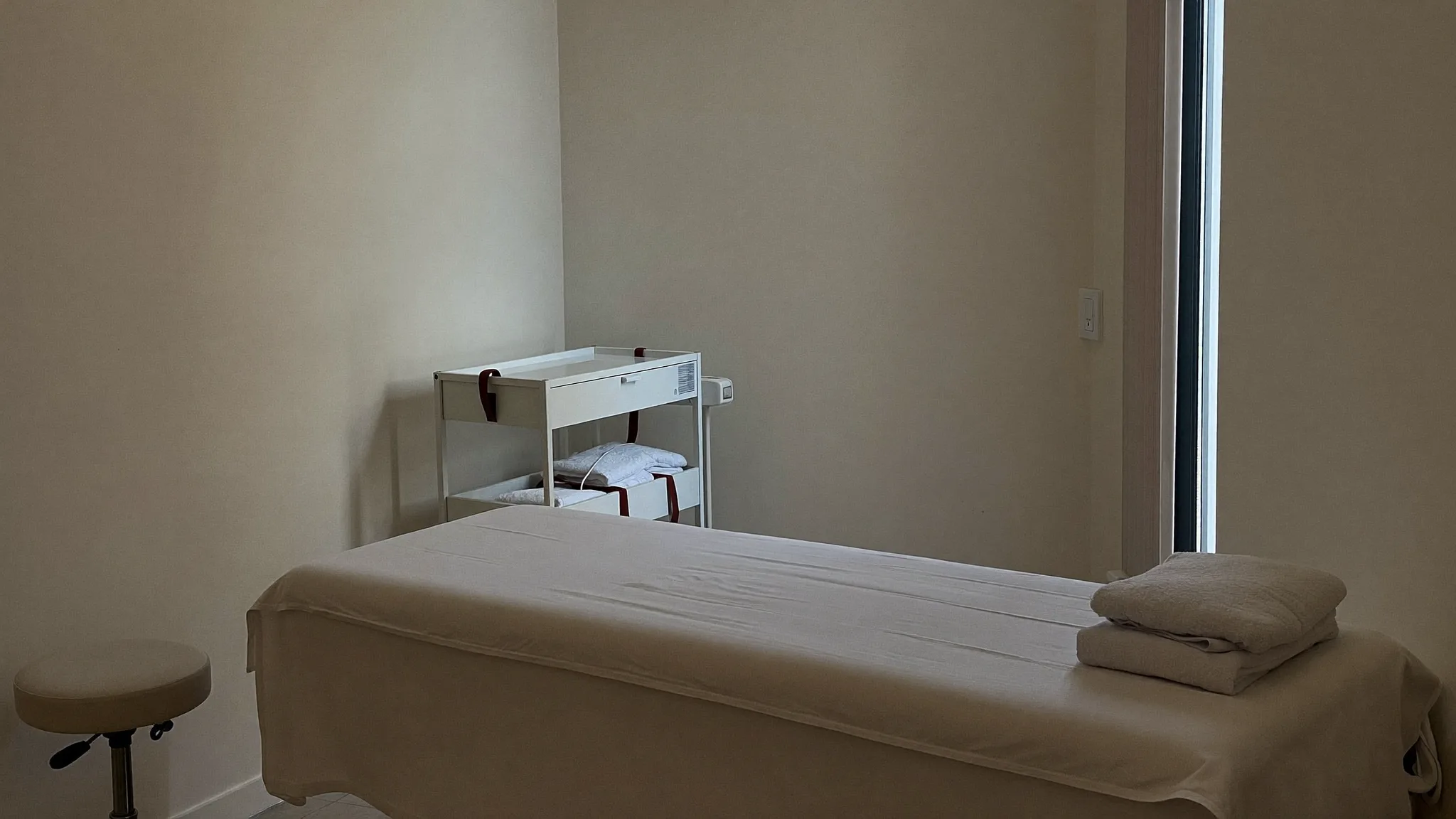
Preparing for your session
| Before your visit | Why it helps |
|---|---|
| Drink plenty of water in the 24 hours before | The clinic page recommends hydration, and it helps you feel comfortable |
| Wear loose, easy clothing | Applicators sit on belts around the treatment area |
| Remove metal jewellery, watches and electronics near the area | Metal and electronics can interfere or heat |
| Avoid a heavy meal right before | You will be lying or sitting for about half an hour |
| Tell your provider about medications, implants and health changes | It affects whether and how treatment goes ahead |

Aftercare, and what to do between sessions
The clinic page says there is no downtime and you can return to work and normal activities right away. Its aftercare suggestions are simple: keep drinking water, favour a protein rich meal to support muscle repair, keep moving gently with walking or stretching, and avoid intense targeted workouts on the treated area for 24 to 48 hours.
| When | What the clinic page suggests |
|---|---|
| Same day | Hydrate, eat a protein rich meal, stay lightly active |
| Next 24 to 48 hours | Skip intense, targeted workouts for the treated muscles |
| Following days | Mild soreness similar to a workout is considered normal and usually fades within a few days |
| Across the series | Keep a regular schedule, with sessions about 48 to 72 hours apart |
If you have not trained a muscle group for a while, I would expect it to feel the sessions more, in the same way the first week back at the gym tends to hurt. That is my own expectation from how muscle soreness works, not a figure from the clinic.
Risks, side effects and warning signs
EMS has a good safety record in supervised use, but it is not risk free. The FDA lists shocks, burns, bruising, skin irritation and pain as possible problems, and says some injuries have needed hospital treatment. Medical News Today names tissue burns and skin irritation as the most common risks. Those mostly relate to poor electrode contact, unsuitable devices or incorrect use, which is part of why screening and trained operators matter.
| What you notice | Usually considered | What to do |
|---|---|---|
| Mild muscle soreness for a few days | Expected, similar to a workout | Rest, hydrate, move gently |
| Tingling or twitching during the session | Expected with stimulation | Tell your provider if it is uncomfortable |
| Slight redness where applicators sat | May occur with skin contact | Mention it, and watch that it settles |
| Blistering, burning or marked skin damage | Not expected | Contact the clinic promptly and seek medical care |
| Chest pain, palpitations or fainting | Not expected | Stop, call emergency services |
| Severe, worsening or one sided calf pain or swelling | Not expected, can be a clot warning | Seek urgent medical care |
| Dark or cola coloured urine with severe soreness | Not expected | Seek urgent medical care |
The last two rows are me being cautious rather than quoting the clinic. Any treatment that makes muscles work hard can in rare cases strain the body, and severe unusual symptoms deserve medical attention rather than a wait and see approach.
What results to expect, and how long they take
The clinic recommends 6 or more sessions, twice a week, spaced 48 to 72 hours apart, and says results build cumulatively. That puts a basic series at about three weeks if you keep to the schedule, and I would expect most people to want to ask what happens after the series ends.
What I would not promise
No one can promise a particular change in size, definition or strength. Muscle response depends on your starting point, training history, protein intake, sleep, age and genetics, and the way you respond to stimulation can differ from the way your friend does. The clinic page says individual results vary, and I agree with that. I also think it is fair to ask any provider how they measure progress, for example with photos taken the same way each time, tape measurements or training numbers, so that you are not relying on how you feel in the mirror on a given day.
What happens when you stop
Muscle you have conditioned generally needs continued use to stay conditioned, the same as with exercise. Ask the team whether they suggest maintenance sessions, how often, and what the plan would look like if you do not continue. That is an ordinary question, and it is not a sign you are doubting the treatment.
What affects the cost
We do not publish prices in this article, because a number printed online can easily be out of date or not apply to your plan. Cost depends on several things.
| Factor | Why it matters |
|---|---|
| Number of sessions | The clinic recommends a series of 6 or more |
| Number of zones treated | The device can treat two zones at once, which may affect planning |
| Whether you add other treatments | Combined plans change the total |
| Maintenance after the first series | Ongoing sessions add to the long term cost |
| Packages or financing | Ask about options, and read the terms carefully |
Our finance page describes financing options, and the team can walk you through a written plan after an assessment. I would also ask whether the consultation itself is charged, since I have not seen that stated and I do not want to assume.
Combining EMS with other treatments
Some people want more than one change at once, such as firmer muscle and firmer skin, or a leaner midsection and clearer definition. These are different goals and different tools, so a combined plan is a conversation rather than a recipe.
EMS with body sculpting or laser lipo
Fat reduction treatments like those on our body sculpting page aim to reduce fat in a treated area. EMS aims to condition muscle. A person might consider both in sequence if they want less fat and more tone, but that depends on the individual and the order is worth discussing. Our post on how long body sculpting results last explains why lifestyle matters for any of these.
EMS with skin tightening
If loose skin is the issue, radiofrequency based skin tightening is the type of approach people usually ask about. You can read more in our posts on skin tightening aftercare and IPL versus RF skin tightening. For people who have lost a lot of weight, our guide to body sculpting after Ozempic covers how skin, fat and muscle each play a part.
EMS with training and nutrition
This is the combination with the strongest backing. Resistance training, enough protein and recovery build muscle. EMS may add stimulation on top of that, and our own page says as much. If you are not training at all, the best next step might be starting a basic routine, which is a plain and slightly unglamorous answer, but I think it is a true one.
Common misconceptions about EMS
EMS replaces the gym
It does not, and the clinic page says it complements a workout. Standalone claims that 20 minutes of EMS equals hours of exercise are marketing, not established science.
EMS burns belly fat
The FDA says no EMS device has been cleared for weight loss or girth reduction. Muscle toning and fat loss are separate outcomes.
Stronger current always means better results
Not necessarily. Comfort, correct placement and the right settings matter, and pushing intensity beyond what is comfortable can raise the chance of irritation or soreness without clear extra benefit.
It is only for people who do not exercise
People who train regularly are among those the clinic describes as a fit, usually as an add on. People who do not exercise at all can try it, but they should still expect to need regular movement and protein for muscle to respond.
Because it is licensed, it is right for everyone
A licence for a system says the device was authorized for sale in Canada. It does not say whether it is appropriate for your health history. That is what screening is for.
When a physiotherapist or doctor is the right next step
EMS in a clinic for toning is not rehabilitation. If you have weakness after an injury or surgery, ongoing pain, numbness, trouble with balance or any neurological symptoms, please see your doctor or a registered physiotherapist before booking a cosmetic muscle treatment. The same applies if you have a heart condition, high blood pressure that is not well controlled, epilepsy, an implanted device or a history of clots. The consultation team will usually ask about these anyway, and a referral back to your doctor is not a failed consultation. It is a sensible outcome.
Questions to ask at an EMS consultation
| Topic | A useful question |
|---|---|
| Fit | Based on my goals and health history, is EMS suitable for me? |
| Safety | Is there anything in my medications, implants or history that changes the plan? |
| Settings | How are intensity and settings chosen and adjusted for me? |
| Series | How many sessions do you suggest for my goals, and what happens if I miss one? |
| Measuring progress | How will we track progress, and when do we decide whether to continue? |
| Maintenance | What do you suggest after the first series, and what does that cost? |
| Alternatives | Would another option suit my goals better, including training alone? |
| Cost | What does the full written plan cost, and what do financing options look like? |
| Sources | Can you show me the device licence details and the manufacturer information? |
Deciding whether to book a consultation
If you already train, like the idea of a hands free addition and understand it will not melt fat, a conversation about EMS may be worth having. If your main goals are weight loss, firmer skin or a medical concern, other routes will probably serve you better, and a good consultation will tell you that. Either way you are not committed to anything by asking. Our team page introduces the people you may meet, and the body FAQ answers general questions about body treatments.
Frequently asked questions
What is electro muscle stimulation?
Electro muscle stimulation uses electrical pulses delivered through the skin to make a muscle contract. The signal imitates the one your nervous system normally sends. It is used in physiotherapy for rehabilitation, in athletic training as an add on, and in some clinics for muscle toning and conditioning alongside exercise.
Does electro muscle stimulation work?
It can, depending on the goal. Medical News Today says EMS may help strengthen or retrain muscles after surgery or injury, while also noting that research results are mixed. For toning in healthy adults the evidence is less settled, so results vary and it works best next to regular exercise.
Is EMS the same as TENS?
No. EMS aims to make muscles contract, while TENS targets sensory nerves to reduce the sensation of pain. Both place electrodes on the skin and both use mild electrical current, which is why they get confused, but they are used for different purposes and at different settings.
Can EMS burn belly fat?
There is no good evidence that it does. The FDA states that no EMS devices have been cleared for weight loss, girth reduction or for obtaining rock hard abs. EMS may tone a muscle, but fat reduction depends on diet, exercise and, for some people, other treatments.
Can EMS replace working out?
No. EMS activates muscle but does not train your heart, lungs, balance or coordination the way exercise does. Our clinic page describes it as a complement to a workout, and a protein rich diet is still recommended to support muscle toning results.
How long is an EMS session at Rejuvenation Med Clinic?
Our service page says each session takes about 30 minutes. Four wireless applicators are secured to velcro belts, so the treatment is hands free and you relax while it runs. Your first appointment may be longer because of the health history review and consultation.
How many EMS sessions will I need?
The clinic recommends a series of 6 or more treatments, scheduled twice a week and 48 to 72 hours apart. Results build over the series. The right number for you depends on your goals and starting point, so ask for a written plan at your consultation.
Is there downtime after EMS?
Our service page says there is no downtime and you can return to work and normal activities right away. Mild muscle soreness similar to a workout is considered normal and usually fades within a few days. Avoid intense targeted workouts on the treated area for 24 to 48 hours.
Does EMS hurt?
It is usually described as tingling with strong muscle contractions rather than sharp pain, and the intensity builds gradually. Healthline describes pins and needles with a twitching muscle. Comfort differs between people, so tell your provider if it feels too strong, because settings can be adjusted.
Is EMS approved by Health Canada?
Our page states that the Venus Bliss MAX system, which includes the FlexMAX EMS applicators, holds a Health Canada medical device licence. The manufacturer’s announcement says the same for the system. A device licence is not the same as suitability for you, and you can ask the team for licence details.
Who should not have EMS?
Our service page lists pacemakers and other implanted electronic devices, metal implants in the area, pregnancy, epilepsy, active cancer, clotting disorders, untreated heart disease, open wounds or infection, a nearby hernia and surgery in the area within 3 months. Ask your doctor first if you are unsure.
Which muscles can be treated?
The service page lists seven muscle groups: biceps, triceps, abdomen, obliques, glutes, hamstrings and quadriceps. Two zones can be treated together in one session. Which areas make sense for you depends on your goals and a conversation with the team.
What are the side effects of EMS?
Common effects are mild muscle soreness and tingling. The FDA lists shocks, burns, bruising, skin irritation and pain as possible risks of muscle stimulators generally, and Medical News Today names burns and irritation as the most common. Contact the clinic promptly if you notice skin damage or unusual symptoms.
How should I prepare for an EMS appointment?
Drink plenty of water in the 24 hours before, wear loose comfortable clothing, remove metal jewellery, watches and electronics near the treatment area, and avoid a heavy meal right before. Tell your provider about medications, implants and any health changes since you booked.
Is EMS better than magnetic muscle stimulation?
Neither is clearly better for everyone, and I am not aware of head to head evidence you can rely on. Our page says electrical stimulation delivers energy directly through electrodes, while magnetic devices use a field that spreads wider. Ask any provider why they chose their technology.
How much does EMS cost in Toronto?
Prices vary by clinic, number of sessions, zones treated and any packages, so we have not printed a figure here. Request a consultation for a written plan, and ask about financing and maintenance costs. Our finance page describes financing options at the clinic.
Are the results permanent?
No one should promise that. Conditioned muscle generally needs ongoing use to stay conditioned, just as with exercise. Ask your provider whether they suggest maintenance sessions, how often, and what happens to results if you stop, so you can plan with realistic expectations.
Do I need to exercise while having EMS?
The clinic says EMS is designed to work alongside your fitness routine, not instead of it. Regular movement, enough protein and rest support muscle response. If you do not exercise now, ask your provider what level of activity they suggest alongside the series.
Electro muscle stimulation sits beside our other body services, including body sculpting and skin tightening. If you would like a plain conversation about your goals and whether EMS makes sense for you, you can request a consultation or use our booking page. This article is general education and not medical advice or a diagnosis. A consultation does not commit you to anything, your plan can change after an individual assessment, and if no treatment or a different option suits you better, we will say so directly.