
Botox for Forehead Wrinkles in Toronto: What It Can Smooth, What It Cannot, and What to Ask First

Botox for forehead wrinkles is a small injection of botulinum toxin type A into the frontalis, the broad muscle that lifts your eyebrows and creates the horizontal lines across your forehead. It relaxes that muscle for a few months, so the lines soften and are less likely to deepen. It works best on lines that show when you move your face, and it will not erase creases that are there even when your face is still.
That is the short version, and honestly the longer version is where the useful decisions live. Forehead lines look like a simple problem, yet the forehead is one of the trickier places to treat well, because the same muscle that makes the lines also holds your brows up. Treat it too heavily and the brows can feel low or flat. Treat it too lightly and the lines hardly change. Most of what makes a result look natural is balance, and I think that gets lost in a lot of online advice.
This guide is general education for adults in Toronto who are curious about it. At Rejuvenation Med Clinic, our Botox forehead wrinkles page describes the treatment, and our broader Botox services in Toronto page lists the other areas we treat. Nothing below is a diagnosis or a promise about your skin. Forehead lines are a normal part of having an expressive face, and leaving them exactly as they are is a perfectly good choice.
Related Service: Botox Forehead Wrinkles at Rejuvenation Med Clinic
What Botox does for forehead wrinkles
Botox is a brand name for onabotulinumtoxinA, one of several botulinum toxin type A products used in cosmetic medicine. A very small amount placed in a muscle blocks the nerve signal that tells it to contract, so the muscle moves less for a while. Our own page explains that Botox blocks nerve signals at the injection site, which prevents the contractions that fold the skin into lines.
The muscle behind the lines
The frontalis is a thin, flat muscle that sits across the forehead and attaches into the scalp tissue above. When it contracts, your eyebrows rise and the skin above them bunches into horizontal ridges. That is the movement you make when you look surprised, when you try to keep your eyes wide on a tired afternoon, or when you lift your brows to read small print. Exactly how much to relax, and where, is a judgement for the injector who watches your face move in person, and I am deliberately not listing doses or injection points here because a blog should not hand those out.
Dynamic lines and static lines
A dynamic line appears only when the muscle moves. A static line stays visible when your face is at rest, usually because the skin has been folded in the same place for years and has lost some of its ability to bounce back. Botox is most useful for dynamic lines. A Mayo Clinic Health System article makes the same point in its title, asking whether Botox is the fix for all facial wrinkles, and the answer it gives is that it suits some wrinkles and not others.
| Type of forehead line | What you may notice | How Botox usually fits |
|---|---|---|
| Dynamic line | Appears when you raise your brows, disappears when your face relaxes | Often the best match for Botox |
| Early static line | A faint crease that stays at rest but is shallow | May soften with regular treatment over time |
| Deep static line | A crease that stays visible with a relaxed face | Botox alone may only partly improve it, other options are often discussed |
| Skin texture or sun damage | Fine crinkling, uneven tone, rough surface | Not a muscle problem, so resurfacing or skin treatments are usually the conversation |
Why forehead lines form in the first place
People often assume forehead lines mean something is wrong. They do not. They are the skin’s record of expression, and they usually deepen gradually with age, sun exposure and habit.
Expression and habit
Some of us raise our brows constantly when we talk, concentrate or listen. Others do it to compensate for heavy upper eyelids, because lifting the brows opens the eyes a little. If that describes you, relaxing the frontalis can make the brows feel lower than you expected, and that is a point worth raising before any treatment.
Changes in the skin
Collagen and elastin thin as we age, and sun exposure speeds that up. The skin becomes less able to spring back, so a line that once vanished at rest begins to linger. Nothing about this is a defect. It is ordinary skin doing what skin does, which is why I would rather talk about options than about fixing anything.
The upper face works as a group
The forehead muscle opposes the muscles between the brows, the ones that create the vertical frown lines. When the brow-lowering muscles are strong, the frontalis often works harder to counter them. This is why forehead lines are rarely planned in isolation, and we come back to it below. Our guides to getting rid of frown lines and 11 lines Botox in Toronto cover the area between the brows in more detail.
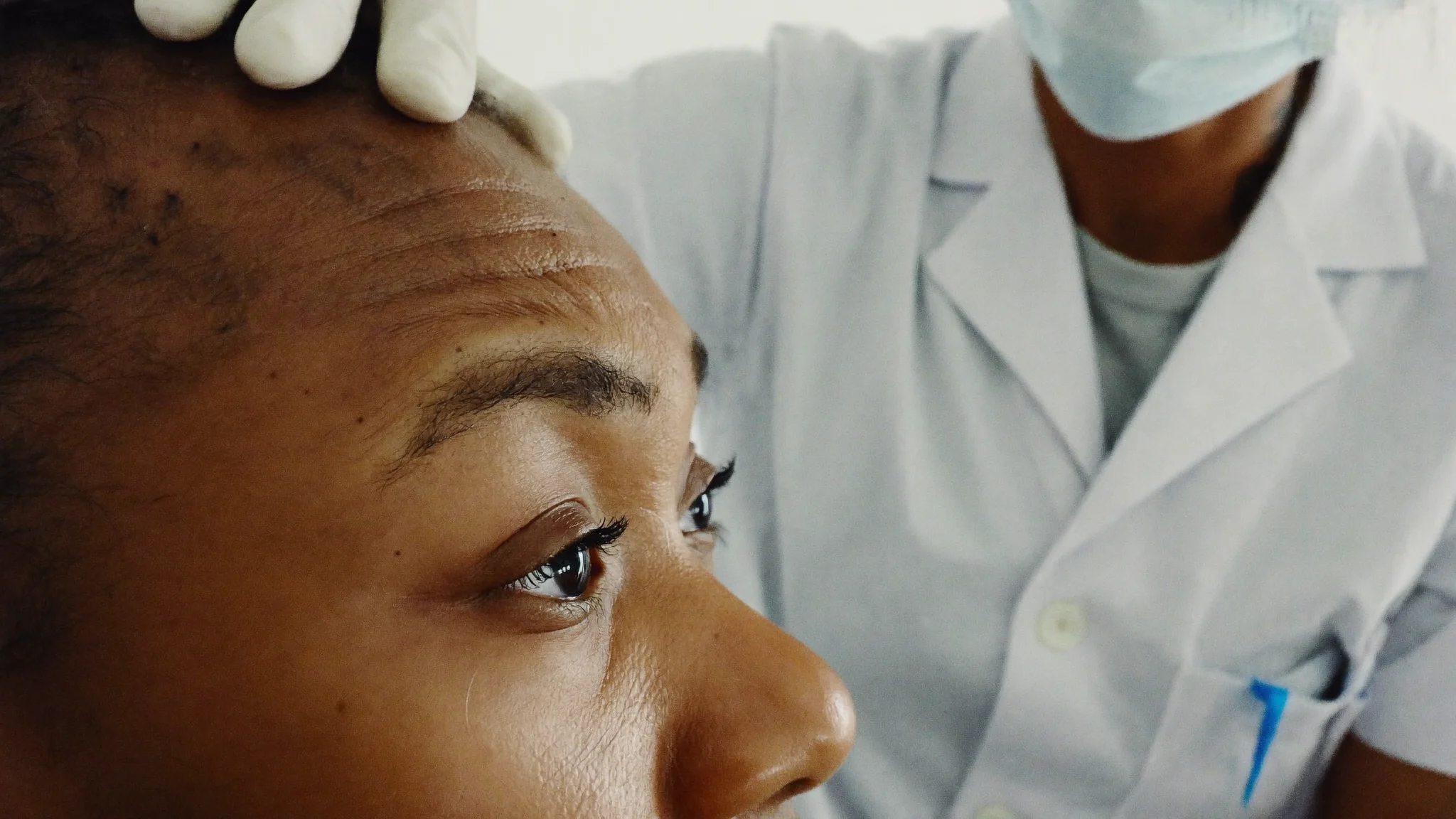
What Botox can and cannot do for the forehead
What it may do
Soften horizontal lines that come from muscle movement, reduce how deeply new lines are etched over time, and give the forehead a smoother, calmer look in photos and in the mirror. Our page notes that regular treatment may help prevent deeper lines from forming. Results vary, and a softer line is not the same as a gone line.
What it will not do
It does not fill a crease, tighten loose skin, lift a heavy brow, change skin texture or treat sun damage. It also does not stop the ageing process. Once it wears off, muscle movement gradually returns.
The trade-off that gets mentioned too rarely
Because the frontalis lifts the brows, any weakening can lower them slightly. For many people that is subtle and barely noticeable. For someone with naturally low brows or hooded upper lids, it can make the eyes feel heavier. A careful provider checks your brow position, upper eyelid and the way you animate before deciding how much movement to leave. I would argue that a bit of movement left in the forehead is almost always better than a perfectly smooth one that feels strange.
| Goal | Is Botox usually the main answer? | Notes |
|---|---|---|
| Soften lines that appear when you raise your brows | Often yes | The most common reason people ask |
| Smooth a crease that stays at rest | Sometimes partly | May need support from other treatments |
| Lift a low or heavy brow | No, and it can worsen it | A lifting discussion is a different conversation |
| Improve rough or sun-damaged skin | No | Skin treatments address texture and tone |
| Prevent future lines | It may slow deepening | Not a guarantee and not a reason to start before you want to |
Is Botox for forehead lines approved by Health Canada?
This is one of the easier regulatory questions in cosmetic injectables, and it is worth getting right. The Health Canada product monograph for Botox Cosmetic lists the treatment of upper facial rhytides, including forehead, lateral canthus and glabellar lines. So the forehead is one of the labelled cosmetic areas, which is different from some other places people ask about, such as the chin or the jaw.
What the labelling does and does not tell you
The monograph says Health Canada has not authorized an indication for patients under 18. It lists hypersensitivity to any botulinum toxin type A or ingredient, and infection at the proposed injection site, as contraindications. It says Botox Cosmetic should not be used during pregnancy, and that caution is advised while nursing because it is not known whether the drug passes into breast milk. Being authorized for an area does not tell you whether it is right for you personally. That depends on your health, medications, brow position and goals, and it is a decision for a qualified clinician after an assessment.
Questions that are fair to ask
Which product will be used, who will inject it, and who supervises. What the plan is if your brows feel lower than expected. What the review process looks like. Our Botox page says treatments are given by a skilled professional under a physician’s supervision, and it is reasonable to ask the clinic to explain that in person.
Forehead, frown lines and crow’s feet are often planned together
Here is something that surprises people. Treating the forehead alone can sometimes backfire. The frown muscles pull the brows down and the forehead muscle pulls them up, and if you weaken one side without considering the other, the balance shifts.
Why the upper face is a unit
When the muscles between the brows are strong, the frontalis may be overworking to hold the brows up. Relax the forehead only, and the brows can sag a little. Many providers therefore look at the glabella, the brow tails and the eye area at the same visit. Our Botox frown lines page, our crow’s feet page and the article on crow’s feet Botox in Toronto describe those neighbouring areas.
Treating one area is still a valid choice
Planning them together does not mean you must treat them together. Some people only want the forehead softened, and that can be a reasonable plan when the muscles are in balance. The point is to have the conversation first rather than discovering the trade-off afterwards.
| Area | What it affects | Why it comes up with the forehead |
|---|---|---|
| Forehead (frontalis) | Horizontal lines, brow lift | The area in question |
| Between the brows (glabella) | Vertical frown lines, brow lowering | Opposes the forehead muscle, so balance matters |
| Around the eyes | Crow’s feet, outer brow shape | Can affect the outer brow position |
| Bridge of the nose | Bunny lines | Sometimes treated at the same visit |
How the appointment usually goes
The assessment
Expect questions about your health, medications, supplements, previous injections and what bothers you about your forehead. The provider will look at your face at rest and while you raise, frown and squint. A good assessment also checks your brow height and upper lids, which is the information that guards against a heavy feeling later.
The injections
Our Botox frown lines page describes a session of about 10 to 20 minutes, with a fine needle that causes a slight pinch and topical numbing cream available if wanted. The forehead appointment will be similar in rhythm, though your own plan sets the details. I am not going to describe technique, because that is for the injector to decide.
Right afterwards
You may see small bumps that settle quickly and a little redness. Our forehead page says to avoid intense exercise and rubbing the injection sites for 24 hours. Most people go straight back to their day, which our Botox page describes as minimal recovery time.
The review visit
Because the full effect takes about two weeks, a review around then is useful. If one brow sits differently or you want a touch more movement removed, that is the moment to discuss it. Ask the clinic what its review and adjustment policy is before your first treatment.

Timeline and how long forehead Botox lasts
Our forehead page says results typically last between three and six months depending on muscle activity and metabolism, and our main Botox page says three to four months on average. Those are the clinic’s descriptions, and the monograph states the effect is generally temporary and may last several months. Your own timeline will differ.
| When | What people commonly notice | Notes |
|---|---|---|
| First few days | Small bumps and redness fade, lines may look the same | Our pages describe early change at around 3 to 5 days |
| About 1 week | Lines start to soften as movement reduces | Varies from person to person |
| About 2 weeks | Full effect usually visible | A good time for a review |
| Months 2 to 3 | The effect is established | Movement returns gradually |
| Months 3 to 6 | Movement returns, lines reappear | Timing depends on the person and plan |
Some providers suggest that, with regular treatment, muscle activity may reduce over time and results can seem to last a little longer. That is common clinical experience and not a promise, so I would treat it as something to ask about rather than expect.
Risks, side effects and warning signs
Common and usually temporary
The monograph’s forehead line trial reported headache as the most common effect, followed by eyelid swelling, bruising and an aching or itchy forehead. Mild redness, small bumps and tenderness at the injection spots are also usual. Our pages mention slight bruising, redness or swelling that settles within a few days.
Brow and eyelid changes
The monograph notes that injecting well above the brow reduces the risk of eyelid ptosis, which is a drooping eyelid. A heavy-feeling brow, a slightly uneven brow, or a raised outer brow shape can also occur depending on how the muscles are weakened. These effects wear off as the product fades, but they can be annoying for weeks, which is one reason a careful assessment matters.
Rare but serious
The monograph carries a boxed warning that the effects of botulinum toxin products may spread from the area of injection. Trouble swallowing or breathing can be serious and symptoms can appear hours to weeks after treatment. Seek emergency care right away for those.
Who should wait or talk to a doctor first
Anyone who is pregnant or breastfeeding, has an infection at the site, has a known allergy to botulinum toxin products, or has a neuromuscular condition. Tell your provider about every medication, including anything that affects bleeding.
| What you notice | Often normal | Contact a provider or doctor |
|---|---|---|
| Redness, small bumps | Yes, usually settles within hours to a few days | If it worsens or spreads |
| Bruising | Can happen | If it is large, painful or expanding |
| Headache | Reported in the monograph’s forehead trial | If severe, or it does not settle |
| Brow feels heavy | Possible while the effect peaks | If it is bothering you, call your provider |
| Drooping eyelid or uneven brow | Not something to ignore | Contact your provider promptly |
| Trouble swallowing, speaking or breathing | No | Emergency care immediately |
Preparation and aftercare
Before your visit
Come with a clean face and a short list of what bothers you. Our pages suggest avoiding blood thinners and alcohol for 24 to 48 hours before treatment to lower the chance of bruising, but never stop a prescribed medicine without asking the doctor who prescribed it. Mention supplements too, since some, like fish oil or vitamin E, are often asked about. If you have an event coming up, book a couple of weeks ahead so the result has time to settle and any small adjustment can happen before the day.
After your visit
Avoid touching or rubbing the area and skip intense exercise for 24 hours, in line with our forehead page. Cleansing gently is fine. A cool compress can help with tenderness. Keep moving your face normally, since I have never seen a good reason to make exaggerated expressions, and follow whatever extra advice your provider gives you.
| Stage | Common advice | Why it comes up |
|---|---|---|
| Days before | Tell your provider about medications and supplements | Some affect bruising |
| 24 to 48 hours before | Avoid alcohol and blood thinners unless your doctor says otherwise | May reduce bruising |
| Day of | Arrive with a clean face and your questions written down | Makes the assessment faster |
| First 24 hours | No rubbing the area, no intense exercise | Our forehead page gives this guidance |
| About 2 weeks | Attend a review if offered | Full effect is usually visible by then |
Forehead Botox compared with other options
Botox is one tool among several, and the right choice depends on what you are actually seeing in the mirror.
Dermal filler
Filler adds volume to a crease and can help a deep static line that Botox alone would not reach. Our page on dermal fillers in Toronto lists the lips, cheeks and the areas around the mouth and eyes, and does not list the forehead, so if you are curious about it for a forehead line, ask the clinic directly whether it is offered and whether it suits you. The forehead has a more delicate blood supply than many other areas, which is a reason to ask about the provider’s experience.
Microneedling and peels
These improve texture and fine crinkling rather than muscle movement. Our microneedling page and medical-grade peel page describe those treatments, and the article on chemical peel versus microneedling may help you compare them.
Radiofrequency microneedling and skin tightening
Treatments such as Morpheus8 and our skin tightening services work on skin quality and firmness. They will not relax a muscle, but they may be part of a plan when texture and laxity are part of the picture.
Facials and skincare
Facials, sunscreen and a well-chosen routine support skin health, and our facial page and the guide to HydraFacial in Toronto explain the options. They will not change how a muscle moves, though many people pair them with injectables.
Brow or eyelid surgery
If the real issue is excess upper lid skin or a low brow position, a surgeon may be the right person to consult. A non-surgical plan is not always the better plan, and a good provider will tell you so. Our non-surgical facelift page covers what injectables and devices can and cannot reach.
| Option | What it mainly addresses | Limitations to keep in mind |
|---|---|---|
| Botox | Muscle-driven lines | Temporary, does not treat texture or lift a heavy brow |
| Dermal filler | Volume loss and deeper creases | Not listed for the forehead on our filler page, ask first |
| Microneedling or peels | Texture and fine crinkling | Does not relax muscle movement |
| Radiofrequency or tightening | Skin firmness and quality | Not a muscle treatment |
| Surgery | Excess skin or low brow position | A surgical decision with its own risks and recovery |
| Doing nothing | Nothing, and that is fine | Lines are a normal part of expression |
Botox, Dysport and other neuromodulators
Botox is not the only product in this family. Dysport is another botulinum toxin type A, and providers sometimes choose between them based on experience, spread and personal preference. If you are weighing them up, our guide to Dysport versus Botox goes into the differences and our Dysport page describes the service. Units for one product are not interchangeable with units for another, which is why a number you read online for one brand means little for another. Whether a specific product is authorized in Canada for a specific area should be checked in Health Canada’s Drug Product Database.
Cost factors in Toronto
Our forehead page gives a range of $300 to $800 per treatment session for forehead wrinkles, and our main Botox page says Botox typically costs between $10 and $20 per unit in Toronto. Those figures come from our pages at the time of writing and can change, so confirm them when you book. For a wider look, our guide on how much Botox costs in Toronto breaks the topic down.
| Factor | How it can affect the total |
|---|---|
| Amount of product needed | Larger or stronger foreheads may need more |
| Areas treated together | Adding frown lines or crow’s feet raises the total |
| Product chosen | Different products are priced differently |
| Frequency | Repeat visits every few months keep the effect going |
| Review or touch-up policy | Ask whether an adjustment is included |
| Payment options | See our financing page for details and eligibility |
Who may be a good candidate, and who may not
An adult with dynamic forehead lines, realistic expectations and no reason to avoid the treatment may be a candidate. Someone with very low brows, heavy upper lids that they already compensate for, a neuromuscular condition, an active skin infection, or who is pregnant or breastfeeding may need a different plan or a conversation with their doctor first. The guide to medical uses of Botox and our article on Botox for migraines show where botulinum toxin sits outside purely cosmetic use, which is a different regulatory conversation.
A 2014 review in American Family Physician on botulinum toxin injection for facial wrinkles notes that horizontal forehead lines are commonly treated alongside the other upper face areas. It is a general clinical review, not specific to any one clinic, and practice has moved on since 2014, so treat it as background reading.
Questions to ask at a consultation
| Question | Why it helps |
|---|---|
| Are my lines dynamic or static? | Sets realistic expectations |
| How will my brow position and upper eyelids be affected? | Helps avoid a heavy feeling |
| Should the frown or eye area be considered too? | The upper face works as a unit |
| Which product will be used, and who supervises? | Clarifies accountability |
| What is the review and adjustment plan? | Prepares you for small tweaks |
| What are the current costs and payment options? | Prices and policies can change |
| What should I do if something feels wrong? | Gives you a clear next step |
When to seek medical care
Call emergency services or go to an emergency department for trouble swallowing, speaking or breathing, or for severe weakness. Get prompt medical care for spreading redness, heat, pus or fever. Contact your provider if one brow looks very different, an eyelid droops, your vision changes, or anything feels wrong to you.
Frequently asked questions
What is Botox for forehead wrinkles?
Botox for forehead wrinkles is a small injection of botulinum toxin type A into the frontalis muscle. It relaxes the muscle so the horizontal lines soften. It is temporary, and it works best on lines caused by movement rather than creases that stay at rest.
Does Botox work on deep forehead wrinkles?
It can soften them, but deep lines that stay visible at rest often improve only partly. Botox relaxes muscle, and it does not fill a crease or restore skin quality. Many providers discuss combining it with other treatments for deeper static lines.
How long does Botox last on the forehead?
Our forehead page says results typically last three to six months, and our main Botox page says three to four months on average. Duration depends on muscle strength, metabolism and the plan. The effect is temporary, so movement gradually returns and repeat treatment is needed.
How long does forehead Botox take to work?
Our pages say results begin within 3 to 5 days and reach full effect at around two weeks. Small bumps and redness settle sooner. A review at about two weeks lets your provider see the full result and discuss any adjustment.
Is forehead Botox approved by Health Canada?
Yes for the labelled area. The Health Canada monograph for Botox Cosmetic lists upper facial rhytides, including forehead, lateral canthus and glabellar lines. It is not authorized for patients under 18. Whether it suits you is a clinical decision made at an assessment.
Can Botox make my eyebrows look low?
It can. The forehead muscle lifts the brows, so weakening it may lower them slightly, especially if your brows are already low or your upper lids are heavy. A careful assessment and a lighter approach can reduce the chance of this.
What is the difference between forehead lines and frown lines?
Forehead lines run horizontally across the forehead when you raise your brows. Frown lines, sometimes called 11 lines, run vertically between the brows when you frown. They involve opposing muscles, so providers often consider them together.
How much does forehead Botox cost in Toronto?
Our forehead page gives a range of $300 to $800 per treatment session, and our main Botox page says $10 to $20 per unit. Your total depends on the amount needed and areas treated. Confirm current pricing when you book, since it can change.
Does forehead Botox hurt?
Most people describe a slight pinch from a fine needle. Our pages say topical numbing cream can be applied if wanted. Discomfort varies, so tell your provider if you are anxious about needles or have had a strong reaction before.
What are the side effects of forehead Botox?
Common effects are redness, small bumps, bruising, headache and a tight or itchy forehead feeling, which usually settle in days. Brow heaviness or an uneven brow can happen. Rare but serious effects include spread of toxin symptoms, which need urgent care.
Can I get Botox on my forehead while pregnant or breastfeeding?
The Health Canada monograph says Botox Cosmetic should not be used during pregnancy and advises caution while nursing. Our Botox page also asks pregnant or breastfeeding clients to wait. Talk to your doctor and your provider about timing.
What should I avoid after forehead Botox?
Our forehead page says to avoid intense exercise and rubbing the injection sites for 24 hours. Before treatment, our pages suggest avoiding blood thinners and alcohol for 24 to 48 hours. Follow your provider’s advice and never stop a prescribed medicine without asking your doctor.
Can Botox prevent forehead wrinkles?
It may slow how deeply lines are etched by reducing the folding that creates them, but that is not guaranteed. There is no single right age to start. Starting is a personal choice, and not treating at all is also reasonable.
Is Botox or filler better for forehead lines?
They do different jobs. Botox relaxes the muscle that creates movement lines, while filler adds volume to a crease. Our filler page does not list the forehead, so ask the clinic directly whether filler is offered there and whether it suits you.
Can Botox be reversed if I do not like it?
There is no quick antidote. The effect wears off over a few months as muscle activity returns. If your brow feels heavy or uneven, contact your provider, who can explain what to expect and whether anything can be done.
How often do I need forehead Botox?
Our forehead page says treatments are usually spaced every three to six months to maintain results. Your own schedule depends on how quickly movement returns and what you prefer. Some people choose to let it wear off completely between visits.
Should I treat my forehead and frown lines together?
Often it is worth discussing, because the muscles oppose each other and treating only one can shift the balance. It is still your choice. A provider can explain the likely trade-offs of treating the forehead alone.
When should I see a doctor after forehead Botox?
Seek emergency care for trouble swallowing, speaking or breathing. Get prompt care for spreading redness, heat, pus or fever. Contact your provider if an eyelid droops, a brow looks very uneven, your vision changes or anything feels wrong.
Talk it through before you decide
If you are thinking about softening your forehead lines, a consultation is a sensible place to start. You can discuss your goals, brow position, medical history, medications, skin and any previous treatments, and ask about candidacy, risks, alternatives, current pricing and financing. A consultation does not oblige you to go ahead, and your plan may change after an individual assessment. You can book a consultation online, read the injectable treatment FAQ, explore our cosmetic injections, or use our contact page if you have a question first. Rejuvenation Med Clinic is at 67 Portland St, Second Floor, Toronto.
This article is general education and not medical advice or a diagnosis. Individual results and suitability vary.