Jowls are the soft tissue that settles along the lower jaw and blurs the line between your face and neck. They usually come from a mix of skin that has lost some firmness, cheek and jaw volume that has shifted or thinned, and changes in the structure underneath. Treatment options range from daily skincare and energy-based skin tightening to dermal filler placed in the cheeks, temples or jawline, and for more pronounced sagging, surgery. Which one makes sense depends on how much of your jowl is volume, how much is loose skin, and what you want your face to look like.
That paragraph is the short version, and it hides a lot. Is this a filler problem or a tightening problem? Will Botox do anything? How do you know when non-surgical care has reached its limit and a surgeon’s opinion is the sensible next step? I think the honest answer to most of those is “it depends on your face,” which is not very satisfying on its own, so this guide tries to give you enough detail to have a useful conversation at a consultation.
At Rejuvenation Med Clinic in Toronto, there is no single “jowl treatment.” What we offer is a set of tools that address different parts of the problem, including dermal fillers, Morpheus8 radiofrequency microneedling, skin tightening and Botox, and part of a good consultation is working out which of them, if any, fits what you are actually seeing in the mirror. Some people leave with a plan that combines two or three. Some leave deciding to wait. Both are perfectly reasonable outcomes.
Related Service: Non-Surgical Facelift at Rejuvenation Med Clinic
What jowls are, and why they form
Jowls are the pocket of tissue that hangs just below the corners of the mouth, along the lower jawline. Some people have a small bump beside the chin, others have a fuller drop that spills over the jaw. Neither is a medical problem, and neither says anything about how healthy you are. They are one of the most common ways that faces change over time.
The layers involved
It helps to stop thinking of jowls as “loose skin” and think of the lower face as a stack of layers. A well-known anatomical review by Coleman and Grover describes facial ageing as the combined effect of gravity, progressive bone resorption, decreased tissue elasticity and redistribution of subcutaneous fullness, and it divides the face into thirds, with the chin, jawline and neck forming the lower third. In plain terms, several things happen more or less together.
The skin gets thinner and less elastic. Fat in the cheeks can thin or drift downward, so there is less support under the skin of the lower face. The bone of the jaw and the midface gradually changes shape, which alters the frame everything else sits on. And the ligaments that hold the soft tissue in place can loosen. None of this happens on a schedule, and no two faces do it the same way.
Jowls, double chin and neck bands are different things
People often group these together, partly because they sit near each other and partly because they tend to show up around the same time. They have different drivers, though, and that matters because the approach differs.
| Feature | Jowls | Double chin | Platysmal bands |
|---|---|---|---|
| Where you see it | Along the lower jaw, beside the chin | Under the chin | Vertical cords in the front of the neck |
| Common contributors | Volume shift, skin laxity, ligament and bone changes | Fat under the chin, skin laxity, genetics | Platysma muscle activity and skin laxity |
| Approaches often discussed | Support, tightening, sometimes muscle relaxing, sometimes surgery | Fat reduction options, tightening, sometimes surgery | Botox in selected people, sometimes tightening |
Genetics, weight and habits
Genetics probably carry the most weight, which is a slightly unsatisfying thing to say. If your parents developed fuller lower faces in their forties, you may have a similar pattern. Sun exposure, smoking and significant weight changes can also play a part, since they affect skin quality and facial fullness. Weight loss in particular can change how the face looks in ways people do not always expect: it may reduce fullness in some areas while making skin laxity more noticeable in others. There is no tidy rule, and I would be wary of anyone who offers one.
Some people notice early changes in their thirties or forties, and others not until much later. Starting earlier or later is not a sign that you did anything wrong.
Volume, laxity or both: the question that shapes the plan
If I had to pick one idea that makes this whole topic easier to follow, it would be this one. Jowls tend to come from two broad sources that overlap. One is lost or displaced volume, particularly in the cheeks and along the jaw, which removes support. The other is skin and soft tissue laxity, where the envelope itself has become looser. Most people have a bit of both, in different proportions.
A rough check in the mirror
You cannot diagnose this at home, but you can get a feel for it. Sit facing a mirror in good light and relax your face. Then lightly press the skin of your cheek upward and outward toward your ear with your fingertips. If the jowl softens a lot when you do that, the lower face may be responding to a lack of support, and restoring or repositioning volume might help. If the skin still looks loose and crepey with the same gentle lift, laxity is likely a bigger part of the picture. I would not read too much into any of this, but it can give you better words for your consultation.
What a clinician looks at
A proper assessment usually takes in the whole face rather than just the jaw. Your provider may look at your cheek volume and the shape of your temples, how your skin looks and feels, how your jawline sits in profile, how the neck and chin area behave, and how much of what you see changes when you smile or turn your head. For a dimpled or bunched chin that moves when you talk, our chin Botox guide explains a different, muscle-based option. They will also ask what bothers you most, since a person who dislikes the shadow beside the mouth may need a different plan from someone who mainly dislikes how the jawline looks in photographs.
| What you notice | Likely main driver | Approach often discussed |
|---|---|---|
| The jowl softens when you gently lift your cheek | Loss of support in the cheeks or along the jaw | Filler to restore support in selected areas |
| Skin looks loose or crepey even when lifted | Skin and soft tissue laxity | Energy-based tightening and skin quality treatments |
| Both of the above | A mix of lost support and laxity | A combined plan, sequenced by your provider |
| Mouth corners turn down and lines run beside the mouth | Muscle pull plus volume change | Possibly Botox and filler, see our marionette lines guide |
| Skin hangs over the jaw and barely changes when lifted | Significant descent and excess skin | A surgical consultation is worth considering |
Non-surgical options for jowls in Toronto
None of these options is a surgical facelift in disguise, and a decent provider will say so at the start. What they can do is soften the look of mild to moderate jowling, improve skin quality, and in some cases delay the point where surgery becomes the more sensible conversation. Here is how each tool works, with the limits included.
Hyaluronic acid filler: support rather than stuffing
This surprises people, but filler for jowls is often not placed in the jowl itself. Because jowls are partly a support problem, injectors commonly think about where volume has been lost higher up, such as the cheeks and temples, and along the jawline where definition has softened. Restoring structure in those areas can reduce the downward pull on the tissue below and make the jawline read more clearly. Our guide to cheek filler in Toronto covers the midface part of that story in more detail.
Our dermal fillers page describes the product category as hyaluronic acid based, and says results can last from months to years depending on the area, with an average of around 6 to 12 months in its FAQ. Health Canada’s consumer page on cosmetic injections says the effects of hyaluronic acid fillers can last from six months to a year or more. Individual duration varies, and your provider can tell you what is realistic for the areas they are proposing.
The limit is that filler adds support, it does not tighten skin. Too much product in the lower face can also look heavy or squared off. Subtle usually wins here.
Morpheus8 radiofrequency microneedling: for skin quality and mild laxity
Morpheus8 combines tiny microneedles with radiofrequency energy. Our Morpheus8 page describes the micro-punctures as triggering a collagen and elastin response, with heat delivered below the skin surface. The idea is gradual remodelling and firming rather than an instant change. If you want a sense of cost factors, our Morpheus8 cost guide goes through them.
How strong is the evidence? A 2026 systematic review of radiofrequency microneedling for facial rejuvenation, published in the Journal of Cosmetic Dermatology, synthesized 20 studies with 558 participants and reported improvements in skin texture and tightening, with mostly mild and temporary adverse events such as redness and swelling. That is encouraging, though it is worth saying clearly that these studies looked at facial rejuvenation in general, not jowls specifically, that many measured outcomes are subjective, and that a review like this cannot tell you what will happen on your jawline. Think of it as supportive rather than conclusive.
The limit is the one most clinicians are upfront about: if there is a lot of loose skin and descended tissue, energy-based treatments will not give a surgical result.
Radiofrequency skin tightening
Our skin tightening page and the Venus Legacy page describe non-invasive radiofrequency technology that heats tissue to encourage collagen and elastin production, with Venus Legacy combining multi-polar radiofrequency with pulsed electromagnetic fields. It is typically discussed as a series of sessions with little recovery time, and your provider decides the number and spacing based on your skin and goals. For a side-by-side look at the two approaches, our post on IPL versus RF skin tightening is a reasonable place to start.
Skin tightening tends to suit people whose main concern is mild softness or looseness of the skin rather than a clear loss of structure. As with everything in this section, the improvement is usually modest and gradual.
Botox, and where it fits
Botox does not lift jowls by itself, and I would be cautious of any promise that it does. What it can do in some people is relax muscles that pull the lower face downward. Small amounts are sometimes placed in the depressor anguli oris, the muscle that pulls the mouth corners down, to soften marionette lines and the pull toward the jowl, and in the platysma, the thin neck muscle that can contribute to a heavy-looking jawline. Both are commonly discussed as off-label uses, so it is a professional judgment call, and your provider should explain the reasoning and the risks.
We cover those two areas in separate guides: marionette lines Botox and platysmal bands Botox. If you are wondering whether jaw slimming is the same thing, it is not. Masseter Botox reduces the bulk of the chewing muscle, and in someone who already has soft, descending tissue it is generally not the first thing to reach for.
Skin quality treatments around the jawline
Skin that is dull, rough or finely lined can make laxity look worse. Medical-grade peels, microneedling and platelet-rich plasma are sometimes used to improve texture and tone. They do not reposition anything, and they will not change the shape of a jowl, but they can be a sensible supporting layer in a plan.
What does not have much behind it
Facial exercises, rollers and creams that promise to “melt” jowls come up constantly. The evidence for facial exercises is mixed at best, and I have not seen convincing evidence that a topical product can lift sagging tissue. Sunscreen and a sensible routine protect the collagen you have, which is worth doing, but they are maintenance rather than correction.
| Option | What it mainly addresses | What to expect | Main limits |
|---|---|---|---|
| Hyaluronic acid filler | Support and jawline definition | Visible change at the visit, with swelling settling over days. Temporary. | Does not tighten skin. Too much can look heavy. |
| Morpheus8 (RF microneedling) | Skin quality and mild laxity | Gradual change as collagen responds. Our page describes minimal recovery. | Not a substitute for a surgical lift. |
| Radiofrequency skin tightening | Mild skin looseness | Usually a series of sessions with little recovery time. Improvement is gradual. | Modest effect, best for mild changes. |
| Botox | Muscle pull from the DAO or platysma in selected people | Effects begin in days and peak at about two weeks on our service pages. | Often off-label. Does not add volume or tighten skin. |
| Peels, microneedling, PRP | Skin texture and tone | Varies by treatment. | Do not reposition tissue. |
| Surgical facelift or neck lift | Descent and excess skin | Performed by a surgeon, with anesthesia and a longer recovery. | Surgical risks, and outside what a med spa offers. |
When surgery is the better conversation
It would be unhelpful to write a whole guide about jowls and pretend non-surgical care covers every situation. It does not. For moderate to pronounced sagging, where a lot of tissue has descended and there is a lot of excess skin, a surgical facelift or neck lift is generally the approach that can reposition tissue and remove skin. Surgeons can also assess whether you are a candidate in ways a med spa cannot.
Signs that a surgical consultation may be worth booking
| What you notice or want | Why it matters |
|---|---|
| A lot of loose skin that hangs when you tilt your head | Energy-based treatments have limited ability to remove excess skin |
| Jowling plus marked laxity in the neck | The whole lower face and neck may need assessment together |
| Previous treatments gave less than you expected | A fresh look at the underlying cause is reasonable |
| You want the largest and longest-lasting change | Surgery is the approach that can reposition tissue and remove skin |
| You are unsure | A second opinion is a normal part of choosing |
There is also a middle ground that gets talked about a lot: thread lifts and the procedures sold as “liquid facelifts.” We went through the trade-offs in our comparison of thread lifts and non-surgical facelifts, and if you are still wondering about timing, our piece on what age to consider a non-surgical facelift may help.
What a med spa can and cannot do
We offer non-surgical treatments. If your face is better suited to a surgical solution, the useful thing for us to do is say so, not sell you six sessions of something that will not get you there. That is true at any clinic worth booking with, and I would treat it as a green flag if a provider is willing to tell you what they cannot fix.
Combining treatments: how plans are often built
Most people with jowls do not have a single-cause problem, and that is why single-treatment promises tend to disappoint. A combination plan usually tries to address support, skin quality and, where relevant, muscle pull, in an order that makes sense.
Why one treatment rarely does it all
Imagine a jowl driven mostly by lost cheek support with moderate skin looseness on top. Filler alone might improve the jawline but leave the skin texture as it was. A radiofrequency treatment alone might firm the skin a little but not restore the support underneath. Together they may do more than either does separately, which is the reasoning behind the multi-treatment approach on our non-surgical facelift page, where the listed options include dermal fillers, radiofrequency therapy, Botox, microneedling and energy-based devices.
Sequencing and spacing
The order and timing depend on the treatments chosen, your skin and how your face responds, and I am not going to pretend there is one correct sequence. Some providers like to restore support first and then address skin quality. Others start with skin tightening and add filler later once swelling and early collagen changes have settled. The useful thing to ask at your consultation is why your provider has chosen their order, and what they would adjust if your first round goes differently than expected.
A small point that gets missed: if you are treating the jawline and also thinking about the jawline sculpting options we have already covered, plan them together. Our article on how long jawline contouring results last is a good companion read for the maintenance side.
What happens at a consultation and treatment visit
If you have never had a consultation for something like this, it is usually less intimidating than people expect. You talk, your provider looks at your face from several angles, and nobody expects you to decide anything on the spot.
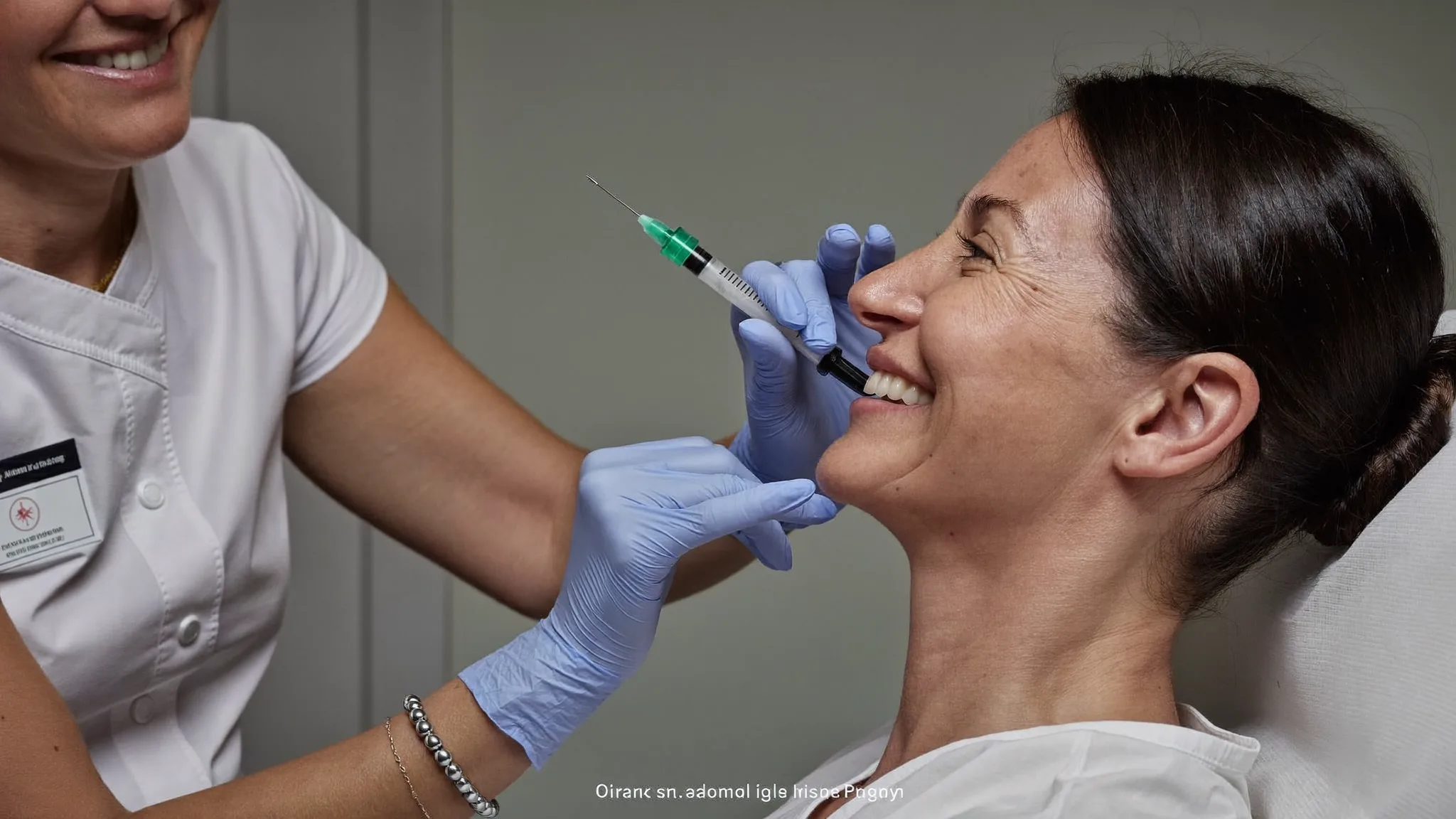
The consultation
Expect questions about what bothers you, how long you have noticed it, your medical history, medications and supplements, previous cosmetic treatments, and anything that might affect healing. You will probably be asked to smile, turn your head and relax your face, and your provider may take photographs for your record. If your concern turns out to be mostly something else, such as neck bands or jaw muscle size, they should tell you.
| Question | Why it helps |
|---|---|
| What do you think is driving my jowls? | Shows whether support, laxity or muscle pull is the main factor |
| Which parts could improve without surgery, and which could not? | Sets honest expectations from the start |
| Why this order of treatments? | Helps you understand the plan before you agree to it |
| What are the risks specific to my plan? | Different options carry different risks |
| What is the total cost, including follow-ups and maintenance? | Avoids surprises later |
| What would make you suggest a surgeon instead? | Confirms the provider will be candid about limits |
On the day
What happens next depends entirely on the treatment. A filler visit usually involves cleansing the skin, possibly a numbing cream, and a series of small injections with your provider checking symmetry as they go. A radiofrequency visit involves a device passed over the treated area, with a numbing step if the treatment calls for it. I am deliberately not giving you minute-by-minute detail or settings, because those are set by your provider for your skin and anatomy. Our injectable treatment FAQ answers many of the practical questions in advance.
Who may want to wait, or look at other options
Like any cosmetic treatment, these options are not a fit for everyone, and “not now” is a fully legitimate answer.
Candidacy considerations
People are generally better candidates for non-surgical jowl treatment when the changes are mild to moderate, they have realistic expectations about subtle improvement, and they are comfortable with maintenance over time. People with significant skin excess or pronounced descent often find non-surgical results underwhelming, and some are better served by a surgical opinion first.
Medical history worth raising
| History or situation | Why it matters |
|---|---|
| Pregnancy or breastfeeding | Many treatments are usually postponed, so ask before booking |
| Active infection, cold sore or open skin near the area | Treatment may need to wait until it clears |
| Blood thinners or supplements that affect bleeding | May increase bruising |
| Neuromuscular conditions or allergy to a product ingredient | Matters for Botox and filler |
| Implanted electronic device or metal near the area | May change whether energy-based treatment is appropriate |
| Tendency to scar, keloids or pigmentation changes | Relevant to microneedling and energy-based treatments |
| Fillers or other treatments elsewhere on the face | Your provider needs the full picture |
When in doubt, bring the full list. Your provider would much rather hear too much than too little.
Risks, normal reactions and warning signs
Every treatment here carries some risk, and the most useful thing I can do is describe the range clearly. Health Canada’s page on cosmetic injections lists possible filler-related problems including pain, bruising, redness, swelling, nodules, infection, skin discolouration, allergic reaction and improper placement of the material, and advises consulting a medical professional with experience in the procedure. A published review of vascular complications after facial filler injection, by Sito and colleagues, is a reminder that rare but serious events exist, which is why anatomical knowledge and training matter so much.
Common temporary reactions versus warning signs
| Usually settles on its own | Contact the clinic, or seek emergency care if severe |
|---|---|
| Mild swelling or redness | Redness that spreads, heat or fever |
| Small bruises | Swelling that grows quickly or is severe |
| Tenderness when chewing or touching the area | Pain that is severe or out of proportion |
| Small lumps that soften over days | A hard, painful lump that persists |
| Temporary tightness or warmth after radiofrequency | Blisters, burns or skin that turns white, grey or dusky |
| Not a normal reaction | Any change in vision, which needs emergency care |
If you ever have severe pain, skin that turns white, grey or dusky, a rapidly spreading rash, or any change in your vision after an injectable treatment, treat it as urgent and seek emergency care, then contact the clinic. Do not wait to see if it settles.
Energy-based treatments
Radiofrequency treatments carry their own considerations, including redness, swelling, temporary tenderness and, less often, blistering, burns or changes in pigmentation. Your provider should talk through your skin type, any history of scarring or pigmentation problems, and what to do if something looks unusual. Tell them if you have an implanted device or metal in the treatment area, since that may change what is appropriate.
Aftercare and everyday habits
Aftercare differs by treatment, so what follows is general and your provider’s instructions take priority.
The first few days
| Time | Often advised | Notes |
|---|---|---|
| First few hours | Avoid rubbing or pressing on treated areas | Follow the written instructions you are given |
| First 24 hours | Many providers advise avoiding strenuous exercise and alcohol | Ask what applies to your treatment |
| First few days | Gentle cleansing, daily sunscreen, a cold compress if suggested | Swelling and bruising are common and temporary |
| First one to two weeks | Watch for changes and avoid other facial treatments unless cleared | Ask when you can book dental work or facials |
| Follow-up | Attend any review visit your provider recommends | Small adjustments are sometimes discussed here |
Habits that protect what you have
Daily sunscreen is the single most useful thing, partly because UV damage accelerates the breakdown of collagen, and the rest of a routine can stay simple. If you are interested in retinoids or other active ingredients, ask your provider when and how to start, especially around a treatment date. Not smoking and keeping weight relatively stable also help skin quality and facial fullness, though neither will undo existing jowls. Think of these as ways of looking after your results rather than a replacement for treatment.
How long results last
This is where I would encourage some skepticism toward any clinic that gives you one neat number. Duration depends on the treatment, the area, your metabolism, how much was done and how your skin keeps ageing.
What our own pages say, and what they do not
| Treatment | What our pages and Health Canada say | Worth knowing |
|---|---|---|
| Hyaluronic acid filler | Our dermal fillers page says months to years depending on area, with about 6 to 12 months on average in its FAQ. Health Canada says six months to a year or more. | Temporary, and varies by area and person |
| Botox | Several of our Botox service pages describe roughly 3 to 4 months, with some describing up to 6 | Maintenance is usually needed to keep the effect |
| Morpheus8 and radiofrequency | Our pages describe a gradual collagen response over a series of sessions, without a fixed duration | Ask what your provider expects for your skin |
| Combined non-surgical facelift | Our page says results can last from about 6 months to 2 years depending on the treatments used | Maintenance can extend the effect |
| Maintenance plan | Depends on your plan | Ask for a realistic schedule and what it costs over a year |
That last row is worth underlining. If a plan is supposed to include maintenance, ask what a realistic schedule looks like and what it would cost over a full year, including the first visit.
Cost factors in Toronto
I am not going to quote prices here, since they depend on the specific treatment, the amount of product or the number of sessions, and they change. What I can do is list what moves the total.
| Factor | Why it affects the total |
|---|---|
| Which treatments are chosen | Filler, radiofrequency and Botox are priced differently |
| Amount of product or number of sessions | Plans for larger or more complex changes need more |
| Number of areas treated | Cheeks, temples and jawline are often assessed together |
| Provider experience and assessment time | A thorough assessment is part of the value |
| Follow-up and maintenance visits | The first visit is rarely the only one |
| Current offers and payment options | Check our pages for what applies at booking |
OHIP does not cover cosmetic treatments for jowls. For general ranges and what shapes them, our guides to dermal filler costs in Toronto and jawline contouring costs are good starting points, and our finance page has current information on payment options. Ask for a written breakdown at your consultation.
Common misconceptions about jowls
A few ideas come up so often that they deserve their own space.
“Jowls mean I am out of shape”
They do not. Jowls appear in people of every fitness level and body type, and plenty of very fit people develop them. Facial structure and ageing are not a measure of discipline.
“More filler will fix it”
Past a certain point, more product tends to make the lower face look fuller and less natural rather than more lifted. The better question is usually where support has been lost, and whether skin laxity is the bigger issue.
“A non-surgical treatment can match a facelift”
It cannot, and I do not think any responsible provider says it can. Non-surgical options can improve mild to moderate changes and may delay the point where surgery makes sense, but they do not remove excess skin or reposition deep tissue.
“Double chin and jowls are the same”
They sit near each other and often get treated in the same conversation, but the causes and options differ. If fat under the chin is your main concern, our guide to double chin fat reduction treatments in Toronto is the better place to begin.
“I should wait until it gets worse”
There is no deadline. Some people prefer to start early with small steps, others wait years, and both choices are fine. Treating something you do not mind is also entirely optional.
Deciding whether to book a consultation
Here is a fair way to think about it. If your jowls bother you, and the mirror check suggests there is some support loss or mild laxity, a consultation will give you a clearer picture of options and likely trade-offs. If your concern is more about heavy skin or significant descent, it is reasonable to see a surgeon as well, or first. And if you realize partway through that you actually feel fine, that is also a perfectly good outcome.
Candidacy, product choice, dosing, device settings, number of sessions and aftercare all need an individual assessment by a qualified professional. This article is general education and not personal medical advice or a diagnosis. If you have new numbness, one-sided facial weakness, a lump that is growing or unexplained swelling along the jaw, please see a physician first.
Frequently asked questions
What is the best treatment for jowls?
There is no single best option. It depends on whether your jowls come from lost support, loose skin or both. Mild to moderate cases may respond to filler, radiofrequency treatments or a combination, while pronounced sagging is usually better served by a surgical opinion. An assessment is the only reliable way to choose.
Can jowls be treated without surgery?
Often they can be improved, though not removed in the way a facelift can. Non-surgical options such as hyaluronic acid filler and radiofrequency treatments tend to suit mild to moderate changes. Results are usually subtle and gradual, and significant sagging may still need surgery.
Which is better for jowls, Botox or filler?
They do different jobs. Filler restores support in areas like the cheeks and jawline, while Botox can relax muscles that pull the lower face downward in some people. Neither tightens skin. Many plans use filler, sometimes with small amounts of Botox, after an in-person assessment.
Can filler make jowls look worse?
It can if too much is placed in the wrong spot, since added volume can make the lower face look heavier. Placing support in the cheeks, temples or jawline rather than into the jowl itself is a common strategy, and conservative amounts are usually safer.
How does Morpheus8 help with jowls?
Morpheus8 combines microneedling with radiofrequency heat to encourage collagen and elastin changes in the skin and tissue below. It may improve firmness and texture along the jawline gradually. It is generally discussed for mild to moderate laxity and does not replace a surgical lift.
At what age do jowls start to appear?
There is no fixed age. Some people notice early changes in their thirties or forties, others much later, and genetics play a large part. Starting earlier or later does not mean you did something wrong, and treating them is always optional.
Why am I getting jowls?
Usually several things combine: skin that has lost elasticity, shifts in cheek and jaw volume, bone changes and loosened ligaments. Sun exposure, smoking, weight changes and genetics can contribute. Jowls are a common part of how faces change and not a sign of poor health.
Do jowls go away with weight loss?
Not reliably. Weight loss can reduce fullness in some people, but it can also make skin looseness more visible. Results vary a lot between individuals, so weight loss should not be treated as a guaranteed way to remove jowls.
Do facial exercises work for jowls?
The evidence is mixed at best. Some people feel exercises improve muscle tone or reduce puffiness temporarily, but they are unlikely to lift sagging tissue or change structure. They are harmless for most people, and they are not a replacement for treatment.
How long do non-surgical jowl treatments last?
It depends on the treatment. Health Canada says hyaluronic acid fillers can last from six months to a year or more. Botox is temporary and usually needs repeating. Radiofrequency results develop gradually and vary. Your provider can describe what to expect for your plan.
How many sessions will I need?
That depends on the treatment, your skin and your goals, and only your provider can say after an assessment. Filler may be completed in one visit with possible top-ups, while radiofrequency treatments are often discussed as a series. Ask for a clear plan and review points.
Is jowl treatment painful?
Most people describe pinching, pressure or warmth rather than severe pain, and numbing cream is often used. Experience varies with the treatment and your own sensitivity, and no treatment should be promised to be painless. Tell your provider if you are anxious about discomfort.
Is there downtime after jowl treatment?
Many people return to routine activities soon after filler or radiofrequency treatments, though swelling, redness or bruising can last days. Our Morpheus8 page describes minimal recovery. Plan conservatively around important events and ask what to expect for your specific plan.
What are the risks of filler in the jawline?
Common effects include bruising, swelling and tenderness. Less common problems include lumps, infection, allergic reaction and uneven results. Rare vascular complications can be serious, which is why training and anatomical knowledge matter. Health Canada advises seeing an experienced medical professional for injectables.
Is jowl treatment covered by OHIP?
No. Treatments for cosmetic concerns such as jowls are not covered by OHIP. Ask for a written breakdown of costs at your consultation, including follow-ups and maintenance, and see our finance page for current payment options.
Can I combine treatments for jowls?
Yes, and it is common. A plan might address support with filler, skin quality with radiofrequency and muscle pull with Botox. Your provider decides the order and timing based on your face, healing and goals, and may adjust after a first round.
When should I consider a facelift instead?
Consider a surgical consultation if you have a lot of loose skin, pronounced sagging of the jawline and neck, or want the largest and longest-lasting change. Surgeons can reposition tissue and remove skin, which non-surgical treatments cannot do.
Can men have jowl treatment?
Yes. Jowls affect people of every gender, and treatment planning focuses on your anatomy and goals. Providers may aim to preserve a strong jawline rather than soften it, so say clearly what look you want and what you would like to avoid.
Which jowl-related treatments does Rejuvenation Med Clinic offer?
Our service pages describe dermal fillers, Morpheus8, skin tightening, Botox and a non-surgical facelift approach that combines several of them. Which ones suit you is decided at a consultation, and availability and current details are confirmed when you book.
Should I see a doctor before treatment?
See a physician first if you have new numbness, one-sided facial weakness, a growing lump or unexplained swelling along the jaw. For ordinary age-related jowling, a consultation with a qualified provider is a reasonable start, and they will tell you if a medical or surgical opinion is better.
Jowls are one of several concerns that we look at as part of our broader cosmetic injectable services and skin tightening treatments in Toronto, and you can read about our team on the our team page. If you would like a plain conversation about whether filler, tightening, a combination or no treatment at all makes sense for you, you can request a consultation. A consultation does not commit you to anything, your plan can change after an individual assessment, and if a surgical opinion is the better step, we will say so directly.