
Does Laser Hair Removal Hurt? What It Really Feels Like and How to Make It Easier

Laser hair removal usually causes mild to moderate discomfort rather than real pain. Most people describe each pulse as a quick, warm snap, a bit like a rubber band flicked against the skin, and it fades within a second or two. Thin-skinned areas with coarse hair, such as the bikini line, underarms and upper lip, tend to feel stronger, while legs and arms are usually easier. The first session is typically the most noticeable, and it often gets milder as the hair thins.
That is the honest short answer. The longer answer is more useful, though, because “does it hurt” really depends on where you are treating, what your hair is like, what laser and cooling the clinic uses, and, a little annoyingly, on you. Two people can lie on the same bed for the same area and come away with completely different stories. I have heard someone call their underarm session “nothing at all” and someone else, the same week, say it made them grip the bed rail. Both were telling the truth.
This guide is general education for adults in Toronto who are curious about laser hair removal but a bit nervous about the sensation. It walks through what the pulses feel like, which areas tend to be more sensitive, why the first session usually feels strongest, and the practical things that can make it easier. At Rejuvenation Med Clinic, our laser hair removal in Toronto page explains how we treat, and nothing below is a diagnosis or a promise about how your skin will respond. Body hair is normal, and deciding to leave it exactly as it is remains a perfectly good choice.
Related Service: Laser Hair Removal at Rejuvenation Med Clinic
Key takeaways
- Most people feel a brief, warm snapping sensation with each pulse rather than lasting pain, and many find it gentler than waxing.
- Sensitivity depends on skin thickness, nerve density and how coarse and dark the hair is, so the bikini line, underarms and upper lip often feel stronger than the legs or arms.
- The first one or two sessions usually feel the most intense, because every follicle still holds a thick hair that absorbs heat.
- Contact cooling, correct settings for your skin and hair, proper shaving the day before and avoiding a tan all make a noticeable difference.
- Numbing cream is something to discuss with your clinic first. Health Canada has warned about serious reactions when topical anesthetics are applied to large areas before laser hair removal.
- Pain that builds after treatment, blisters or crusting are not normal and should be checked.
What does laser hair removal feel like during each pulse?
The laser sends a short burst of light into the skin. The pigment in the hair, mostly melanin, absorbs that light and turns it into heat, and the heat travels down to the follicle. What you feel is that heat arriving, very quickly, at a small spot. People describe it in a handful of ways: a rubber band snap, a warm pinprick, a quick sting like a spark of static, or a flick of hot water. The American Academy of Dermatology says many patients describe the pulses as warm pinpricks or a rubber band being snapped against the skin, which matches what most clients tell us too.
How long the sensation lasts
Each pulse lasts a fraction of a second. The sting itself is gone almost as soon as you register it, though the area can feel warm, a bit like mild sunburn, for a while afterwards. Because the provider moves the handpiece in a steady pattern, you experience a rhythm of small snaps rather than one long burn. I think that rhythm is part of why people cope better than they expect. You know another snap is coming, and you also know it will be over in a moment.
What it does not usually feel like
It is not normally a deep, aching pain, and it should not feel like a burn that keeps building while the handpiece sits still. If a spot suddenly feels much hotter than the rest, say so right away. A good provider would rather pause and adjust than have you push through quietly.
The smell and the sound, since nobody mentions them
You may notice a faint smell of singed hair, which is just the hair above and in the follicle being heated. Some devices make a soft beep or click with each pulse. Neither means anything is wrong, but it can be a bit startling the first time, so it is nice to know in advance.
Does laser hair removal hurt more than waxing, threading or other methods?
For most people, no. Waxing and threading pull hair out by the root, and you repeat that every few weeks for as long as you use them. Laser stings briefly per pulse and, over a course of sessions, there is less and less hair to react. That said, “less painful than waxing” is a generalization. Some people find waxing almost relaxing after years of it, and a first laser session on a coarse area can feel sharper than they expected. So I would treat the comparison as a rough guide, not a rule.
| Method | What it usually feels like | How long the discomfort lasts | How often it is repeated |
|---|---|---|---|
| Laser hair removal | A quick warm snap or pinprick with each pulse | A second or two per pulse, then mild warmth that often settles within hours | A course of sessions spaced weeks apart, then occasional touch-ups |
| Waxing | A sharp pull as hair is removed from the root | Stinging and redness for minutes to hours | Every few weeks, ongoing |
| Sugaring | Similar to waxing, some find it slightly gentler | Minutes to hours | Every few weeks, ongoing |
| Threading | Rapid plucking along a line, can make eyes water on the lip | While it is being done, plus brief redness | Every two to four weeks, ongoing |
| Shaving | Usually painless, but razor burn and ingrown hairs are common | Irritation can last a day or two | Every day or few days |
| Electrolysis | A sting or heat at each individual follicle | Repeats with every hair treated | Many sessions, since hairs are treated one at a time |
A quick note on shaving and ingrown hairs
Shaving does not hurt in the moment, but the bumps, itching and ingrown hairs that follow are their own kind of discomfort. Some people come to laser mostly for that reason, and our post on laser hair removal for ingrown hairs goes into that more.
Which body areas hurt the most during laser hair removal?
Three things drive how strong an area feels: how thin the skin is, how many nerve endings sit close to the surface, and how coarse and dark the hair is. Coarse, dark hair holds more pigment, so it absorbs more energy and produces a stronger snap. That same pigment is also why coarse dark hair tends to respond well. It is a slightly unfair trade, honestly, but it usually works in your favour over the course of treatment.
| Treatment area | Typical sensitivity | Why |
|---|---|---|
| Brazilian and bikini line | Higher | Thin skin, dense nerve endings, coarse hair |
| Underarms | Higher | Thin skin and dense, coarse hair in a small space |
| Upper lip | Higher | Thin facial skin close to sensitive nerves, sits near the nose and teeth |
| Chin and jawline | Moderate to higher | Hair can be coarse, especially hormonal hair, skin is fairly sensitive |
| Beard line and neck (often men) | Moderate to higher | Very dense, coarse hair |
| Back, shoulders and chest | Moderate | Thicker skin, but coarse dense hair over a large area |
| Feet, toes, ankles and knees | Moderate | Bone sits close under thin skin |
| Lower legs | Lower | Thicker skin, though shins and inner thighs can feel sharper |
| Arms and stomach | Lower | Thicker skin and often finer hair |
This is a general pattern, not a prediction for you. Someone with fine, sparse underarm hair may find the underarms easy, and someone with very dense leg hair may find the legs more intense than the table suggests.
Bikini and Brazilian
This is the area people ask about most, and it is often the most sensitive, at least for the first few visits. The skin is thin, there are many nerve endings, and the hair is usually coarse. If you are deciding between areas, our guide to bikini vs Brazilian laser hair removal explains the difference, and our bikini area laser hair removal and Brazilian laser hair removal pages describe each treatment. Most people notice the sensation drops as the hair thins.
Underarms
Underarms are small, so the session is short, and many people find it more manageable than they feared. The first visit tends to be the strongest. Our underarm laser hair removal page covers how we approach it.
Upper lip, chin and the rest of the face
Facial skin is sensitive and the upper lip in particular can make your eyes water a little, mostly from reflex rather than real pain. The good news is that facial areas are small and fast. If you are thinking about hormonal chin hair or the jawline, see our lip and chin laser hair removal and facial laser hair removal pages, and our post on whether laser hair removal is safe for the face.
Legs, arms and back
Larger areas take longer, which is the main challenge, even though each pulse tends to feel milder. Shins sit right on bone and can feel a little sharper than the calves. The back is usually moderate per pulse but covers a lot of ground. See our leg laser hair removal, back laser hair removal and full body laser hair removal pages if you are planning a bigger area.
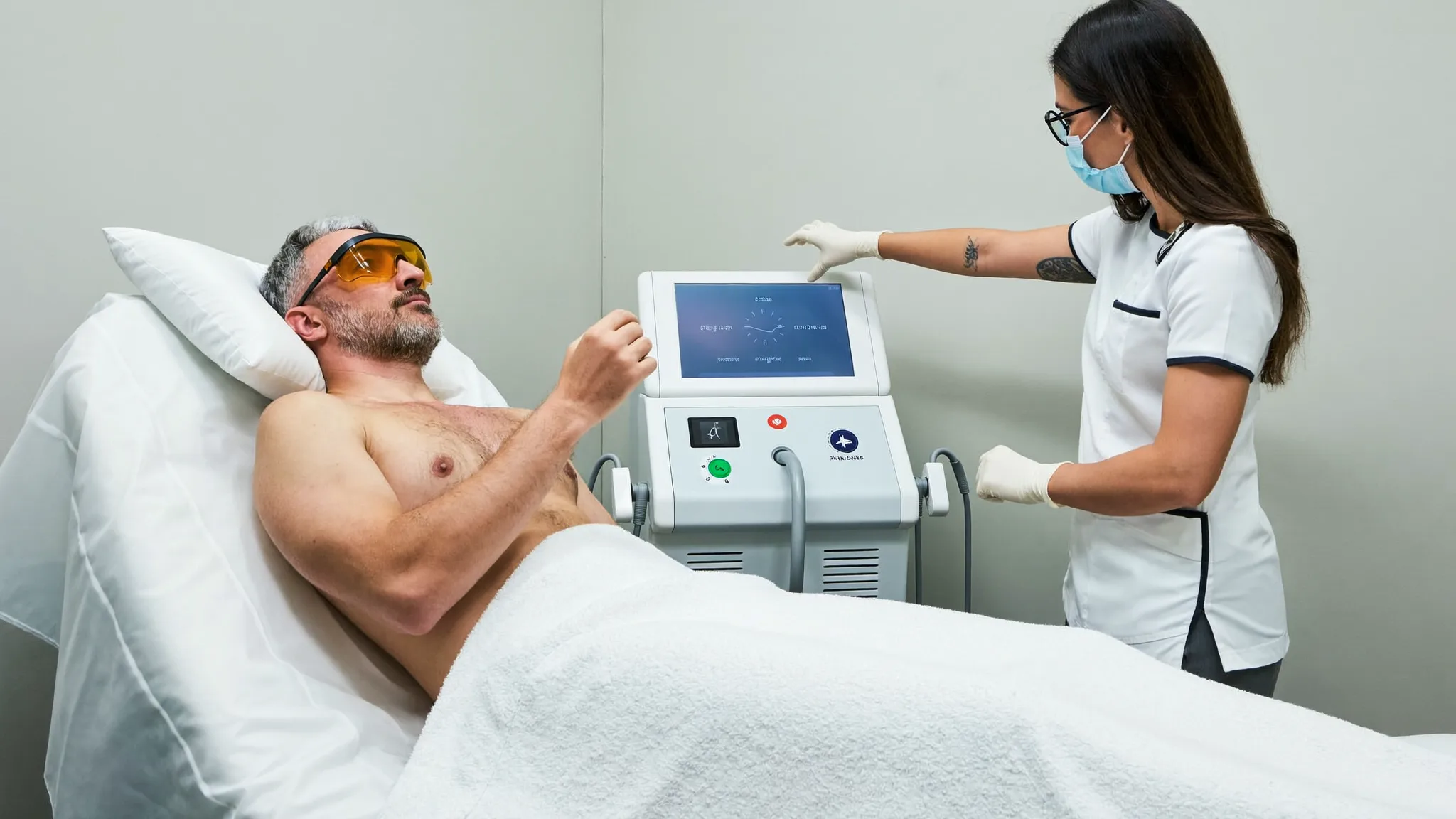
Why does the first session usually feel the strongest?
At your first session every follicle in the area still holds a full, thick hair, so there is a lot of pigment soaking up energy at once. After treatment, the hairs that were in their active growth phase gradually shed, which is covered in our post on when hair falls out after laser. Over the following sessions, there is usually less hair, and what grows back is often finer and lighter. Less pigment means less heat, which generally means a gentler session.
When a later session feels stronger
This happens, and it can be confusing. Common reasons include a little sun exposure since the last visit, a missed or rushed shave, skin that is irritated from a new product, a change in settings, or simply a tired, stressed day. Some people notice their skin feels more sensitive around their period. None of that is a sign treatment is failing, but it is worth mentioning to your provider so they can adjust.
| Stage of treatment | What people commonly notice | Why |
|---|---|---|
| First session | Usually the most noticeable snap, especially on coarse areas | Every follicle still holds a thick, pigmented hair |
| Early sessions | Often similar or slightly easier, and you know what to expect | Some hairs have shed, anxiety tends to drop |
| Middle of the course | Many people find it clearly milder | Hair is often sparser and finer |
| Later sessions and touch-ups | Often mild, sometimes patchy sensation | Fewer, finer hairs remain to absorb energy |
What affects how much laser hair removal hurts?
There is not one answer here, which is probably why the internet is full of contradictory stories. Several things stack together.
Your hair
Coarse, dark hair absorbs more energy and usually produces a stronger snap. Fine or light hair absorbs less and usually feels milder, though it may also respond less well. Light blonde, red, grey and white hair has little pigment, which affects results more than comfort.
Your skin
Thin skin and areas with many nerve endings feel stronger. Skin tone matters for safety and settings. Darker skin holds more melanin, so the laser and its settings have to be chosen carefully to avoid overheating the skin. When it is done well, treatment does not have to feel worse on darker skin. Our page on laser hair removal for dark skin explains how we approach it.
The laser and the cooling
Different wavelengths behave differently, and cooling makes a real difference to comfort. At Rejuvenation Med Clinic we use the Soprano ICE Platinum, which combines alexandrite, diode and Nd:YAG wavelengths in one handpiece and has a built-in cooling tip, along with the Venus Velocity system. If you want to understand the wavelengths themselves, our comparison of diode vs alexandrite vs Nd:YAG lasers is a good place to start. A device having cooling does not mean you will feel nothing, to be clear. It usually means the surface of the skin is protected and the sensation is softer.
The provider and the settings
Settings are chosen for your skin type, hair and area, and adjusted as you go. An experienced provider watches how your skin responds and listens to how you describe it. This is one of those places where communication matters as much as equipment.
You, on the day
Pain perception shifts with sleep, stress, caffeine, hunger and anxiety. I do not want to overstate that, since a calm person can still find the bikini line sharp, but people who arrive rested, fed and knowing what to expect often report an easier session.
| Factor | Tends to feel stronger when | Tends to feel milder when |
|---|---|---|
| Hair | Coarse, dark and dense | Fine, sparse or lighter |
| Skin | Thin, sensitive, tanned or irritated | Thicker, calm, untanned |
| Area | Bikini, underarm, upper lip, bony spots | Legs, arms, stomach |
| Preparation | Long hair left on the surface, recent waxing or plucking | Shaved about a day before, root left in place |
| Cooling | Little or no cooling during pulses | Contact or air cooling throughout |
| Session stage | First one or two sessions | Later sessions as hair thins |
| How you feel that day | Tired, stressed, very anxious | Rested, hydrated, informed |
Does laser hair removal hurt more for men?
It can, at least at the start. Hair on the back, chest, shoulders and beard line is usually coarse and dense, which means more pigment and a stronger snap, and the beard line sits close to sensitive facial nerves. Large areas also mean longer sessions. On the other hand, coarse dark hair often responds well, so the sensation commonly drops quickly as the hair thins. Our laser hair removal for men page describes the areas men most often treat.
How can you make laser hair removal hurt less?
A lot of comfort comes down to preparation and communication. None of these steps is dramatic on its own, but together they add up.
Before your appointment
- Shave the area about 24 hours beforehand. Long surface hair heats up on the skin and makes the snap stronger, while the root needs to stay in place for the laser to reach it.
- Do not wax, pluck, thread or tweeze between sessions. Our post on whether you can shave between laser sessions explains why shaving is the way to go.
- Avoid tanning and sunburn. Tanned skin holds more pigment and can react more strongly to heat.
- Ask about pausing products such as retinoids, benzoyl peroxide and salicylic or other hydroxy acids on the area, since they can make skin more reactive.
- Eat something, drink water and, if you can, avoid booking on a day when you are running on very little sleep.
- If you notice your skin is more sensitive at certain points in your cycle, you can try booking around that.
Our full guide on how to prep for your laser hair removal session covers this in more detail.
During your appointment
- Tell your provider how it feels, honestly and early. They can adjust settings, slow down, add cooling time or pause between passes.
- Breathe out slowly as the pulses come. It sounds almost too simple, but tensing up tends to make each snap feel bigger.
- Ask for a short test on a small spot first if you are nervous. Seeing how your skin responds settles a lot of worry.
- A distraction helps some people. Talking, music, counting the pulses in a pattern.
After your appointment
Expect warmth and redness, and maybe small raised bumps around the follicles, often settling within hours. A cool compress can help. Skip very hot showers, saunas and hard workouts for the rest of the day if your provider suggests it, and protect the area from the sun between sessions. Our post on whether you can tan after laser hair removal explains why sun protection matters so much.
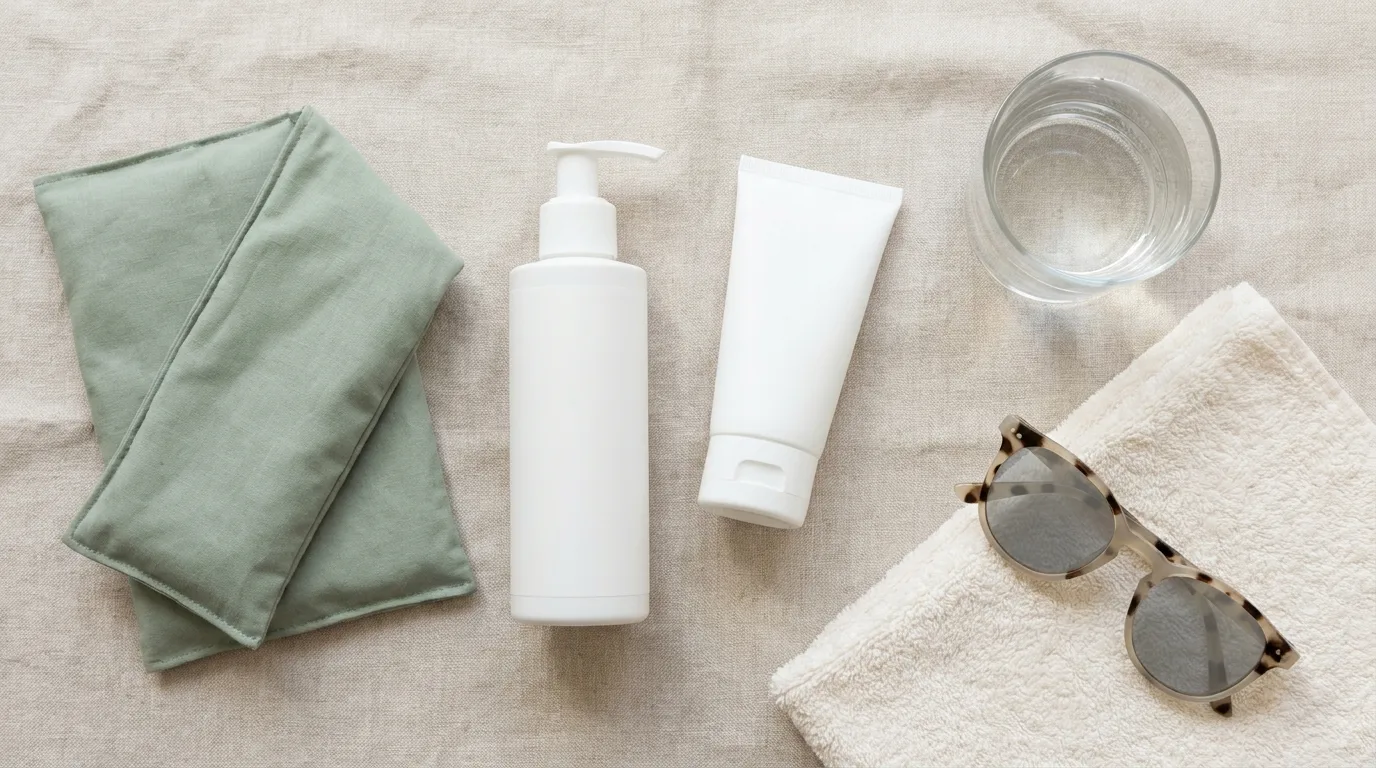
Can you use numbing cream before laser hair removal?
Sometimes, but this is a conversation to have with your clinic before you buy anything. Topical anesthetics can make sensitive small areas more comfortable for some people, and some providers use them for areas like the upper lip or bikini line. They are not harmless, though, especially in large amounts.
Health Canada has published safety information on topical anesthetics describing serious adverse events, including deaths, linked to excessive use of these products. Many of the Canadian cases involved adults applying anesthetic cream to large areas of the body before laser hair removal, sometimes covering it with plastic wrap to increase absorption. The risk rises with stronger concentrations, larger areas, damaged skin and covering the cream.
So, a few practical points:
- Do not apply numbing cream at home before a session unless your clinic has told you to, which product, how much, where and for how long.
- Never apply it to large areas such as both full legs or the whole back, and never wrap it under plastic unless a qualified professional has specifically directed you to.
- Tell your provider about any numbing product you have used, as it may affect how they assess your skin’s response.
- If you feel dizzy, confused, unusually drowsy, short of breath, notice blue-grey lips or skin, or have a racing or irregular heartbeat after using a numbing product, treat it as an emergency.
Whether numbing is offered or recommended for your area is something to ask about at your consultation. For many areas, cooling alone is enough to keep things comfortable.
Can you take a painkiller before laser hair removal?
Check with your provider and, if you have health conditions or take regular medication, your doctor or pharmacist. Some people take an over-the-counter pain reliever, but whether that is appropriate depends on your health history and the medication. Some medications can also increase light sensitivity, which matters for laser, so bring a full list of what you take, including supplements, to your consultation.
What is normal after treatment, and what is not?
Mild redness, warmth and small bumps around the follicles are common and usually settle within hours, sometimes a day or so. The American Academy of Dermatology notes that redness and swelling often look like a mild sunburn and that a cool compress can help. Pain that gets worse instead of better is a different story.
| Usually expected | Contact your clinic | Seek urgent care |
|---|---|---|
| Warmth and redness for a few hours to a day | Blisters, crusting or skin that looks burned | Signs of a serious reaction after using a numbing product, such as confusion, trouble breathing or an irregular heartbeat |
| Small raised bumps around follicles | Pain that builds after the first day | Rapidly spreading redness with fever |
| Mild tenderness, like light sunburn | Lighter or darker patches appearing | Swelling of the face, lips or throat |
| Hairs shedding over the next couple of weeks | Spreading redness, warmth, swelling or pus | Any eye pain or vision change after facial treatment |
If you are ever unsure, it is reasonable to call. Nobody minds a question about a reaction that turns out to be ordinary.
Who should be cautious or wait?
Comfort is one question. Whether treatment is suitable right now is another, and it deserves an individual assessment. Things worth raising at a consultation include:
- Pregnancy or breastfeeding. Many clinics defer elective laser treatment during pregnancy, and our post on laser hair removal when pregnant covers the usual approach.
- A recent tan, sunburn or planned holiday.
- Medications that increase light sensitivity, and any recent isotretinoin or similar treatment.
- A history of cold sores in the area, keloid scarring or pigment changes after skin injury.
- Active skin infection, open wounds or a flare of a skin condition in the area.
- Sudden new or worsening facial or body hair, which can have a medical cause and is worth discussing with your doctor before or alongside cosmetic treatment.
How long does each session take, and does that change the experience?
Shorter sessions are easier to tolerate, which is a small mercy for the more sensitive areas, since those tend to be small. Our service page notes most areas take about 15 to 30 minutes. Large areas such as full legs or the back take longer, so there is more time spent on the bed, even if each pulse feels milder. If you are planning a large combination, ask whether it makes sense to split areas across visits.
| Area size | Examples | What that means for comfort |
|---|---|---|
| Small | Upper lip, chin, underarms | Often more sensitive per pulse, but over quickly |
| Medium | Bikini line, Brazilian, face and neck, arms | A mix, the bikini area can be strong but short |
| Large | Full legs, back, chest, full body | Milder per pulse, but longer time on the bed |
Will it still hurt by the end of my course?
Usually far less. Most clients need a series of sessions spaced several weeks apart, because the laser only reliably affects follicles in their active growth phase. Our service page notes most clients need 6 to 8 sessions, and coarse hair, hormonal areas such as the face, and lighter hair can take more. As the hair thins, sessions commonly become quicker and milder. The goal is long-term hair reduction rather than a guarantee of zero hair, which our post on whether laser hair removal is permanent explains, and the Brazilian-specific timeline is in how many Brazilian laser treatments are needed.
Myths about laser hair removal pain
“If it hurts, it is working better”
Not really. A stronger sensation often reflects coarse dark hair, which does tend to respond, but pain itself is not a measure of success. Settings should be effective and tolerable. Pushing energy up to the point of real pain raises the risk of burns and pigment changes without a clear benefit.
“Painless lasers mean you will feel nothing”
Some devices are marketed as painless or close to it. Cooling and certain techniques do make treatment much more comfortable, but most people still feel something, usually warmth or a light snap. It is more helpful to expect mild discomfort and be pleasantly surprised.
“Darker skin always hurts more”
Darker skin needs careful laser selection and settings, mainly for safety. With the right approach, the sensation does not have to be worse.
“It will hurt this much every time”
For most people, the first session is the strongest, and it eases as hair thins. Not always in a perfectly straight line, but generally.
Questions to ask at your consultation in Toronto
| Question | Why it helps |
|---|---|
| Which laser will you use for my skin and hair, and does it have cooling? | Wavelength and cooling affect both safety and comfort |
| Which of my areas are likely to feel strongest? | Knowing in advance makes it easier to cope |
| Can we do a small test spot first? | Shows how your skin responds and what it feels like |
| Do you use or recommend numbing for my area, and how? | Avoids unsafe self-application |
| What should I stop or avoid before each session? | Preparation changes both comfort and risk |
| How many sessions do you expect, and how far apart? | Sets realistic expectations for results and cost |
| What reactions should I call you about? | You know where the line is between normal and not |
| What will it cost per session for my areas? | Pricing varies by area, see our laser hair removal cost in Toronto guide |
How we approach comfort at Rejuvenation Med Clinic
Our laser hair removal page states that our team has over 10 years of laser hair removal experience, that our three medical aestheticians treat every skin tone using the Soprano ICE Platinum and Venus Velocity systems, that you pay per session with no contract, and that the first consultation is free. You can read more about the people behind our treatments, including our medical director, on our team page. At the consultation we go over your skin, hair, medical history, medications and the areas you want treated, explain which laser we plan to use, and talk through what each area is likely to feel like. If you are anxious about the sensation, say so. It is a very common worry and it changes how we pace the first visit.
Frequently asked questions
Does laser hair removal hurt?
Most people feel mild to moderate discomfort, often described as a warm snap like a rubber band with each pulse. The sensation lasts a fraction of a second. Thin-skinned areas with coarse hair, such as the bikini line and underarms, usually feel stronger, and sessions tend to get milder as the hair thins.
What does laser hair removal feel like?
Each pulse feels like a quick burst of heat, commonly compared to a rubber band snap, a warm pinprick or a small static spark. Afterwards the skin may feel warm, a bit like mild sunburn, for a few hours. It should not feel like a deep, building burn.
Is laser hair removal more painful than waxing?
For most people it is less painful overall. Waxing pulls hair from the root every few weeks indefinitely, while laser stings briefly per pulse and the hair thins over a course of sessions. A first laser session on a coarse area can still feel sharper than some people expect.
Which area hurts the most for laser hair removal?
The Brazilian and bikini area, underarms and upper lip are usually the most sensitive because the skin is thin, nerve endings are dense and the hair is often coarse. Bony spots such as ankles and knees can also feel sharp. Legs, arms and the stomach tend to be easier.
Does the first laser hair removal session hurt the most?
Usually, yes. At the first session every follicle still holds a full, thick hair that absorbs a lot of heat. As treated hairs shed and regrowth becomes finer and sparser, later sessions commonly feel milder, though an individual session can still feel stronger for reasons like sun exposure or a missed shave.
Does laser hair removal hurt on the face?
The face is fairly sensitive, and the upper lip in particular can make your eyes water from reflex. Facial areas are small, so the session is short. Hormonal chin hair can be coarse and feel stronger early on. Cooling and properly chosen settings help keep it manageable.
Does underarm laser hair removal hurt?
Underarms are often moderately to highly sensitive at first because the hair is dense and coarse and the skin is thin. Many people find it easier than expected because the area is small and quick. The sensation usually eases as the hair thins over the course of sessions.
Does Brazilian laser hair removal hurt?
It is commonly one of the more sensitive areas, especially in the first few sessions, due to thin skin, many nerve endings and coarse hair. Cooling, good preparation and honest communication with your provider help. Ask your clinic whether numbing is appropriate rather than applying a product yourself.
Can I use numbing cream before laser hair removal?
Only with your clinic’s guidance. Health Canada has shared safety information about serious adverse events linked to topical anesthetics applied to large body areas before laser hair removal, particularly under plastic wrap. Your provider can tell you whether numbing suits your area, which product and how much.
Can I take ibuprofen or acetaminophen before laser hair removal?
Ask your provider, and your doctor or pharmacist if you have health conditions or take other medications. Whether a pain reliever is appropriate depends on your health history. Also mention all medications and supplements, since some increase light sensitivity and can affect laser treatment.
Does laser hair removal hurt more on dark skin?
It does not have to. Darker skin contains more melanin, so the laser type and settings must be chosen carefully to avoid overheating the skin. With an appropriate wavelength, such as Nd:YAG, and careful settings, treatment can be both safe and reasonably comfortable for darker skin tones.
Does laser hair removal hurt more for men?
It can feel stronger at first on areas like the back, chest and beard line, where hair is coarse and dense. Larger areas also mean longer sessions. Because coarse dark hair often responds well, many men notice the sensation drops fairly quickly as the hair thins.
How long does pain last after laser hair removal?
The sting of each pulse is gone within seconds. Warmth, redness and tenderness usually settle within a few hours, occasionally lasting a day or so. Pain that increases after the first day, blistering or crusting are not typical and should be checked by your clinic.
Why did my laser session hurt more than last time?
Common reasons include recent sun exposure, a missed or uneven shave, irritated skin from new products, a settings change, hormonal changes around your period, or simply being tired or stressed. Tell your provider, since they can adjust settings or cooling for the next pass.
Is it normal to have bumps and redness after laser?
Yes. Small raised bumps around follicles and redness that looks like mild sunburn are common and usually settle within hours to a day. A cool compress can help. Blisters, crusting, spreading redness, pus or new light or dark patches are reasons to contact your clinic.
Does laser hair removal hurt less with each session?
Generally, yes. As treated hairs shed and regrowth becomes finer and sparser, there is less pigment absorbing heat, so sessions usually feel milder and quicker. Progress is not always perfectly even, and an individual session may feel stronger now and then for practical reasons.
Is there such a thing as painless laser hair removal?
Some devices are marketed as nearly painless, and cooling can make treatment much more comfortable. Most people still feel warmth or a light snap. It is more realistic to expect mild discomfort that is easy to manage than to expect no sensation at all.
Does laser hair removal hurt more than electrolysis?
Many people find laser more comfortable overall because it treats many follicles with each pulse, while electrolysis treats one hair at a time, so the sting repeats at every follicle. Electrolysis has its own uses, such as very light hair, so the right choice depends on your hair and goals.
Talk it through before you decide
If the sensation is what is holding you back, a consultation is a sensible, low-pressure place to start. You can discuss your skin, hair, medical history, medications and the areas you are considering, ask which areas are likely to feel strongest, and ask about cooling, test spots, numbing, aftercare, risks, alternatives and current pricing. A consultation does not oblige you to go ahead, and your plan may change after an individual assessment. You can book a free consultation online, read more on our laser hair removal Toronto page, or use our contact page if you have a question first. Rejuvenation Med Clinic is at 67 Portland St, Second Floor, Toronto.
This article is general education and not medical advice or a diagnosis. Individual sensation, suitability and results vary.