
Laser Hair Removal Side Effects: What Is Normal, What Is Rare, and When to Call

Most side effects of laser hair removal are mild and temporary. The usual ones are redness, swelling, small raised bumps around the hair follicles, warmth and a little itching, and they typically fade within a few hours to about three days. Less common effects include temporary darkening or lightening of the skin, crusting, folliculitis and cold sore flare-ups. Burns, blisters, scarring and paradoxical hair growth are rare and are most often linked to tanned skin, settings that do not suit the skin type, or poor aftercare.
That is the honest short version, and it matches what dermatology bodies and most clinics say. I think it helps to hear it plainly before getting into the details, because a lot of people arrive at a consultation having read one frightening forum thread and very little else. The longer version is more useful, though. Side effects are not random. They follow fairly predictable patterns based on your skin tone, the laser wavelength, the area being treated, recent sun, medications and how the skin is cared for in the days after a session.
This guide walks through what is normal, what is uncommon, what is rare, how long each reaction tends to last, who is at higher risk, and how to tell an ordinary post-treatment flush from something worth a call. It is general education for adults in Toronto thinking about treatment, not medical advice or a diagnosis. You can read how we approach treatment on our laser hair removal in Toronto page. And to say it once clearly: body hair is normal. Nothing here suggests anyone needs to remove it.
Related Service: Laser Hair Removal at Rejuvenation Med Clinic
Key takeaways
- The common side effects are redness, swelling around the follicles, warmth, tenderness and mild itching. The American Academy of Dermatology describes these as minor and lasting about 1 to 3 days.
- Pigment changes (darker or lighter patches) are the most talked-about less common effect. They are usually temporary, more likely on deeper or recently tanned skin, and occasionally permanent.
- Burns, blisters, scarring and paradoxical hypertrichosis (hair growing back thicker in or near a treated area) are rare.
- A review in Lasers in Medical Science found pigment changes in up to 19% of treatments with shorter-wavelength lasers in darker skin, compared with about 2 to 3% with the longer-wavelength Nd:YAG laser.
- Most serious problems trace back to a handful of avoidable causes: a tan, the wrong wavelength or settings for the skin, skipped cooling, photosensitizing medications, and picking or sun on freshly treated skin.
- There is no credible evidence that laser hair removal causes cancer or affects fertility. The light is non-ionizing and works close to the skin surface.
- Blistering, open sores, spreading redness, pus, fever, or pain that gets worse instead of better should be checked promptly.
What are the side effects of laser hair removal?
Laser hair removal works by sending pulses of light into the skin. The pigment in the hair, melanin, absorbs that light and turns it into heat, and the heat damages the follicle enough to slow or stop future growth. The surrounding skin picks up some of that heat as well. So a small, controlled reaction in the skin is not a malfunction. It is more or less the expected cost of heating hair follicles on purpose.
It helps to sort side effects into three groups. Most of the worry people carry into their first appointment belongs to the third group, while most of what they actually experience belongs to the first.
| Group | Examples | How often | Typical duration |
|---|---|---|---|
| Common and expected | Redness, swelling around follicles (perifollicular edema), warmth, tenderness, mild itching, shedding of treated hairs | Most sessions, to some degree | A few hours to about 3 days; shedding over 1 to 3 weeks |
| Less common | Temporary darkening or lightening of skin, crusting, folliculitis or small breakouts, cold sore flare-ups, purple-ish bruise-like marks | Some people, more often with certain skin types or areas | Days to a few months |
| Rare | Burns, blisters, scarring, long-lasting pigment change, paradoxical hypertrichosis, eye injury without proper eyewear, infection | Uncommon, and largely preventable | Weeks or longer if they happen |
Why the skin reacts at all
Each follicle that absorbs energy becomes a tiny hot spot under the skin. The tissue around it responds the way skin responds to any mild heat injury, with extra blood flow (redness), a little fluid around the follicle (those raised goosebump-like bumps), and some warmth. This is the same reason a session can leave a faint smell, a bit like singed hair. The American Academy of Dermatology describes a laser as removing hair by vaporizing it, which produces small plumes of smoke with a sulfur-like smell. Odd, but normal.
Side effect versus complication
These two words get used interchangeably online, which does not help anyone. In this article, a side effect means an expected and usually temporary reaction, like redness. A complication means a less common outcome that needs attention or takes longer to settle, like a blister or a patch of skin that stays darker. Most people only ever experience side effects. Complications are possible, though, and pretending otherwise would be a disservice.
Common side effects and what they feel like
The American Academy of Dermatology notes that the most common side effects are minor and last 1 to 3 days, and that treated skin often looks like a mild sunburn, which a cool compress can ease. That description matches what we see in practice pretty closely.
Redness (erythema)
Pink or flushed skin right after a session is the most common reaction by a long way. On lighter skin it looks red. On deeper skin tones it can look darker or slightly purplish rather than red, which sometimes confuses people who were told to watch for redness. It usually calms within a few hours, and sometimes lingers until the next day on sensitive areas such as the bikini line or the face.
Swelling around the follicles
Small raised bumps that look like goosebumps or a mild hive pattern often appear within minutes. The clinical name is perifollicular edema. Some practitioners actually look for a light version of this response during treatment, because it suggests the follicles absorbed energy. It usually flattens within a few hours to a day. Larger, puffy swelling is more common on the upper lip and around the jaw, where skin is thin and loose.
Warmth, tenderness and stinging
The area may feel warm or prickly, a bit like it spent too long in the sun. This is often strongest in the first hour. A cool compress, an unscented soothing gel, and keeping the area out of hot water for the day are usually enough. If you are curious about how the session itself feels, we wrote a separate guide on whether laser hair removal hurts.
Itching and dryness
Mild itching tends to show up a day or two later as the skin settles. It is easy to underestimate how annoying it can be on the bikini area. Try not to scratch. Scratching freshly treated follicles is one of the more common ways a minor reaction turns into irritation or a small infection.
Shedding that looks like regrowth
Over roughly one to three weeks, treated hairs push out of the follicle. It can look as if the hair is still growing, and people message us about it all the time thinking the session did nothing. It is actually a good sign. We explain the timing in when hair falls out after laser. Gentle washing usually clears it. Pulling or plucking those hairs is a bad idea, since it disrupts the follicles you want to keep targeting.
Less common side effects
These do not happen at most sessions, but they are common enough that anyone starting a course should know what they look like.
Hyperpigmentation (darker patches)
Heat and inflammation can push the skin to make more pigment, leaving a patch that looks darker than the surrounding skin, sometimes in the shape of the handpiece. This is more likely on medium to deep skin tones, on recently tanned skin, and when the treated area gets sun in the weeks after a session. It usually fades over weeks to a few months with strict sun protection. Occasionally it lasts longer.
Hypopigmentation (lighter patches)
Less often, the skin goes lighter instead. This happens when heat affects the pigment-producing cells in the outer skin. It is more common when energy is absorbed by surface pigment, for instance on a tan. Lightening usually recovers too, but it tends to be slower than darkening, and the AAD notes that some changes to skin colour can be permanent. That is one of the main reasons a careful clinic will refuse to treat over a fresh tan.
Folliculitis and breakouts
A rash of small red or pus-tipped bumps a few days after treatment is usually folliculitis, an inflammation or infection of the follicles. It shows up more on areas with friction and sweat, such as the back, chest, buttocks, bikini line and underarms, and on the beard area in men. Most cases are mild and settle with gentle cleansing and loose clothing. Persistent or spreading bumps should be seen by a clinician, since some cases need treatment.
Crusting and small scabs
Light crusting over a few follicles can happen, especially with dense, coarse hair where a lot of energy is absorbed in a small spot. Leave it alone. It usually flakes off within a week or so. Picking is what tends to cause marks.
Cold sore flare-ups
If you get cold sores (herpes simplex), laser treatment near the mouth can trigger an outbreak. The AAD lists this among possible side effects. Mention any history of cold sores at your consultation, because a doctor may suggest preventive medication before treating the upper lip or chin.
Bruise-like marks
Now and then, a session leaves a purplish mark that looks like a bruise, sometimes called purpura. It is uncommon with hair removal settings and usually fades in one to two weeks. It is still worth reporting to your provider, because it can mean the settings need adjusting.
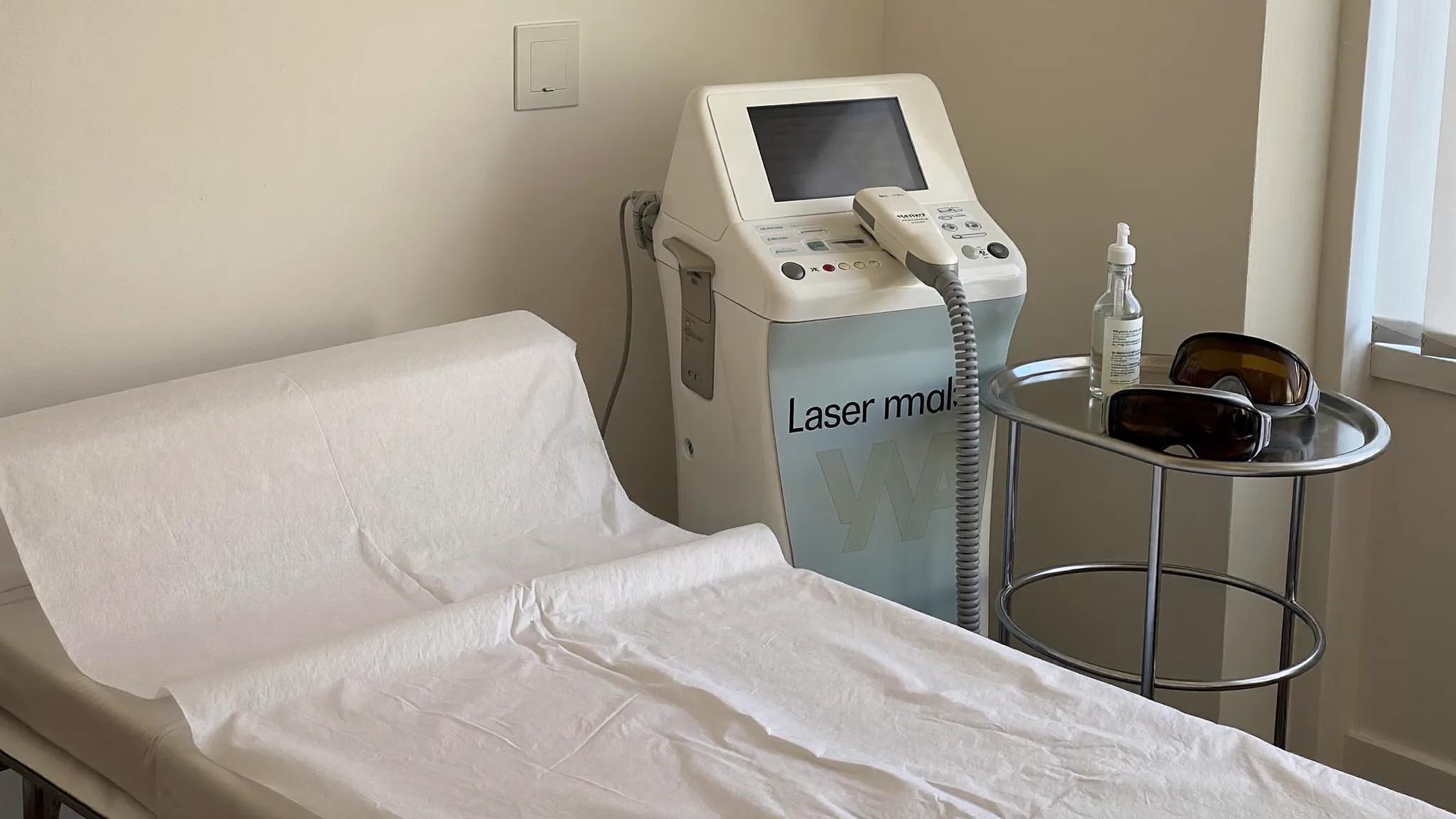
Rare side effects and serious risks
This is the section people scroll straight to, and fair enough. Rare does not mean impossible, and knowing what drives these problems is the best way to avoid them.
| Rare risk | What it looks like | Usual cause | What lowers the risk |
|---|---|---|---|
| Burns | Pain that builds over hours, deep redness, sometimes a grid or stamp pattern matching the handpiece | Tanned skin, energy too high for the skin type, poor cooling, wrong wavelength | Honest skin assessment, no tan, suitable wavelength, built-in cooling |
| Blisters | Fluid-filled bubbles within a day or two | Excess heat in the outer skin | Same as burns; do not pop blisters |
| Scarring or texture change | Raised, sunken or shiny skin that persists | Almost always follows a burn, blister or infection, often after picking | Prompt care of any blister, no picking, keep the area clean |
| Long-lasting pigment change | Darker or lighter patch lasting many months or longer | Treating deeper or tanned skin with a less suitable wavelength, sun afterwards | Longer wavelengths such as Nd:YAG on deeper skin, strict sun protection |
| Paradoxical hypertrichosis | More, darker or thicker hair in or next to the treated area | Not fully understood; seen mostly on the face and neck, often with fine hair | Realistic candidacy discussion, careful treatment of borders |
| Eye injury | Vision changes, pain or light sensitivity | Laser light reaching the eye without protection | Proper eyewear for everyone in the room, no treatment inside the eye orbit |
| Infection | Increasing pain, warmth, pus, spreading redness, fever | Broken skin, scratching, a popped blister | Clean, gentle aftercare and early review |
Burns and blisters
The American Society of Plastic Surgeons lists blistering, crusting, scarring and other changes in skin texture among possible risks (this is U.S. guidance, included for context). In my experience, a burn after laser hair removal almost always has a story behind it. A recent beach holiday. A spray tan someone forgot to mention. A medication that makes skin more light sensitive. Or a device and setting that did not suit that person’s skin. That is reassuring in a way, because those are things a good consultation catches.
If a blister does form, leave it intact, keep it clean, and contact the clinic. Popping a blister opens the door to infection, which is the real route to scarring.
Scarring
Scarring from laser hair removal is very rare. When it happens, it usually follows a burn or blister that got infected or was picked. Anyone with a history of keloids or raised scars should say so up front, since the provider may want to test a small spot first or change the approach.
Paradoxical hypertrichosis
This is the strange one. In a small number of people, hair in or near the treated area grows back thicker or darker rather than thinner. A 2005 study in the Journal of the American Academy of Dermatology described it after laser epilation, and it has been reported with several laser types and IPL since. It is seen most on the face and neck, often where hair is fine to begin with, and it seems more common in people with hormonal hair growth. Nobody fully understands why it happens. One theory is that energy too low to destroy a follicle may instead stimulate it. If you notice it, tell your provider rather than quietly booking more sessions, because the plan may need to change.
Eye safety
The eye contains pigment too, which is why eye protection is not optional. The AAD notes that everyone in the treatment room must wear protective eyewear. Treating hair close to the eyes, including the eyebrows, is generally avoided for this reason. Any eye pain or change in vision after a session needs urgent medical attention.
How long do laser hair removal side effects last?
Having a rough timeline in your head stops you from second-guessing a normal reaction. These ranges are typical, not promises. Your own skin may run a little faster or slower.
| Reaction | When it usually starts | How long it usually lasts |
|---|---|---|
| Redness and warmth | During or right after the session | A few hours, sometimes up to a day |
| Bumps around follicles | Within minutes | A few hours to about 2 days |
| Swelling on the face or upper lip | Within an hour | Up to 2 to 3 days |
| Itching or dryness | Day 1 to 2 | A few days |
| Shedding of treated hairs | Around day 5 to 14 | 1 to 3 weeks |
| Folliculitis | Day 2 to 5 | About a week if mild |
| Crusting | Day 1 to 3 | About 5 to 10 days |
| Darker or lighter patches | Days to weeks after | Weeks to several months, occasionally longer |
Short-term versus long-term side effects
Almost everything people experience is short term. Long-term side effects, meaning anything still present after several months, are uncommon and mostly limited to pigment changes and, very rarely, scarring. The review by Lim and Lanigan in Lasers in Medical Science concluded that the overall incidence of adverse effects after laser and light hair removal appears to be low, with very uncommon permanent effects, and that the majority of adverse effects are transient and minor. Hair reduction itself is the intended long-term change, of course, and it is worth knowing that laser hair removal is best described as long-term reduction rather than guaranteed permanent removal.
When a reaction lasts longer than expected
A good rule: normal reactions get steadily better day by day. If something is getting worse after the first 24 to 48 hours, or has not improved at all after several days, it is time to check in. Not to panic. Just to have someone look.
Normal reaction or warning sign?
This is probably the most useful table in the article. The left column is what you can expect and manage at home. The middle column is worth a message to the clinic. The right column needs prompt medical care.
| Usually normal | Contact your clinic | Seek prompt medical care |
|---|---|---|
| Pink or flushed skin that fades over hours | Redness still strong after 3 days | Redness that spreads outward with heat, swelling and pain |
| Goosebump-like bumps for a day | Bumps turning into many pus-filled spots | Pus with fever or feeling unwell |
| Mild warmth and tenderness | Tenderness that increases on day 2 instead of easing | Severe or rapidly worsening pain |
| Light itching | Any blister, even a small one | Large blisters or open, weeping skin |
| Hairs shedding over 1 to 3 weeks | A patch noticeably darker or lighter than surrounding skin | Eye pain or any change in vision |
| Faint singed smell during treatment | Thicker or darker hair appearing in or near the treated area | Signs of an allergic reaction such as facial swelling or trouble breathing |
If you are unsure which column you are in, take that as a reason to ask. A photo sent to your clinic usually settles it within a day. Clinics would much rather hear from you early than see a small problem after it has had a week to grow. For general medical advice in Ontario outside clinic hours, Health811 is available by phone, and anything that feels urgent belongs at an emergency department or with 911.
Who is more likely to get side effects?
Risk is not spread evenly. A few factors make a big difference, and the most important ones are things you can talk about openly at a consultation.
Skin tone and the Fitzpatrick scale
The laser needs to tell the difference between pigment in the hair and pigment in the skin. On lighter skin with dark hair, that contrast is high and the laser can focus on the follicle. On deeper skin, more melanin sits in the outer layer, so a wavelength that is too short can heat the surface. That is where most pigment changes and burns come from.
The research on this is fairly clear. The Lim and Lanigan review found pigment changes in up to 19% of treatments with shorter-wavelength lasers, particularly in darker skin types, compared with 2 to 3% using the longer-wavelength Nd:YAG laser. The practical takeaway is not that deeper skin cannot be treated. It can. It is that the wavelength and settings matter more. We go into this in our page on laser hair removal for dark skin and in our comparison of diode, alexandrite and Nd:YAG lasers.
| Skin type (general) | Main side effect consideration | What usually helps |
|---|---|---|
| Very fair (Fitzpatrick I to II) | Low pigment risk, but light, red or grey hair may respond poorly | Honest expectations about hair colour; sun protection still matters |
| Light to medium (III) | Generally good candidates; some risk of temporary darkening after sun | No tanning before or after; appropriate settings |
| Medium to olive (IV) | Higher chance of temporary darkening with shorter wavelengths | Wavelength chosen for the skin, cooling, gradual adjustments |
| Deep (V to VI) | Highest risk of pigment change or burns if the wavelength is unsuitable | Longer wavelengths such as Nd:YAG, conservative settings, experienced provider |
A tan, including a fake one
This is the single biggest avoidable risk factor. Tanned skin holds extra pigment at the surface, which absorbs laser energy that was meant for the follicle. The ASPS advises that anyone who has tanned, used a spray tan or gone to a tanning booth should wait until the tan has faded. Self-tanner is not a laser risk in quite the same way as a real tan, but it can interfere with assessment and absorption, so tell your provider about it. Our guide on tanning after laser hair removal covers the timing in more detail.
Medications and skincare that increase sensitivity
Some medicines make skin more sensitive to light, including certain antibiotics, some acne medications and some other prescription drugs. Recent isotretinoin use is a common reason to delay treatment, although advice on how long to wait varies and should come from the prescriber or a doctor. Topical retinoids, strong acids and benzoyl peroxide can make the surface more reactive too, and our own preparation advice is to pause them before treatment. Please bring a full list of what you take, including supplements, rather than guessing which ones matter.
Hormonal hair and conditions such as PCOS
Hormonal hair growth on the chin, jaw and neck does not by itself increase the risk of burns. It does seem linked to a higher chance of paradoxical hypertrichosis and to needing more sessions. New or rapidly increasing facial or body hair is worth raising with a doctor, since it can have a medical cause that laser does not treat.
Pregnancy
There is not good evidence that laser hair removal harms a pregnancy, but it has not been well studied, and skin is more prone to pigment changes during pregnancy. Most clinics, including ours, prefer to wait. Our article on laser hair removal during pregnancy explains the reasoning.
Side effects by body area
Where you are treated changes what you are likely to feel afterwards. Thin, sensitive or high-friction skin tends to react more, and dense hair means more follicles heating at once.
| Area | What is typical | Worth knowing |
|---|---|---|
| Upper lip and chin | Redness, noticeable puffiness, small bumps | Cold sore flare-ups possible; hormonal hair may need more sessions |
| Rest of the face and neck | Redness and mild swelling | Paradoxical hypertrichosis is reported most often here; sun protection is essential |
| Underarms | Redness, tenderness, brief itching | Skip deodorant for about a day; friction can trigger folliculitis |
| Bikini and Brazilian | More obvious redness and follicle bumps | Thin, sensitive skin; loose cotton clothing helps |
| Legs and arms | Redness that fades quickly | Lower legs are often sun-exposed, so watch for a tan before booking |
| Back, chest and shoulders | Redness and occasional folliculitis | Sweat from workouts can irritate; shower gently after exercise |
| Men’s beard line | Redness, swelling, bumps | Dense coarse hair absorbs a lot of energy; folliculitis is more common |
The face
Facial skin is thin and sun-exposed year-round, so it is where both pigment changes and paradoxical hair growth are discussed most. We wrote a separate guide on whether laser hair removal is safe for the face, and our facial laser hair removal and lip and chin pages describe how those treatments work at the clinic.
Underarms and bikini line
These areas tend to look angrier than they are because the skin is thin and the hair is often dark and coarse. A day of redness and bumps is normal. Pain that builds or blistering is not. You can read more on our underarm and bikini area treatment pages.
Back, chest and men’s areas
Large areas with dense hair mean a lot of follicles reacting at once, so redness can look widespread for a few hours. Folliculitis is a bit more common on the back and beard line. Our pages on back laser hair removal and laser hair removal for men go into those areas.
Does laser hair removal cause cancer or other long-term health problems?
No credible evidence shows that laser hair removal causes cancer. Hair removal lasers use non-ionizing light, which is a different category from the ionizing radiation in X-rays that can damage DNA. The energy is absorbed by pigment in the hair and the upper layers of skin, and it does not travel deep enough to reach internal organs.
Fertility and internal organs
For the same reason, there is no recognized link between laser hair removal on the bikini or abdominal area and fertility. The light simply does not penetrate that far. People ask about this a lot, especially before Brazilian treatment, and I understand why. The word laser sounds more dramatic than the physics.
Moles and skin checks
What laser can do is change the look of a mole or pigmented spot, which matters for a different reason: it can make future skin checks harder. Most providers avoid treating directly over moles. If you have many moles or a personal or family history of skin cancer, raise it at the consultation, and keep up with regular skin checks with your doctor. A new or changing spot should be looked at by a physician whether or not you are having laser treatment.
What actually causes most complications
Here is the part I find oddly reassuring. When you look at why laser hair removal goes wrong, the list is short, and most of it is preventable.
| Cause | Why it raises risk | Who controls it |
|---|---|---|
| Recent tan or sunburn | Extra surface pigment absorbs energy meant for the follicle | Mostly you, with an honest clinic check |
| Wavelength not suited to the skin | Shorter wavelengths heat surface pigment more on deeper skin | The clinic |
| Energy settings too high for the skin | More heat than the skin can tolerate | The clinic |
| Inadequate cooling | The surface is not protected while the follicle heats | The clinic |
| Photosensitizing medications or actives | Skin reacts more strongly to light | Shared: you disclose, the clinic adjusts or delays |
| Waxing or plucking before sessions | Removes the root, can lead to uneven energy absorption and less effective treatment | You |
| Sun, heat or picking afterwards | Turns minor irritation into pigment change or infection | You |
| At-home devices used outside instructions | No assessment, no adjustment for skin tone | You |
Where at-home devices fit in
At-home laser and IPL devices are designed with lower power so a beginner is less likely to cause harm. That is a reasonable design choice, but lower power is not the same as no risk, and many devices are not intended for deeper skin tones. The bigger difference is judgment. A device cannot look at your skin, notice a tan or adjust for a mole. If you use one, follow its instructions closely and stop if your skin reacts in ways you did not expect.
How to lower your risk before and after each session
Some of the work sits with the clinic and some sits with you. Neither half is complicated.
Before your session
- Avoid sun exposure and tanning (including tanning beds) for several weeks before, and tell your provider about any spray tan or self-tanner.
- Shave the area about a day before unless told otherwise. Do not wax, pluck, thread or epilate between sessions. Our guide on shaving between laser sessions explains why.
- Pause retinoids, strong exfoliating acids and benzoyl peroxide on the area as advised.
- Bring a list of all medications and supplements, and mention cold sores, keloids, recent isotretinoin, pregnancy or any skin condition.
- Arrive with clean skin, free of lotion, deodorant or makeup on the area.
Our full checklist is in how to prep for your laser hair removal session.
In the first 48 hours after
- Use a cool compress or a fragrance-free soothing gel for warmth and redness.
- Skip hot showers, baths, saunas, steam rooms, hot yoga and hard workouts for about a day or two.
- Avoid deodorant on treated underarms and makeup on treated facial skin for about 24 hours, or as advised.
- Wear loose, soft clothing over the bikini area, back or legs.
- Do not scratch, pick or exfoliate.

In the weeks between sessions
Sun protection is the long game. Cover the area or use a broad-spectrum sunscreen of SPF 30 or higher on exposed skin, and avoid tanning altogether during your course. Gentle exfoliation can start again after a few days once the skin has settled. We cover all of this, area by area, in our laser hair removal aftercare guide.
| Product or habit | Usual advice after a session | Why |
|---|---|---|
| Retinoids (retinol, tretinoin) | Pause for several days, as advised | They thin the outer layer and increase irritation |
| Exfoliating acids (AHA, BHA) | Pause for several days | Treated skin is more reactive |
| Fragranced lotions and perfume | Avoid on the area for a day or two | Fragrance can sting and irritate |
| Deodorant (underarms) | Skip for about 24 hours | Reduces stinging and irritation |
| Sunscreen | Use daily on exposed treated skin | Lowers the risk of pigment changes |
| Fragrance-free moisturizer or aloe gel | Fine to use | Soothes dryness and itch |
| Swimming pools and hot tubs | Wait a day or two | Chlorine and heat can irritate open follicles |
Laser hair removal side effects in a Toronto context
Toronto’s seasons actually help here, and I do not think people use that enough. From late fall through early spring most skin is covered and untanned, which lowers the biggest single risk factor. Starting a course in October or November means your first several sessions happen when sun exposure is naturally low.
Winter is not risk-free
Winter brings its own small issues. Dry indoor heat can make treated skin itchier, so a plain moisturizer becomes more important. Ski trips and southern holidays are the hidden catch. A week in the sun in February can leave enough of a tan to postpone a session, so it is worth timing appointments around travel rather than squeezing one in the day before a flight.
Spring and summer
As the weather warms, legs, arms, underarms and the face see more sun. You can still continue treatment in summer with care, but the margin for error is smaller. If you are planning a full course, our post on how many laser hair removal sessions you need can help you map it against the calendar.
Laser hair removal compared with other hair removal methods
Every hair removal method has side effects. It is fair to compare them, because the alternative to laser is rarely no hair removal at all for people asking these questions.
| Method | Common side effects | Less common risks | How often it is repeated |
|---|---|---|---|
| Laser hair removal | Redness, follicle swelling, mild itching | Pigment change, burns, blisters, paradoxical hair growth | A course of sessions, then occasional maintenance |
| Shaving | Razor burn, nicks, razor bumps | Ingrown hairs, folliculitis | Every day or few days |
| Waxing and sugaring | Redness, pain, bumps | Ingrown hairs, burns from hot wax, skin lifting with some acne medications | Every 3 to 6 weeks |
| Depilatory creams | Stinging, redness | Chemical irritation or burns, allergic reactions | Every few days |
| Electrolysis | Redness, tenderness, small scabs | Pigment change, small pitted scars | Many sessions, follicle by follicle |
Ingrown hairs and razor bumps
For a lot of people, the side effects of shaving and waxing are the reason they start laser in the first place. Fewer, finer hairs mean fewer chances for a hair to curl back into the skin. We wrote about that in laser hair removal and ingrown hairs. Improvement is gradual, though, and a few ingrowns can still appear early in a course.
When laser is not the right fit
Laser relies on pigment in the hair, so blonde, red, grey and white hair usually respond poorly. In that case, more sessions rarely help, and electrolysis is often the better conversation. Laser may also be postponed during pregnancy, with an active skin infection, or after recent isotretinoin. None of this is a judgment on anyone’s hair. It is about matching the method to the person.
Questions to ask about side effects at your consultation
A good consultation should leave you feeling informed, not sold to. These questions help.
| Question | Why it is worth asking |
|---|---|
| Which laser wavelength will you use on my skin, and why? | Wavelength choice is one of the biggest factors in pigment risk |
| What reactions should I expect after my first session? | Knowing what is normal prevents unnecessary worry |
| Do any of my medications or skincare products need to pause? | Photosensitizing drugs and actives raise risk |
| How do you adjust if my skin reacts strongly? | Shows how the clinic manages settings over a course |
| Is my hair colour likely to respond? | Avoids paying for sessions that may not work |
| What should I do if I get a blister or a dark patch? | You want a clear plan before anything happens |
| Who do I contact after hours? | Useful for peace of mind |
| What does each session cost, and are packages optional? | Lets you plan without pressure |
Price matters too, of course, and it is worth comparing on more than the number alone. Our guide to the cost of laser hair removal in Toronto covers the factors that change it.
How we keep side effects small at Rejuvenation Med Clinic
At our clinic on Portland Street in downtown Toronto, every laser hair removal course starts with a free consultation. One of our three medical aestheticians, who have more than 20 years of combined experience, looks at your skin tone, hair colour and thickness, medical history, medications and the areas you want treated before anything is switched on. They explain which laser they would use, what reactions are likely, and roughly how many sessions you may need.
We use the Soprano ICE Platinum, which combines alexandrite, diode and Nd:YAG wavelengths in one handpiece with built-in cooling, along with the Venus Velocity diode laser for larger areas. Having more than one wavelength available helps us match treatment to lighter and deeper skin tones rather than taking a single approach for everyone. As our service page says, mild redness, swelling or warmth is common and usually settles within a few hours, and rarely blistering or temporary changes in skin colour can occur, which is why the right settings for your skin type and an experienced practitioner matter. You pay per session with no contract. You can meet the people involved on our team page, and common questions are answered on our FAQ page.
We cannot promise that anyone will have zero side effects. Nobody honestly can. What we can do is explain the risks clearly, take your history seriously, and adjust if your skin tells us something during the course.
Frequently asked questions
What are the most common side effects of laser hair removal?
The most common side effects are redness, swelling and small raised bumps around the follicles, warmth, tenderness and mild itching. Treated skin often looks like a mild sunburn. These usually fade within a few hours to about three days. Shedding of treated hairs over one to three weeks is also normal.
Is laser hair removal safe?
For most adults, laser hair removal is considered safe when it is done by trained providers with a wavelength and settings suited to the skin. Serious complications are uncommon and are usually linked to tanned skin, unsuitable settings or poor aftercare. It is not risk-free, so a proper assessment before treatment matters.
How long do laser hair removal side effects last?
Redness and follicle bumps usually settle within hours to about two days, and swelling on the face can last two to three days. Itching may last a few days, and shedding takes one to three weeks. Pigment changes, if they happen, can take weeks to several months to fade.
Can laser hair removal burn your skin?
Yes, but burns are rare when treatment is matched to the skin. They are most often linked to a recent tan, energy settings that are too high for the skin type, the wrong wavelength or inadequate cooling. Pain that builds over hours, blistering or a handpiece-shaped mark should be reported to the clinic promptly.
Why is my skin darker after laser hair removal?
Darker patches, called hyperpigmentation, can appear when heat and inflammation prompt the skin to make extra pigment. They are more likely on medium to deep skin tones and on recently tanned skin. Most fade over weeks to a few months with strict sun protection. Let your provider know so settings can be reviewed.
Why is my skin lighter after laser hair removal?
Lighter patches, called hypopigmentation, happen when heat affects the pigment-producing cells in the outer skin, often when the skin was tanned. They are less common than darkening and usually recover, though more slowly. Occasionally the change is permanent, which is one reason clinics avoid treating over a tan.
What are the long-term side effects of laser hair removal?
Long-term side effects are uncommon. When they occur, they are usually lasting pigment changes or, very rarely, scarring after a burn, blister or infection. A published review found most adverse effects are transient and minor, with very uncommon permanent effects. Sun protection and good aftercare lower the small remaining risk.
Does laser hair removal cause cancer?
There is no credible evidence that laser hair removal causes cancer. Hair removal lasers use non-ionizing light that is absorbed by pigment in the hair and upper skin and does not reach internal organs. Providers usually avoid treating directly over moles, and any new or changing spot should be checked by a doctor.
Can laser hair removal make hair grow back thicker?
Rarely, yes. This is called paradoxical hypertrichosis, where hair in or near a treated area grows thicker or darker. It is reported most on the face and neck, often with fine hair, and seems more common with hormonal hair growth. If you notice it, tell your provider so the plan can be adjusted.
Is it normal to have bumps after laser hair removal?
Yes. Small raised bumps around the follicles, called perifollicular edema, are a normal reaction and usually settle within a few hours to two days. Bumps that appear several days later and turn red or pus-filled may be folliculitis, which is usually mild but should be checked if it spreads or persists.
Can laser hair removal cause acne or folliculitis?
It can cause temporary folliculitis, small inflamed bumps around the follicles, especially on the back, chest, bikini line, underarms and beard area. Most cases are mild and settle within about a week with gentle cleansing and loose clothing. Spreading, painful or persistent bumps should be assessed by a clinician.
Is laser hair removal safe for dark skin?
Yes, deeper skin tones can be treated safely with a suitable wavelength, such as Nd:YAG, and appropriate settings. The main extra risk is pigment change. A published review found pigment changes in up to 19% of treatments with shorter wavelengths in darker skin, compared with 2 to 3% with Nd:YAG.
Can I get laser hair removal if I have a tan?
It is best to wait until the tan has fully faded. Tanned skin holds extra surface pigment that absorbs laser energy, raising the risk of burns and pigment changes. Tell your provider about sun exposure, tanning beds, spray tans or self-tanner, since each can affect whether and how you are treated.
What should I avoid after laser hair removal?
For about a day or two, avoid hot showers, saunas, hot tubs, swimming pools, hard workouts, fragranced products, deodorant on treated underarms and makeup on treated facial skin. Do not scratch or pick. Avoid sun and tanning throughout your course, and use sunscreen on exposed treated skin.
Can laser hair removal cause cold sores?
It can trigger a cold sore outbreak in people who already carry the herpes simplex virus, mainly when treating the upper lip or chin. Mention any history of cold sores at your consultation. A doctor may suggest preventive medication before facial treatment, which helps lower the chance of a flare.
Does laser hair removal affect fertility?
There is no recognized link between laser hair removal and fertility. The light is absorbed by pigment in the hair and upper skin and does not penetrate deeply enough to reach the ovaries, testes or other internal organs. Laser treatment is generally postponed during pregnancy as a precaution, since it has not been well studied.
When should I see a doctor after laser hair removal?
Seek prompt medical care for spreading redness with heat and pain, pus with fever, large or open blisters, severe or worsening pain, eye pain or vision changes, or signs of an allergic reaction. Contact your clinic for smaller blisters, darker or lighter patches, or redness still strong after three days.
Are side effects worse on the bikini area or face?
Reactions are often more noticeable on the bikini area, upper lip and chin because the skin is thinner and more sensitive. Expect more redness and puffiness there, usually for a day or two. The face also needs extra sun protection, and cold sore history matters for the lip and chin.
Talk it through before you decide
If you are weighing up laser hair removal and the side effects are what is holding you back, a consultation is the most reliable way to get an answer for your own skin. You can discuss your skin tone, hair, medical history, medications and goals, and ask about the laser that would be used, expected reactions, risks, aftercare, alternatives such as electrolysis, and current pricing. A consultation does not oblige you to go ahead, and any plan can change after an individual assessment. You can book a free consultation online, read more on our laser hair removal Toronto page, or use our contact page if you would like to ask a question first.
This article is general education and not medical advice or a diagnosis. Suitability, side effects and results vary from person to person, and the recommendations of the professional who assesses your skin take priority. Seek prompt medical care for any reaction that is severe, spreading or getting worse.