

Laser hair removal aftercare is mostly about keeping treated skin cool, clean and protected while it settles. For the first 24 to 48 hours, soothe any redness with a cool compress or plain aloe gel, wash gently with lukewarm water and a mild cleanser, and skip hot showers, saunas, hard workouts, fragranced products and harsh actives. Protect the area from the sun with clothing and a broad-spectrum SPF 30 or higher between sessions, shave rather than wax or pluck, and let the treated hairs shed on their own over the next one to three weeks.
That is the short version, and it covers most of what people need. But aftercare questions tend to get very specific once you are standing in your bathroom the night after a session. Can I put deodorant on? Is this bump normal? I have a spin class tomorrow, does that count as a hard workout? Why does it look like the hair is growing back already? We hear some version of these every week, so this guide tries to answer them in the order they usually come up.
This is general education for adults in Toronto who have had, or are planning, laser hair removal. It is not a diagnosis and it does not replace the specific instructions your provider gives you, which should always come first because they know the laser, the settings and your skin. You can read how we approach treatment on our laser hair removal in Toronto page. Body hair is normal, by the way, and nothing here is meant to suggest anyone should remove it.
Related Service: Laser Hair Removal at Rejuvenation Med Clinic
Key takeaways
- Mild redness, warmth and small raised bumps around the follicles are common after laser hair removal and usually settle within a few hours to a day or two.
- For roughly the first 24 to 48 hours, avoid heat and friction: hot showers and baths, saunas, steam rooms, hot tubs, intense exercise and tight clothing over the area.
- Use gentle, fragrance-free products and pause retinoids, exfoliating acids, scrubs and other irritating actives on the treated skin for a few days, or as your provider advises.
- Sun protection matters for the whole course of treatment, not just the first week, because tanned or sun-irritated skin raises the risk of burns and pigment changes at the next session.
- Shaving is fine between sessions once the skin has calmed. Waxing, plucking, threading and epilating remove the root the laser needs.
- Treated hairs often look like they are growing at first. They are usually being pushed out and tend to shed over one to three weeks.
- Blisters, crusting, pain that gets worse, spreading redness, pus, fever or new light or dark patches are not routine and should be checked.
What should you do right after laser hair removal?
Right after a session, treated skin often looks and feels a bit like a mild sunburn. It might be pink, warm to the touch, a little tight, and dotted with small bumps around each follicle. Clinicians sometimes call these bumps perifollicular edema, which is just a fancy way of saying the follicle area is briefly swollen from the heat. The American Academy of Dermatology notes that redness and swelling after laser hair removal are common and usually short-lived, and that matches what most of our clients see.
Cool it down, gently
A cool compress is the simplest thing you can do. A clean cloth soaked in cool water, or an ice pack wrapped in a thin towel, held on the skin for ten minutes or so at a time, usually takes the edge off the warmth. Never put ice directly on freshly treated skin. It sounds soothing, I know, but it can cause its own irritation, and cold injury on top of heat is not what the skin needs.
Use a plain soothing gel or moisturizer
Pure aloe vera gel, or a bland fragrance-free moisturizer, can make the area feel more comfortable. Check the label. A lot of “aloe” products are mostly fragrance, alcohol and colour, and those can sting. If your provider gave you a specific post-treatment product, use that instead of experimenting.
Leave it alone as much as you can
This is the part people find surprisingly hard. Do not rub, scratch, scrub or pick at the treated area, even if the bumps feel odd. Pat rather than rub when you dry off. Loose, soft clothing over the area helps, especially after bikini, underarm or leg sessions, where seams and waistbands can chafe.
Laser hair removal aftercare timeline: the first hour to the next session
Aftercare is easier to follow when you think of it in stages. The exact timing can vary with the laser used, your skin type and the area treated, so treat the ranges below as typical guidance rather than fixed rules.
| Time after treatment | What is common | What to do | What to avoid |
|---|---|---|---|
| First few hours | Warmth, pinkness, small bumps around follicles, mild tenderness | Cool compress, plain aloe or fragrance-free moisturizer, loose clothing | Hot water, rubbing, fragranced products, makeup on irritated facial skin |
| First 24 hours | Redness and bumps usually fading, skin may feel a little sensitive | Lukewarm showers, gentle cleanser, pat dry, stay hydrated | Deodorant on freshly treated underarms, saunas, hot tubs, intense workouts |
| 24 to 48 hours | Most skin looks close to normal, sometimes a little dry | Resume light activity if skin is calm, keep moisturizing | Chlorinated pools and very hot environments if skin still feels irritated |
| Days 3 to 7 | Treated hairs may seem to be growing or look like stubble | Gentle routine, sun protection, shave if needed once skin is calm | Waxing, plucking, threading, epilating, harsh scrubs, tanning |
| Weeks 1 to 3 | Treated hairs shed gradually, patchy regrowth is common | Light exfoliation if your provider agrees, consistent SPF | Pulling hairs out, sun exposure on the treated area |
| Between sessions | New hairs entering their growth phase | Shave only, protect from sun, book your next session at the interval you were given | Tanning beds, self-tanner close to treatment, waxing |
What not to do after laser hair removal
Most aftercare mistakes come from heat, friction, the sun, or removing hair the wrong way. None of them are disasters on their own, usually, but they can turn a calm recovery into a few days of irritated skin, and the sun in particular can make your next session riskier.
Avoid heat for the first day or two
Heat increases blood flow to skin that is already a bit inflamed. That is why most clinics ask you to skip hot showers and baths, saunas, steam rooms and hot tubs for roughly 24 to 48 hours. A warm shower is fine. A long, steaming one probably is not, at least not on the first night.
Skip hard workouts briefly
Sweat and friction are the issue with exercise rather than movement itself. A walk is fine. A hot yoga class, a long run in tight leggings after a leg session, or a heavy gym session in a sweaty shirt after a back treatment is the kind of thing to push back a day or two. More on this below, since it is one of the most common questions we get.
Pause harsh products on the treated skin
Retinoids, glycolic, salicylic and other exfoliating acids, benzoyl peroxide, scrubs and strongly fragranced products can all sting and irritate freshly treated skin. Most people restart them after a few days once the skin is fully calm, but follow your provider’s timing, especially for the face.
Do not pluck, wax or tweeze
Laser hair removal works by heating the pigment in the hair and the follicle around it, so the root needs to stay in place for future sessions. Waxing, sugaring, threading, plucking and epilating all pull the root out. Shaving does not, which is why it is the one method that fits between sessions. We go into more detail in whether you can shave between laser sessions.
Do not tan
This one deserves its own section, so it gets one further down.
| Do | Don’t |
|---|---|
| Use cool compresses and a plain soothing gel or fragrance-free moisturizer | Put ice straight on the skin or use heavily fragranced lotions |
| Wash with lukewarm water and a mild cleanser, then pat dry | Take very hot showers or baths in the first day or two |
| Wear loose, breathable clothing over the area | Wear tight waistbands, shapewear or rough fabrics over freshly treated skin |
| Protect the area from the sun with clothing and broad-spectrum SPF 30 or higher | Sunbathe, use tanning beds or apply self-tanner close to a session |
| Shave between sessions once the skin has settled | Wax, pluck, thread, sugar or epilate |
| Let treated hairs shed naturally | Pull out hairs that seem loose |
| Call your clinic about anything that seems unusual | Treat blisters or crusting at home without advice |
Can you shower after laser hair removal?
Yes, you can usually shower the same day. Keep the water lukewarm rather than hot, use a mild fragrance-free cleanser, avoid scrubbing the treated area with a loofah or washcloth, and pat the skin dry with a clean towel. If your skin is very red or tender, a quick cool rinse is often more comfortable than a full shower.
Baths, hot tubs and pools
Long hot baths and hot tubs are worth avoiding for about 24 to 48 hours, mainly because of the heat. Chlorinated pools can sting irritated skin, and many clinics suggest waiting until the redness and bumps have settled, often a day or two. If you swim regularly for training, mention it at your appointment so your provider can tell you what makes sense for your area and your skin.
Can you work out after laser hair removal?
Light activity is generally fine, but most clinics recommend waiting about 24 to 48 hours before intense exercise that makes you sweat heavily or creates friction on the treated area. Sweat can irritate inflamed follicles and may contribute to bumps or folliculitis, and heat from exertion can make redness linger.
A practical way to think about it
I usually suggest people ask two questions. Will this workout make the treated area hot and sweaty? Will clothing or equipment rub against it? If the answer to both is no, a gentle session is usually reasonable once the skin feels calm. A walk after an upper lip session is very different from a long cycling class the evening after a bikini treatment, and it is fine to use common sense.
After your workout
When you do return to the gym, change out of sweaty clothes soon afterwards and rinse with lukewarm water. It is a small habit, but it seems to help people who are prone to bumps.
Can you put on deodorant, makeup or skincare after laser?
This depends on the area, and on the product. The general approach is to keep anything potentially irritating off the treated skin until the redness has settled.
Deodorant after underarm laser hair removal
Most clinics suggest skipping deodorant and antiperspirant on freshly treated underarms for about 24 hours, longer if the skin is still irritated. Fragrance and some antiperspirant ingredients can sting. If you really need something, ask your provider whether a plain, fragrance-free product is reasonable for you. Our underarm laser hair removal page covers what treatment of this area involves.
Makeup after facial laser hair removal
For the face, many providers suggest waiting until the skin is no longer red, often about 24 hours, before putting on makeup. When you do, use clean brushes or sponges. If you are considering treatment for facial hair, our facial laser hair removal in Toronto page and the article on whether laser hair removal is safe for the face are useful background reading.
Skincare ingredients to pause
| Product or ingredient | Why it can be a problem after laser | Typical approach |
|---|---|---|
| Retinoids (retinol, tretinoin, adapalene) | Can increase sensitivity and peeling | Pause on the treated area for a few days, or as advised; prescription products should be discussed with your prescriber |
| Exfoliating acids (glycolic, lactic, salicylic) | Can sting and irritate inflamed follicles | Pause for a few days, restart once skin is calm |
| Benzoyl peroxide | Drying and irritating on sensitive skin | Pause on the treated area for a few days |
| Physical scrubs, loofahs, exfoliating mitts | Friction on inflamed skin | Wait about a week, then use gently if your provider agrees |
| Fragranced lotions, perfumes, body sprays | Common irritants | Avoid on the area for at least a day or two |
| Self-tanner | Adds colour to the skin surface, which can complicate the next session | Avoid near your sessions, ask your provider about timing |
| Plain moisturizer, aloe gel, mineral or broad-spectrum sunscreen | Generally well tolerated | Fine to use, choose fragrance-free |
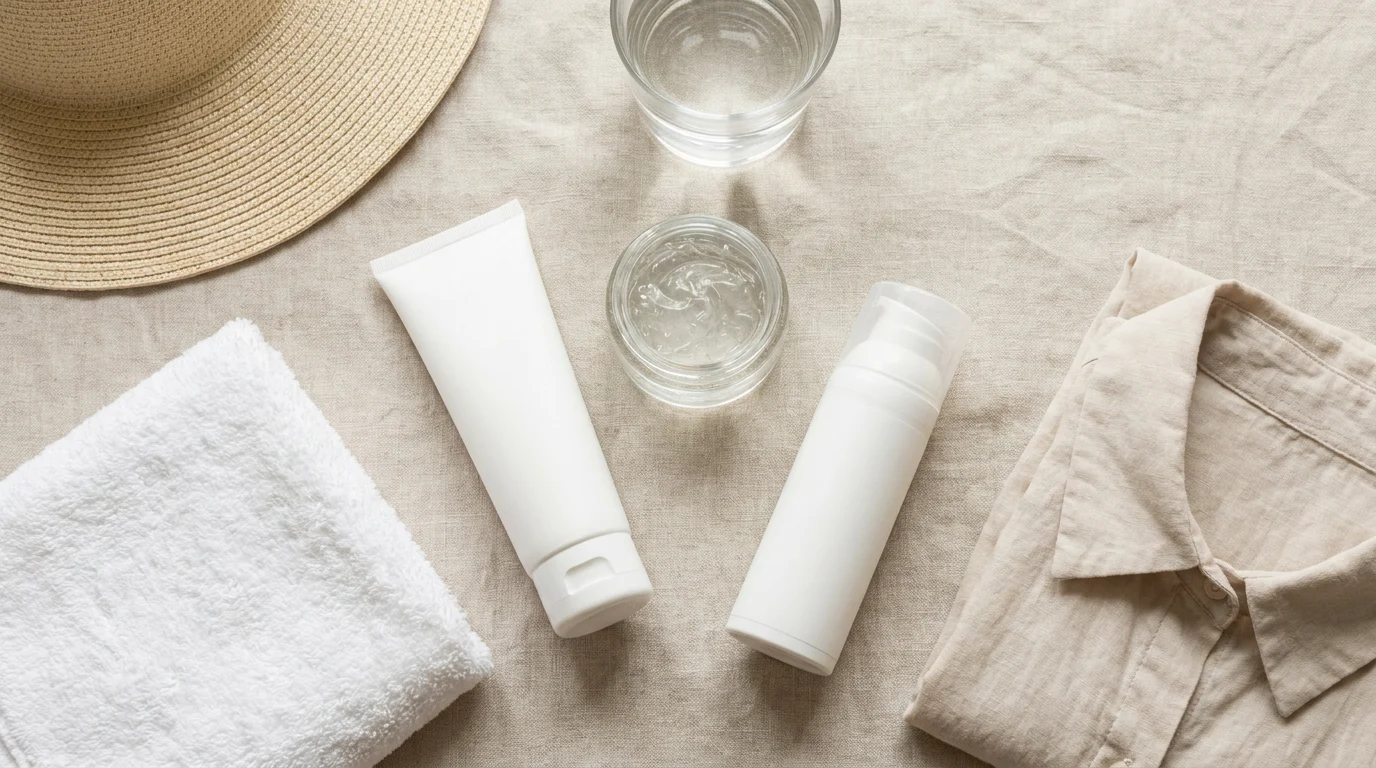
Why sun protection matters after laser hair removal
Sun exposure is the aftercare rule with the longest tail. Lasers used for hair removal target pigment. When skin is tanned or recently sun-irritated, there is more pigment in the skin itself competing with the hair, which raises the chance of burns, blistering and changes in skin colour. That is why sun avoidance is part of preparing for a laser hair removal session and also part of what you do after one.
How long to avoid the sun
Many clinics recommend avoiding direct sun on the treated area for at least one to two weeks after each session, and protecting it consistently for the whole course of treatment. In practical Toronto terms, that is easier in November than in July. Covering the area with clothing is the most reliable protection, and a broad-spectrum sunscreen with SPF 30 or higher on any exposed treated skin is a sensible habit year round, including cloudy days and winter days with snow glare.
Tanning beds and self-tanner
Tanning beds should be avoided during a course of laser hair removal. Self-tanner does not involve UV, but it does change the colour of the skin surface, and most clinics ask you to stop using it in the weeks around a session and to let it fade before you come in. Our post on tanning after laser hair removal goes through this in more detail, including summer timing.
A note on darker skin tones
People with darker skin can absolutely have laser hair removal with the right laser and settings, often a longer-wavelength approach such as Nd:YAG. Pigment changes after treatment can be more noticeable on deeper skin, though, so sun protection and careful aftercare matter even more. Our page on laser hair removal for dark skin explains how treatment is adapted, and the article comparing diode, alexandrite and Nd:YAG lasers covers the technology side.
When does hair fall out after laser hair removal?
Treated hairs usually do not fall out right away. For the first week or so, it can look as if they are still growing, which catches a lot of people off guard. What is often happening is that the damaged hair is being pushed up and out of the follicle. Shedding tends to happen gradually over about one to three weeks after a session.
Let the hairs go on their own
It is tempting to pull out hairs that look loose. Try not to. Gentle exfoliation in the shower, once your skin is calm and if your provider is comfortable with it, can help them release, but tugging them out with tweezers or wax is not a good idea during a course of laser. If you want to know more about this stage, we wrote a full post on when hair falls out after laser.
Why some hairs seem untouched
Hair grows in cycles, and only hairs in the active growth phase respond well to laser at any one session. Hairs that were resting will grow in later, which is part of why a series of sessions is needed and why regrowth between sessions can look patchy. It is normal, if slightly annoying.
Shaving and exfoliating between sessions
Shaving is the right way to manage hair between laser sessions. Most people can shave again once the skin has settled, often after a day or two. Use a clean, sharp razor, shave in the direction of growth if you are prone to irritation, and use a gentle shaving gel rather than dry shaving.
Exfoliation, gently
After about a week, light exfoliation can help with shedding and with ingrown hairs, which are something many people come to laser hoping to reduce in the first place. A soft washcloth or a mild exfoliating product is usually enough. If your skin is sensitive, or if the treated area is the face, ask before adding anything new. Our article on laser hair removal and ingrown hairs explains that connection.
Before your next appointment
You will usually be asked to shave the area shortly before each appointment, so the laser energy goes into the follicle rather than burning hair on the surface. Your clinic’s instructions on timing come first.
Aftercare by treatment area
The basics are the same everywhere, but each area has its own quirks. This is the part that people often wish they had been told before their first session.
| Area | What tends to come up | Area-specific aftercare tips |
|---|---|---|
| Face, upper lip and chin | Redness can be more visible, makeup questions, hormonal hair that regrows | Skip makeup until redness settles, pause actives, wear sunscreen daily, avoid touching the area |
| Underarms | Deodorant, sweat, friction from arm movement | Skip deodorant for about 24 hours, wear loose sleeves, rinse sweat off promptly |
| Bikini line and Brazilian | Friction from underwear and waistbands, sweat, sensitivity | Loose breathable cotton underwear, avoid tight leggings and long workouts for a day or two, no hot tubs |
| Legs | Larger area, friction from leggings and jeans, sun exposure in summer | Loose trousers or skirts, delay long runs or cycling if irritated, cover legs in the sun |
| Back and shoulders | Backpacks, sweaty shirts, hard to reach for moisturizer | Avoid heavy bags and straps briefly, change out of sweaty clothes, ask someone to help apply aloe or sunscreen |
| Chest and abdomen | Friction from fitted shirts, sweat at the gym | Soft loose tops, rinse after exercise, protect from sun at the beach or cottage |
Face and facial hair
Facial skin tends to show redness more and is more likely to be using active skincare, so pausing those products matters. If facial hair is linked to hormonal factors, such as with PCOS, regrowth between sessions and the need for maintenance are common, and it is worth having hormonal causes assessed by your family doctor alongside laser. Our lip and chin laser hair removal page is a good place to start.
Bikini and Brazilian
Friction and sweat are the main issues here. Loose cotton underwear and skipping tight workout clothes for a day or two help more than any product. If you are deciding on coverage, the guide to bikini vs Brazilian laser hair removal explains the difference, and our Brazilian laser hair removal page covers treatment of that area.
Legs
Legs are a large area, so mild redness may cover more skin than people expect. It usually settles quickly. In summer, sun on the legs is the main thing to watch. See our leg laser hair removal page for more on treating this area.
Back, shoulders and chest
These areas are common for men, and the practical issue is usually sweaty gym shirts and backpack straps. A loose, clean shirt and a quick rinse after exercise go a long way. You can read about back laser hair removal in Toronto and laser hair removal for men if this is relevant to you.
What is normal after laser hair removal, and what is not?
Most reactions after laser hair removal are mild and temporary. A few are reasons to contact your clinic, and a small number need prompt medical attention. Knowing the difference in advance makes the first night much less stressful.
| Common and usually temporary | Contact your clinic | Seek medical care promptly |
|---|---|---|
| Pink or red skin like a mild sunburn, settling within hours to a day or two | Redness that is getting worse after the first day or lasting several days | Rapidly spreading redness, red streaks, or warmth with fever |
| Small raised bumps around follicles | Bumps that turn into pus-filled spots or become very tender | Swelling of the face, lips or eyes with difficulty breathing |
| Mild warmth, tightness or tenderness | Pain that increases instead of easing | Severe pain that is not controlled |
| Mild itching as skin settles | Blisters, crusting, or skin that looks grey, white or broken | Large or extensive blistering |
| Hairs that look like they are still growing for a week or two | New dark or light patches of skin | Any eye symptoms after facial treatment, such as pain or vision changes |
Bumps and folliculitis
Small bumps right after treatment are usually just follicle swelling. Sometimes, though, follicles become inflamed or infected a few days later, which can look like pimples and is called folliculitis. Keeping the skin clean, avoiding sweat and friction for a day or two and not picking can reduce the chance of it. If spots become painful, spread or contain pus, contact your clinic, and see your doctor if they do not improve.
Pigment changes
Laser hair removal can sometimes cause darkening (hyperpigmentation) or lightening (hypopigmentation) of the treated skin. This is more likely with a recent tan, on darker skin if settings are not suited to it, or when aftercare is skipped. Many pigment changes fade over weeks to months, but some can last, so they should be reported and assessed rather than covered and ignored.
Burns and blisters
Blisters or crusting are not normal after laser hair removal. Do not pop blisters or put home remedies on them. Keep the area clean, protect it from the sun and contact your clinic so the skin can be assessed and you can be told how to care for it.
Unexpected hair growth
Rarely, people notice thicker or darker hair growing near a treated area after laser, a reaction sometimes called paradoxical hypertrichosis. It is uncommon and more often reported on the face and neck. If you notice it, mention it at your next appointment rather than waiting.

Pain relief and comfort after a session
Most people find any discomfort fades quickly. If you want to understand the sensation itself, our article on whether laser hair removal hurts covers that in detail.
Simple comfort measures
Cool compresses, loose clothing and plain aloe gel are usually enough. Some people find a cool shower before bed helps them sleep comfortably on the first night. If you are thinking about an over-the-counter pain reliever, check with a pharmacist or your doctor first, particularly if you take other medications or have health conditions.
About numbing creams
Numbing creams are a “before” question rather than an “after” one, but they come up often. Topical anesthetics should only be used as directed by your clinic. Health Canada has published safety information about serious adverse events linked to topical anesthetics, including when large areas are covered before cosmetic procedures, so please do not apply them on your own over a large area.
Aftercare that affects your results
Good aftercare does not make the laser work better on its own. What it does is protect your skin so it is ready for the next session on schedule, and so your provider can keep using settings that suit your hair. Missing sessions because of a sunburn or irritated skin is one of the quieter ways a course of treatment drags on.
Keep to the interval you are given
Most clients need 6 to 8 sessions spaced several weeks apart, according to our laser hair removal service page, and coarse hair, hormonally influenced areas such as the face, and lighter hair can take more. Sessions are timed around hair growth cycles, so coming back much earlier does not speed things up. If you are curious how this works for a specific area, see how many Brazilian laser treatments are needed.
Expect gradual change, and some maintenance
Laser hair removal is best described as long-term hair reduction rather than guaranteed permanent removal. Many people have a large and lasting reduction after a full course, often with occasional touch-ups. We go into that in is laser hair removal permanent? and in our article on how often you need laser hair removal touch-ups.
| Factor | How aftercare can affect it |
|---|---|
| Session timing | Sunburn, a tan or irritated skin can mean postponing a session |
| Safe settings | Calm, untanned skin lets your provider use settings suited to your hair and skin |
| Pigment changes | Sun protection lowers the chance of dark or light patches |
| Ingrown hairs and bumps | Clean skin, less friction and shaving instead of waxing can help |
| Comfort at the next session | Skin that has fully recovered tends to tolerate treatment better |
Special situations worth mentioning to your provider
Some circumstances change the aftercare advice, or whether treatment should go ahead at all. These are worth raising at your consultation and again if anything changes between sessions.
New medications
Some medications make skin more sensitive to light, and some acne treatments affect how skin heals. If you start a new prescription, antibiotic or acne medication during your course, tell your clinic before your next appointment. Your prescriber or pharmacist can also tell you whether a medication causes photosensitivity.
Pregnancy
Laser hair removal is generally postponed during pregnancy, mainly because there is limited safety data and the skin can be more prone to pigment changes. Our article on laser hair removal during pregnancy explains the usual approach.
History of cold sores or skin conditions
If you have had cold sores and are having treatment near the mouth, or you have a skin condition such as eczema or psoriasis in the area, mention it. Your provider may adjust the plan or suggest you speak with your doctor first.
Upcoming travel or events
If you have a beach holiday, a wedding or an event where the treated area will be visible, plan sessions with some space beforehand. Redness usually fades quickly, but it is nice not to be worrying about it, and sun exposure on holiday is exactly what you want to avoid mid-course.
Questions to ask about aftercare at your consultation
| Question | Why it is useful |
|---|---|
| Which laser will you use for my skin and hair? | Different wavelengths and settings can change what reactions are expected |
| What reactions are normal for my area and skin type? | Helps you know what to expect the first night |
| What products should I pause, and for how long? | Especially important if you use retinoids or prescription skincare |
| When can I exercise, swim or use deodorant again? | Gives you a clear, area-specific answer |
| How should I protect the area from the sun between sessions? | Sun is the main factor that can delay sessions |
| Who do I contact if I have blisters or unusual redness? | You know exactly where to go if something seems off |
| How many sessions and what spacing do you expect for me? | Sets realistic expectations and helps with planning and cost |
| What does each session cost for my areas? | Pricing varies by area, see our laser hair removal cost in Toronto guide |
A simple aftercare checklist for the first week
If you like having something to tick off, this is the short list. Screenshot it, stick it on the bathroom mirror, whatever works.
| When | Checklist |
|---|---|
| Night of treatment | Cool compress, plain aloe or fragrance-free moisturizer, loose clothing, lukewarm shower only |
| Day 1 | Gentle cleanser, no deodorant on treated underarms, no makeup on red facial skin, skip hard workouts |
| Day 2 | Return to light exercise if skin is calm, keep moisturizing, sunscreen or clothing over exposed treated skin |
| Days 3 to 7 | Restart actives gradually if your provider agrees, shave if needed, no waxing or plucking |
| Week 2 onward | Gentle exfoliation if approved, let hairs shed, keep up sun protection, book your next session |
How aftercare works at Rejuvenation Med Clinic
According to our laser hair removal page, our team has over 10 years of laser hair removal experience, and our three medical aestheticians treat every skin tone using the Soprano ICE Platinum and Venus Velocity laser systems. You pay per session with no contract, and the first consultation is free. You can learn more about the people behind our treatments on our team page.
Before your first session, we go over your skin, hair, medical history, medications and the areas you want treated, and we talk through what to expect afterwards for those specific areas. After treatment, mild redness or swelling is normal and usually settles within a few hours, treated hairs shed over the following one to three weeks, and we ask clients to protect the area from the sun between sessions. If something does not look right after a session, we would much rather hear from you early than have you wonder about it.
Frequently asked questions
What should I do after laser hair removal?
Keep the area cool, clean and protected. Use a cool compress and plain aloe or fragrance-free moisturizer, wash with lukewarm water and a mild cleanser, wear loose clothing, and avoid heat, hard workouts and harsh products for about 24 to 48 hours. Protect the skin from the sun between sessions.
What should you not do after laser hair removal?
Avoid hot showers, saunas, hot tubs and intense exercise for a day or two, skip fragranced products and exfoliating actives for a few days, and do not tan, wax, pluck, thread or epilate between sessions. Do not pick at bumps or pull out hairs that seem loose.
Can I shower after laser hair removal?
Yes, you can usually shower the same day. Use lukewarm rather than hot water and a mild fragrance-free cleanser, avoid scrubbing with a loofah or washcloth, and pat the skin dry. Long hot baths and hot tubs are best avoided for about 24 to 48 hours.
How many hours after laser can I shower?
Most people can take a lukewarm shower within a few hours of treatment, often the same evening. The main thing to avoid is hot water and scrubbing. If the skin is very red or tender, a short cool rinse is usually more comfortable than a long shower.
Can I work out after laser hair removal?
Light activity such as walking is usually fine. Many clinics suggest waiting about 24 to 48 hours before intense or sweaty exercise, especially if clothing or equipment rubs the treated area, because heat, sweat and friction can irritate inflamed follicles.
When can I use deodorant after underarm laser?
Most clinics suggest waiting about 24 hours before applying deodorant or antiperspirant to treated underarms, and longer if the skin is still red or irritated. Fragrance and some antiperspirant ingredients can sting. Ask your provider about a plain fragrance-free option if you need one.
Can I wear makeup after facial laser hair removal?
It is usually best to wait until redness has settled, often about 24 hours, before applying makeup to treated facial skin. Use clean brushes or sponges and gentle products. Follow your provider’s advice, especially if your skin was particularly red or sensitive.
Is it normal to have red bumps after laser hair removal?
Yes. Small raised bumps around the follicles and redness similar to mild sunburn are common and usually settle within hours to a day or two. A cool compress can help. Bumps that become pus-filled, painful or spread over several days should be checked.
How long does redness last after laser hair removal?
Redness usually fades within a few hours to a day or two. It can last a little longer on sensitive areas or after a first session on coarse hair. Redness that gets worse after the first day, or is accompanied by blisters, crusting or pain, should be reviewed by your clinic.
How long should I stay out of the sun after laser hair removal?
Many clinics recommend avoiding direct sun on the treated area for at least one to two weeks after each session and protecting it throughout the whole course. Cover the area with clothing and use a broad-spectrum sunscreen with SPF 30 or higher on any exposed treated skin.
Can I shave after laser hair removal?
Yes. Shaving is the recommended way to manage hair between sessions because it leaves the root in place. Wait until the skin has calmed, often a day or two, then use a clean, sharp razor and a gentle shaving gel. Avoid waxing, plucking, threading and epilating.
When does hair fall out after laser hair removal?
Treated hairs usually shed gradually over about one to three weeks after a session. For the first week they may look like they are still growing, because the hair is being pushed out of the follicle. Let them shed naturally rather than pulling them out.
Can I exfoliate after laser hair removal?
Wait until the skin is fully calm, typically about a week, before gentle exfoliation. A soft washcloth or mild exfoliating product is usually enough and can help shedding hairs release. Avoid harsh scrubs and ask your provider first if the area is sensitive or on the face.
Can I go swimming after laser hair removal?
Many clinics suggest waiting until redness and bumps have settled, often 24 to 48 hours, before swimming in chlorinated pools, and avoiding hot tubs for at least that long. Outdoor swimming also means sun exposure, so protect the treated area with clothing or sunscreen.
What are signs of a burn after laser hair removal?
Blisters, crusting, skin that looks grey or white, pain that worsens instead of easing, and redness that spreads or lasts several days can suggest a burn. Do not pop blisters. Keep the area clean and protected from the sun and contact your clinic for assessment.
Can laser hair removal cause dark spots?
It can. Darkening or lightening of the treated skin is a known risk, more likely with a recent tan, sun exposure after treatment, or settings that do not suit the skin. Many changes fade over weeks to months, but some last, so report any new patches to your provider.
What helps soothe skin after laser hair removal?
Cool compresses, pure aloe vera gel or a plain fragrance-free moisturizer, loose breathable clothing and lukewarm showers are usually enough. Avoid ice directly on the skin and fragranced products. Ask a pharmacist or doctor before using any medication for discomfort.
Does aftercare affect laser hair removal results?
Aftercare mainly protects your skin so sessions can stay on schedule at settings that suit you. Sunburn, tanning or irritated skin can mean postponing a session, and waxing or plucking removes the root the laser needs, so good aftercare supports steady progress over the course.
Talk it through before you decide
If you are planning laser hair removal and want to know how aftercare would fit around your work, workouts or travel, a consultation is a sensible place to start. You can discuss your skin, hair, medical history, medications and the areas you are considering, and ask about expected reactions, aftercare, risks, alternatives, the number of sessions and current pricing. A consultation does not oblige you to go ahead, and your plan may change after an individual assessment. You can book a free consultation online, read more on our laser hair removal Toronto page, or use our contact page if you have a question first. Rejuvenation Med Clinic is at 67 Portland St, Second Floor, Toronto.
This article is general education and not medical advice or a diagnosis. Individual reactions, suitability and results vary, and your provider’s instructions for your skin take priority.